Picture of JOEL YUDISI

JOEL YUDISI

Game Writer, Cinematic & Narrative Designer

Prize

Lady Umbrella

Responsibilities Overview

Goal

  1. Create a video-game using professional framework in the span of 9 months.
  2. Upgrade design skills through several iterations using feedback given by industry experts.
  3. Working alongside several team members in order to learn communication and collaboration.
  4. Learn how to organize, break down, and share content with other development teams without disrupting production.
  5. Learn how to manage conflicts effectively and solve problems under pressure.
See Full Breakdown Below

Character Design, Scripts & Barks

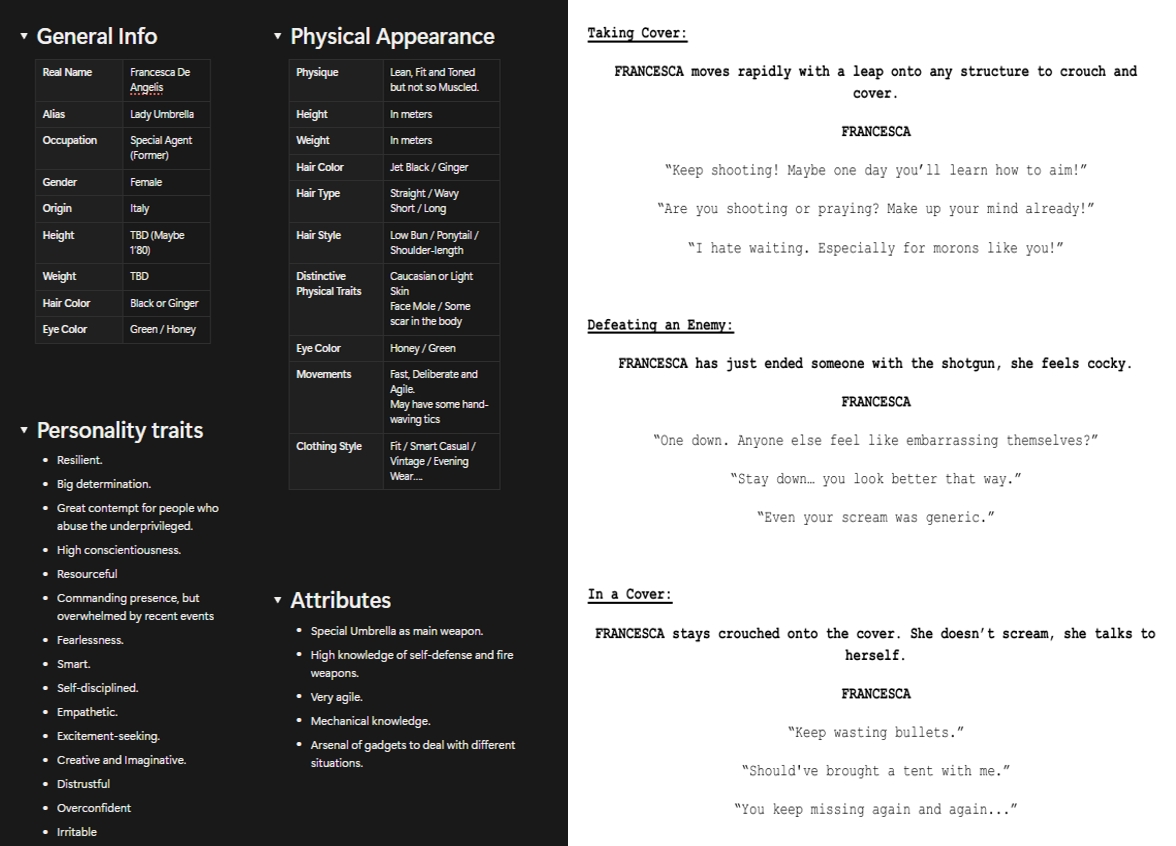
Player Character: Francesca de Angelis
Design
Weapon Functionality
Dialogues & Barks

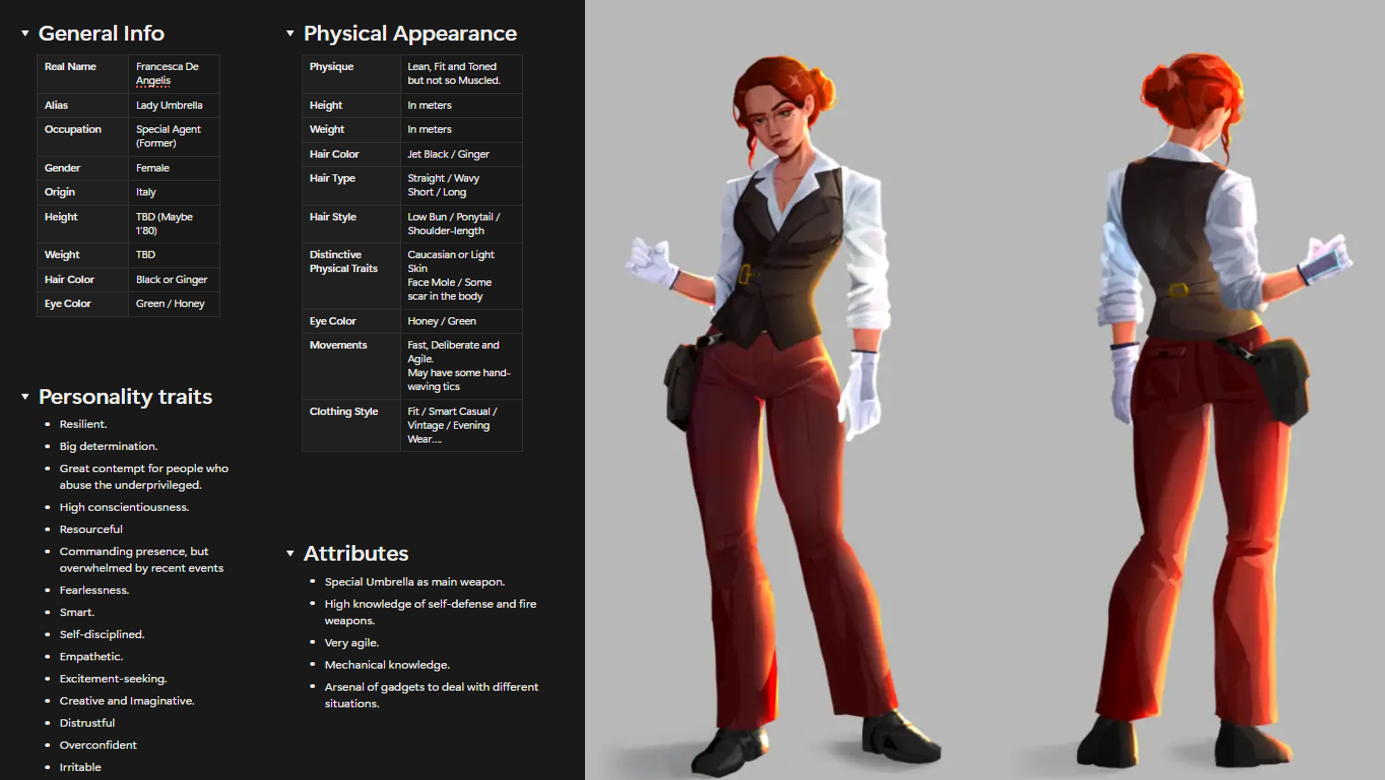
Developed the protagonist’s design with the goal of making her fit the role assigned to her by the game’s plot.

  • Based off our main references by analyzing what made their protagonists fit into the theme.
  • Designed the dialogues and barks with the objetive to reinforce engagement from the player.

Francesca is brave, strong, agile and lethal. She faces struggle and pressure with determination. These traits enhance the gameplay, making the player fight aggressively.  

  • Her taunts and jokes invite the player to feel as a threat to the enemies.
  • The secret agent theme reinforces the idea of always having a backup plan, a secret weapon and a last resort.
Design
Dialogue

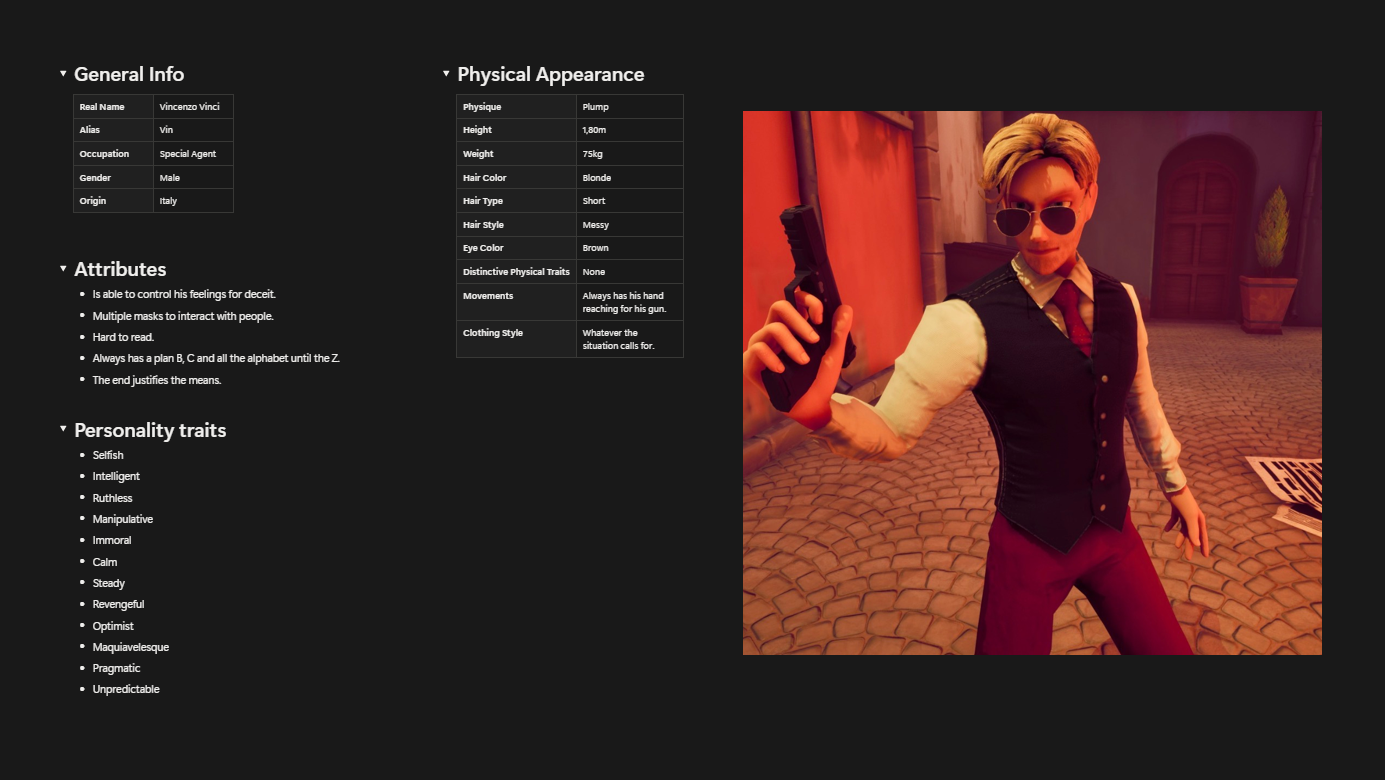
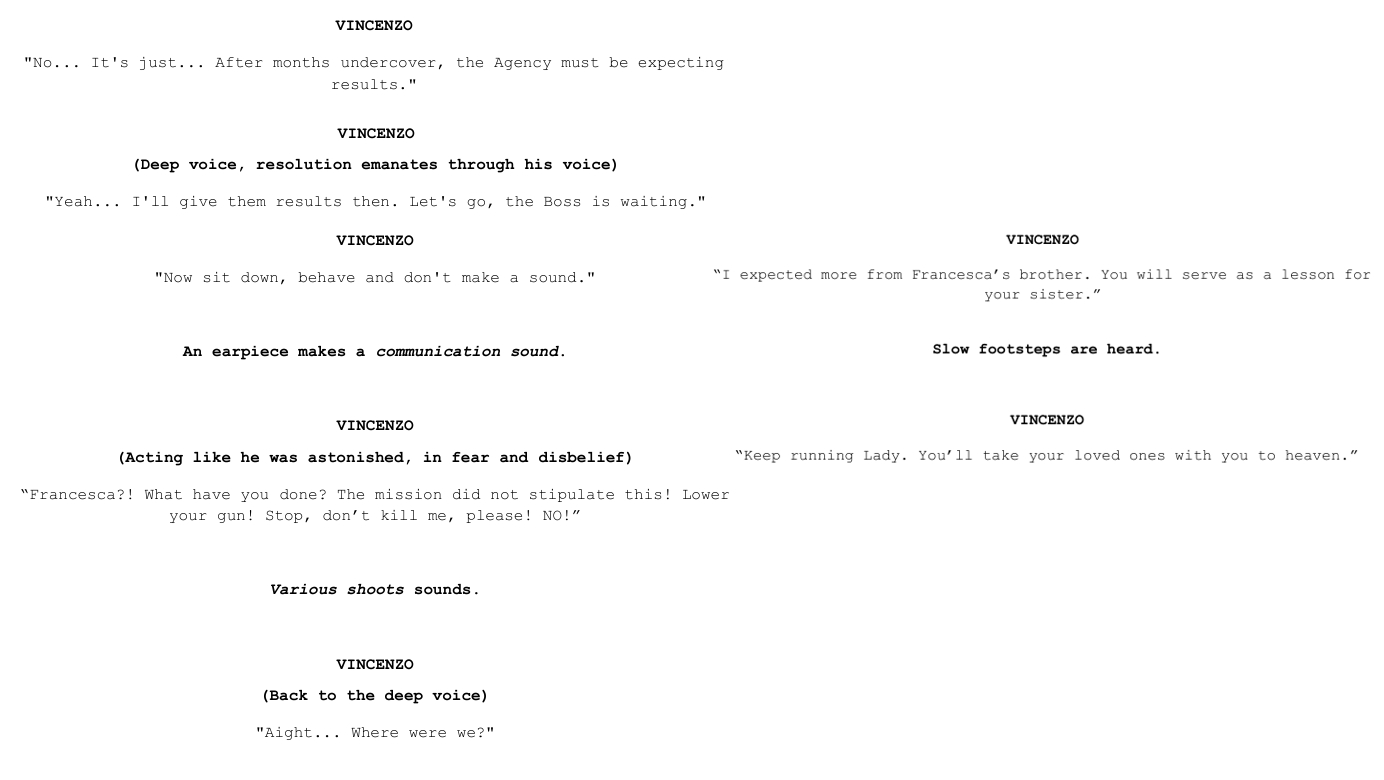
Vincenzo was designed to be the main villain of the story. A calculating, cold, and manipulative character. He doesn’t hesitate to resort to any kind of trickery to dish out what he considers “justice.” This selfishness clashes directly with Francesca’s personality.

  • Vincenzo manipulates the mafia from within, murdering its boss and framing Francesca in the eyes of the agency they work for, thereby setting off the conflict that drives the story.
  • Although it may seem as though he has succumbed to the idea of power, his intention is to nip the conflict in the bud by eliminating both mafia and Agency, adding depth to the character.
Design
Barks

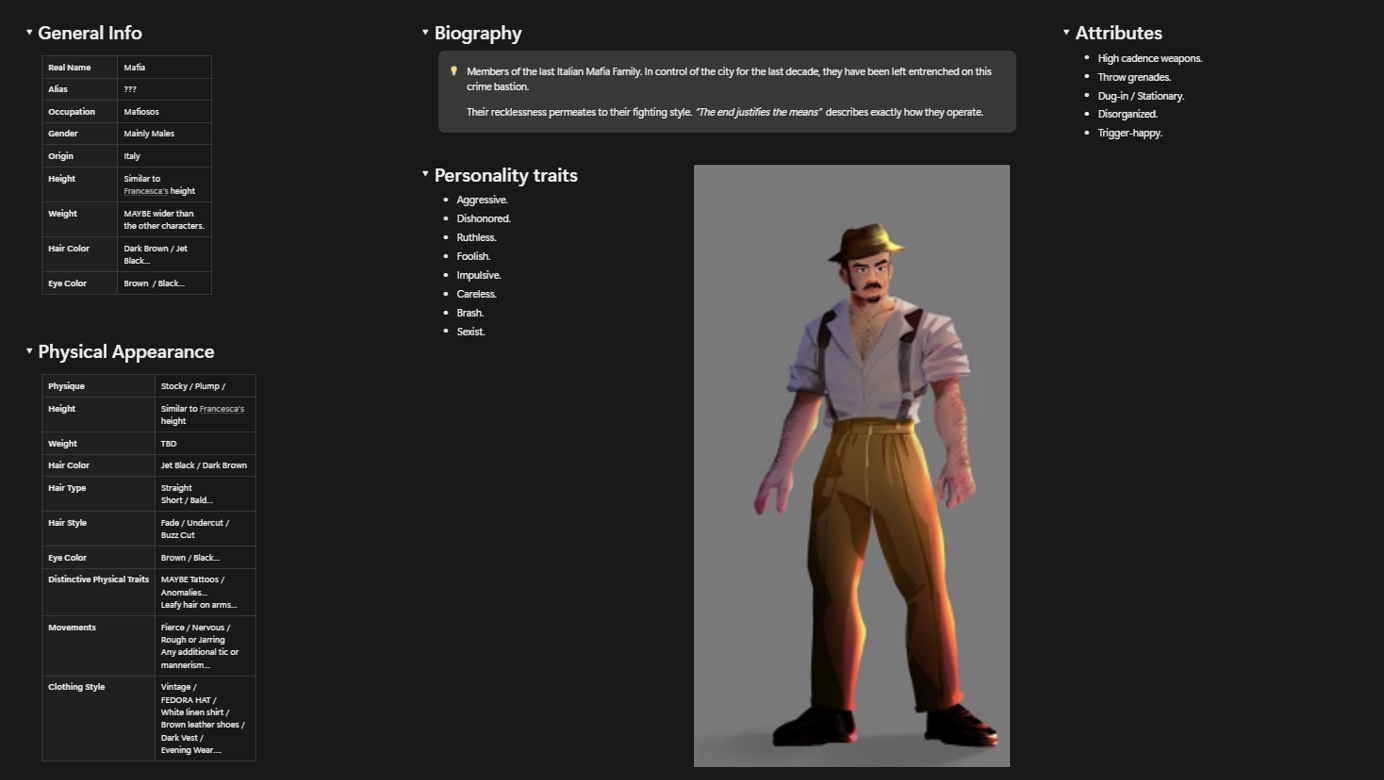
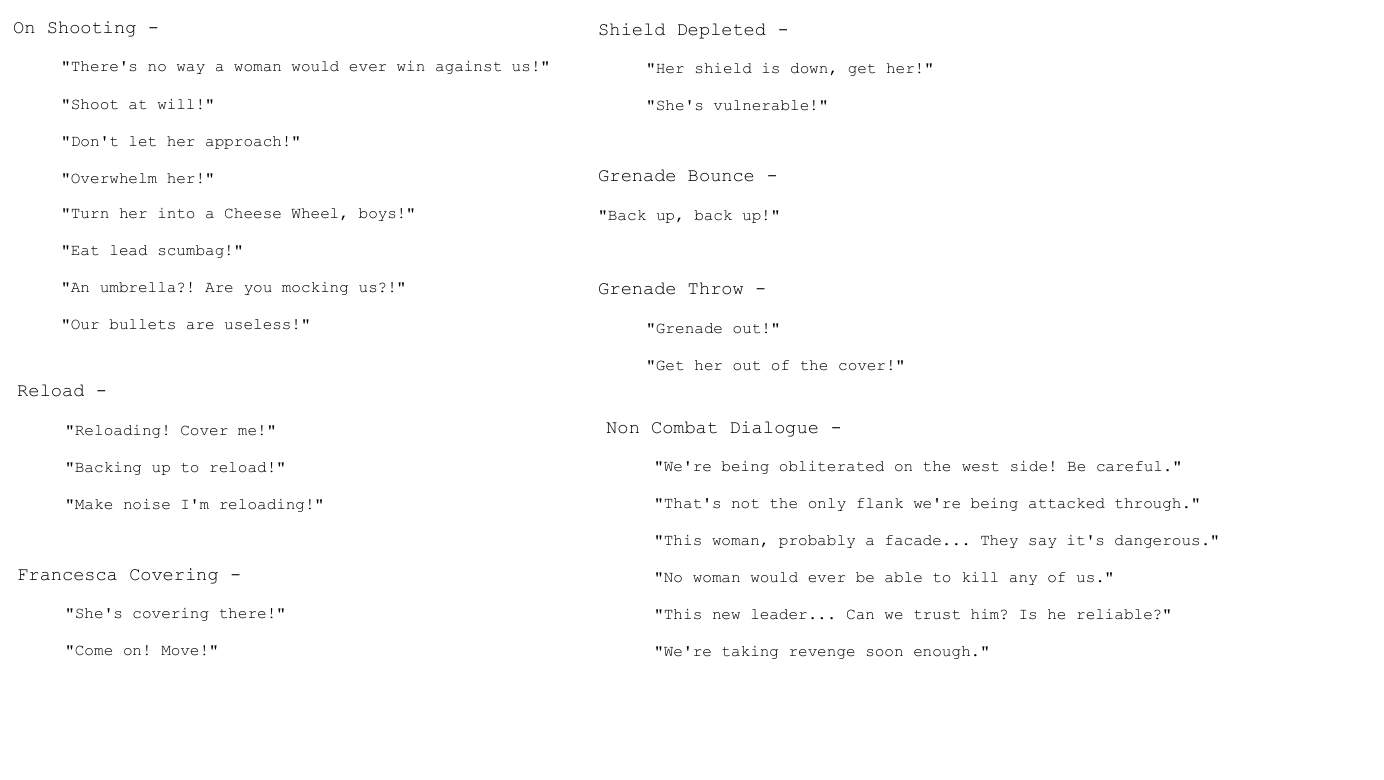
The Mafia plays the role of the main antagonists of the game. The main objective was to design an enemy that played the same role both in narrative and gameplay:

  • Ruthless and shameless, they spit out their thoughts and traverse the battlefield head on.
  • They throw grenades onto the player when in reload or covering state just to keep them moving.
  • Their personalities make them unable to back up, so they will literally follow the player until one of both is done and dusted.
Design
Barks

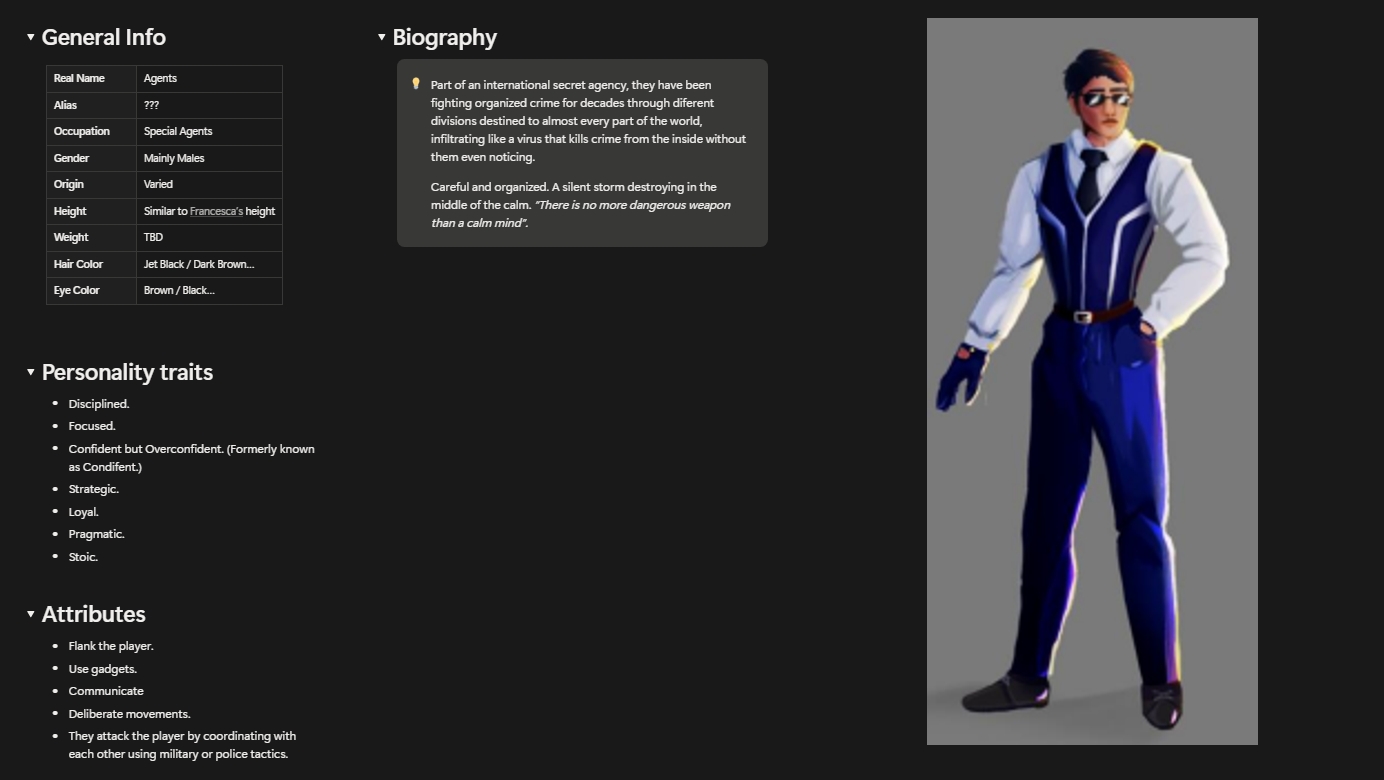
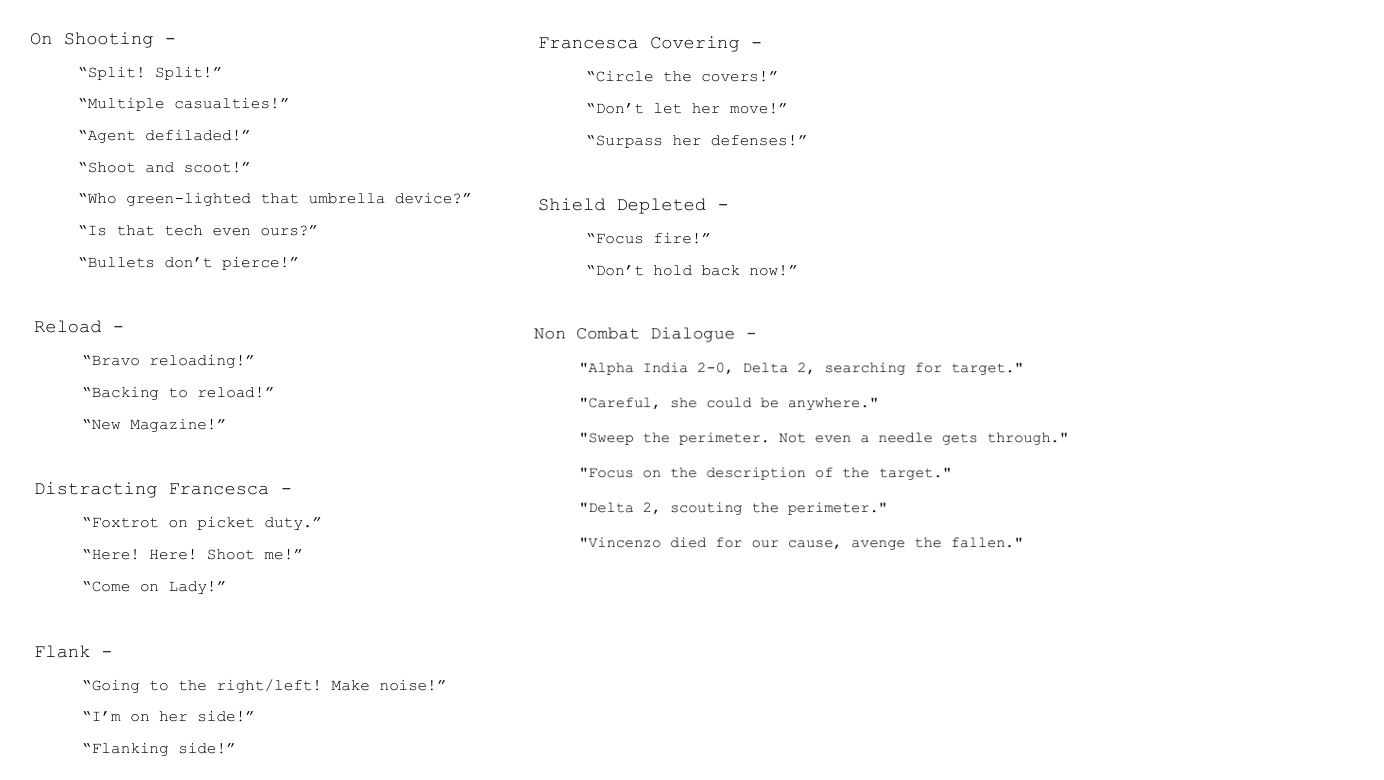
The Agency shows itself as a methodical and organized group of people. They remain calm, sending key information to their teammates quickly and precisely. They are hard to impress, as they have always been used to having the upper hand in every situation. That’s until they see their own people against them.

  • Methodic and quick. the scatter through the battlefield, flanking the player from different angles.

  • High-end tech, as they wield electrifying guns that can stun the player.

  • Surprise and adaptation: They start moving with shields that pump up their threat.


Story Iteration & Linear Dialogue

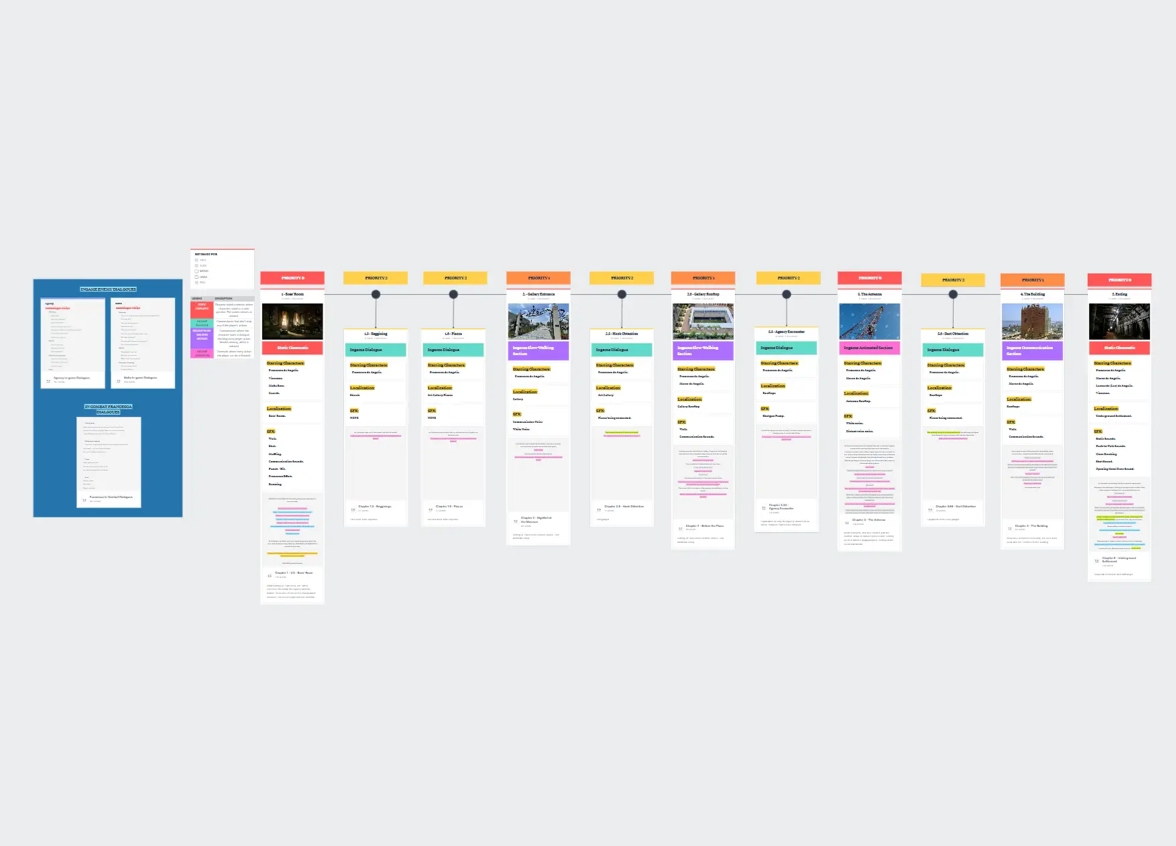
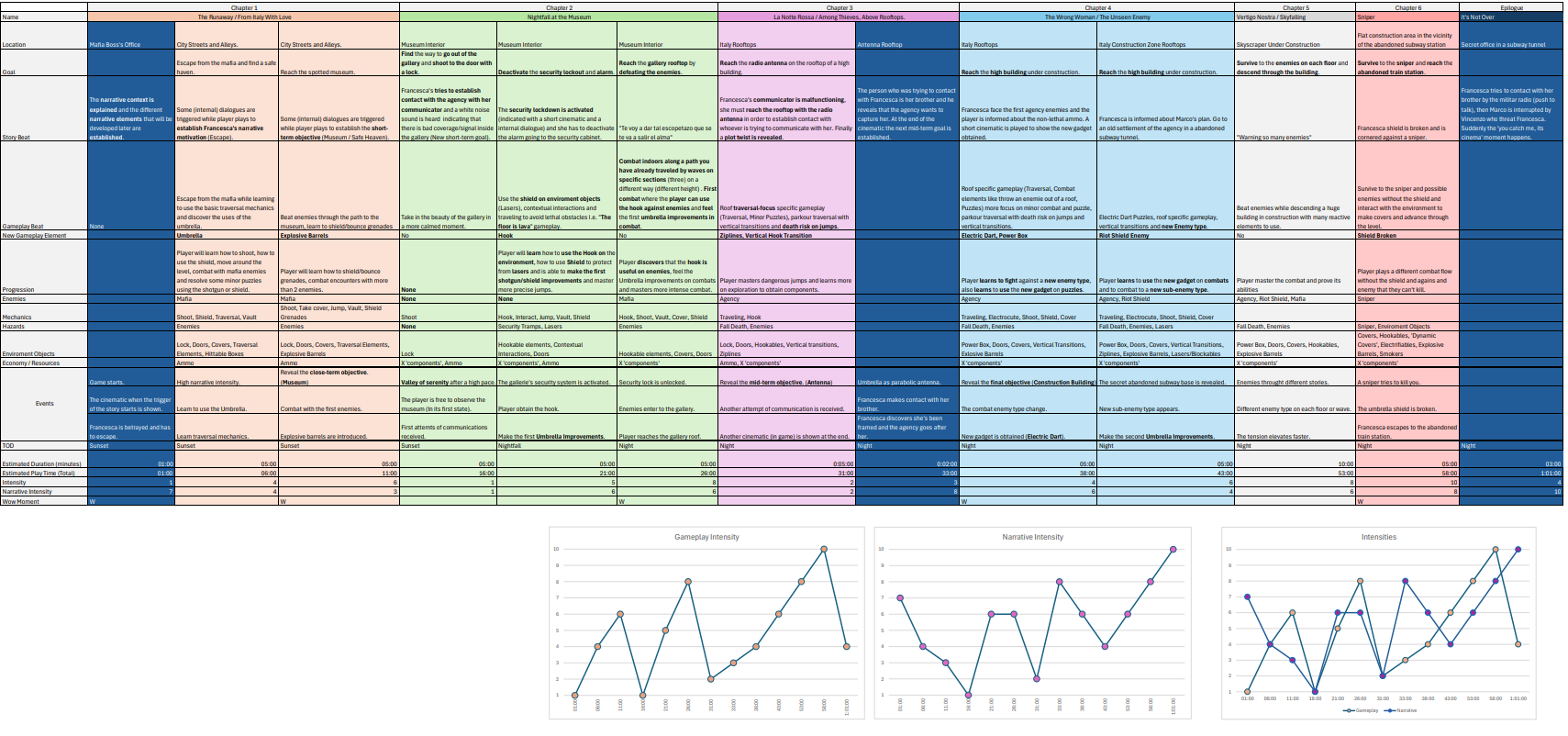
Designed Story Beats & Chapters

I worked with designers to create a beat chart, which included:
– The different levels;
– Their specific objectives in terms of progression;
– The intensity levels of gameplay and narrative;
– Mechanics and new gameplay elements;
– Other key elements for establishing the game’s rhythm and pacing.

Achieved the following writing goals with linear dialog:

  1. Encouraging the player to move forward: I maintain the protagonist’s personality at all times, allowing the player to progress in line with the game mechanics.

  2. Maintaining tension: Several plot twists unfold throughout the game, always leaving just enough information to subvert the player’s expectations.

Storyboarding & Cinematic Design


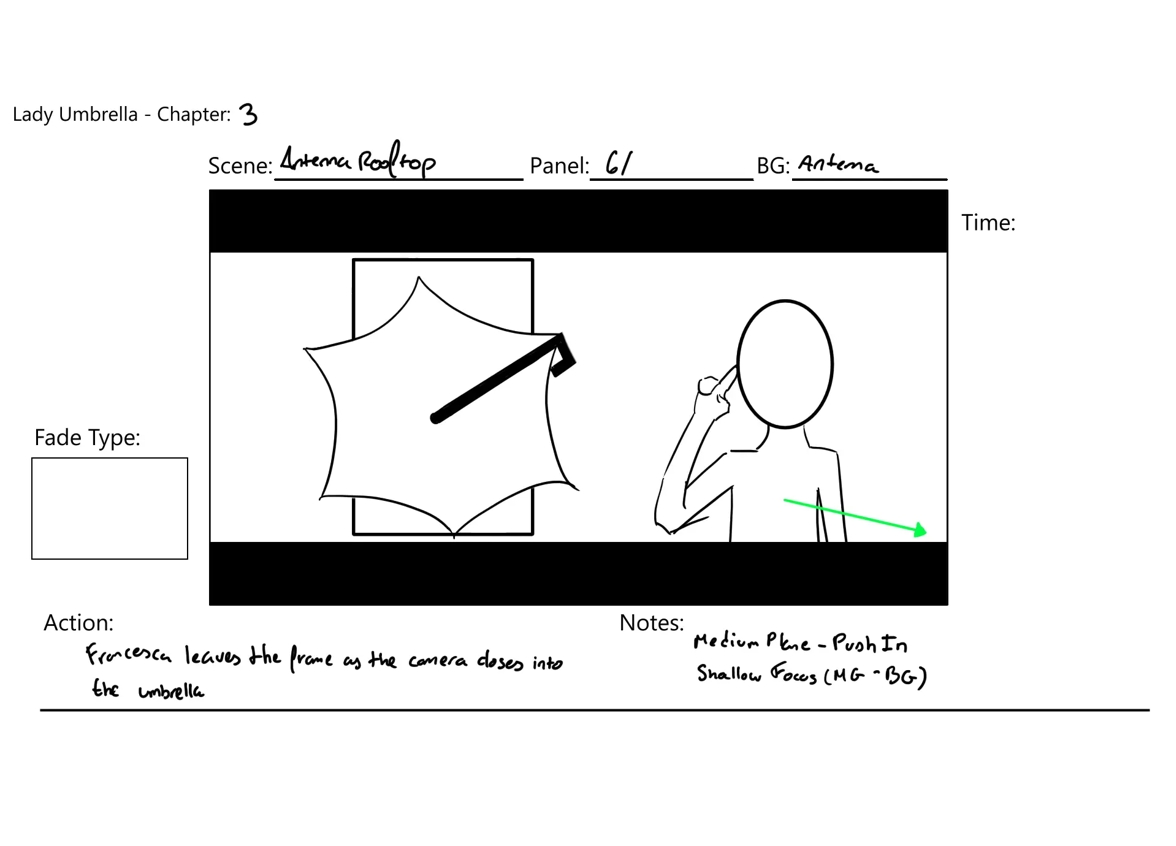
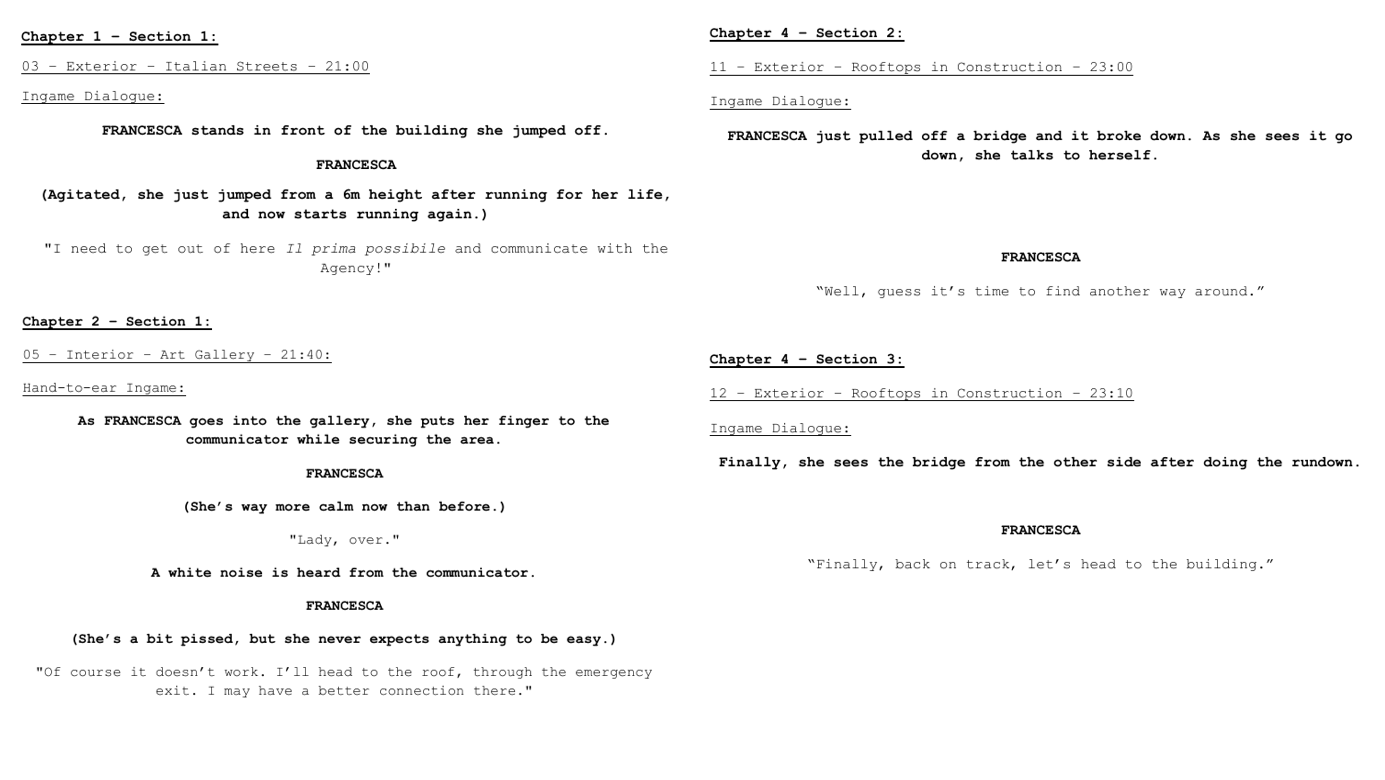
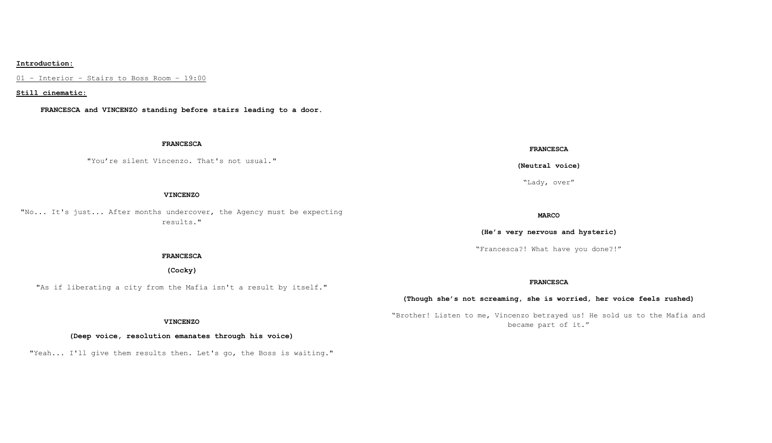
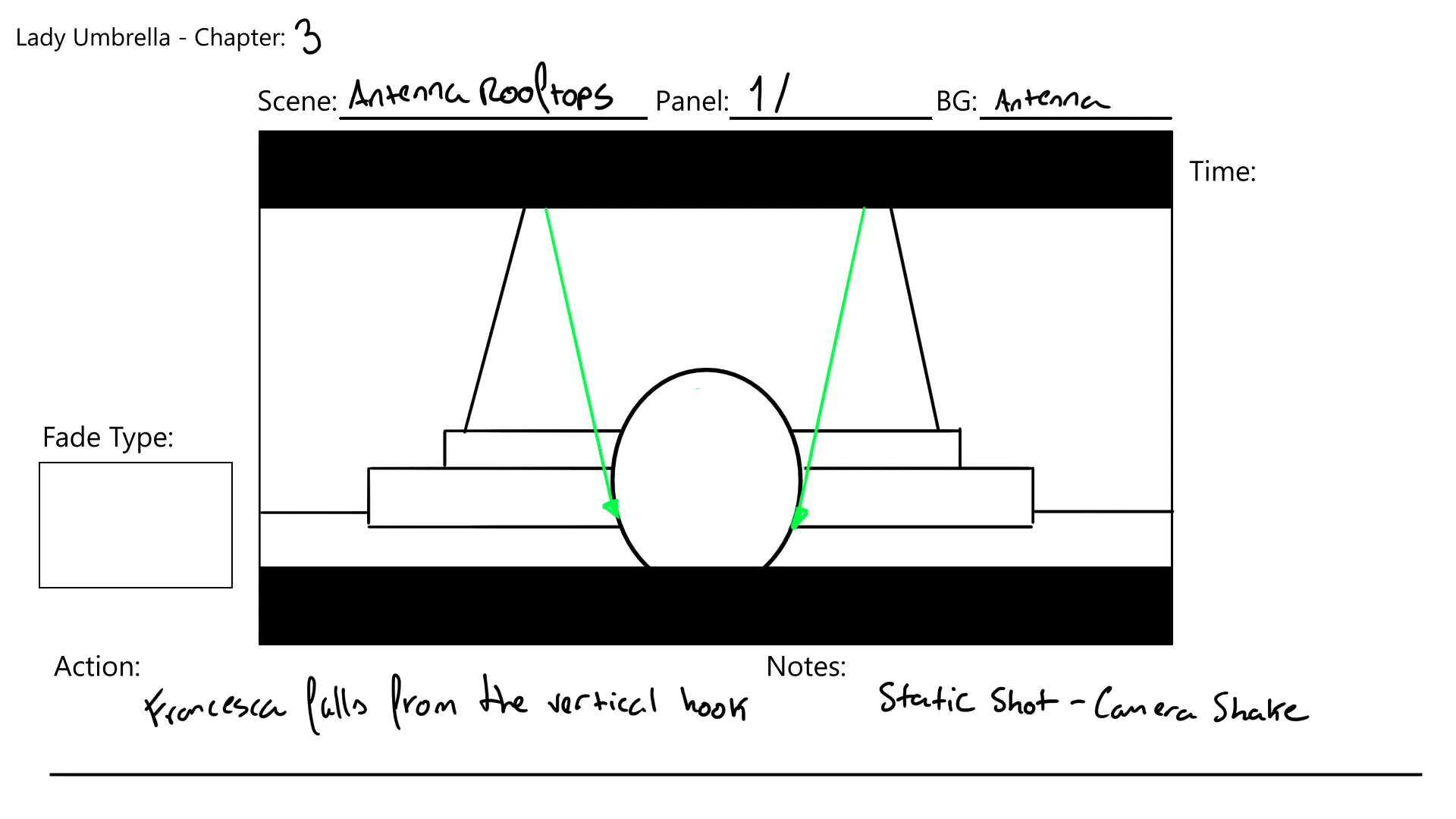
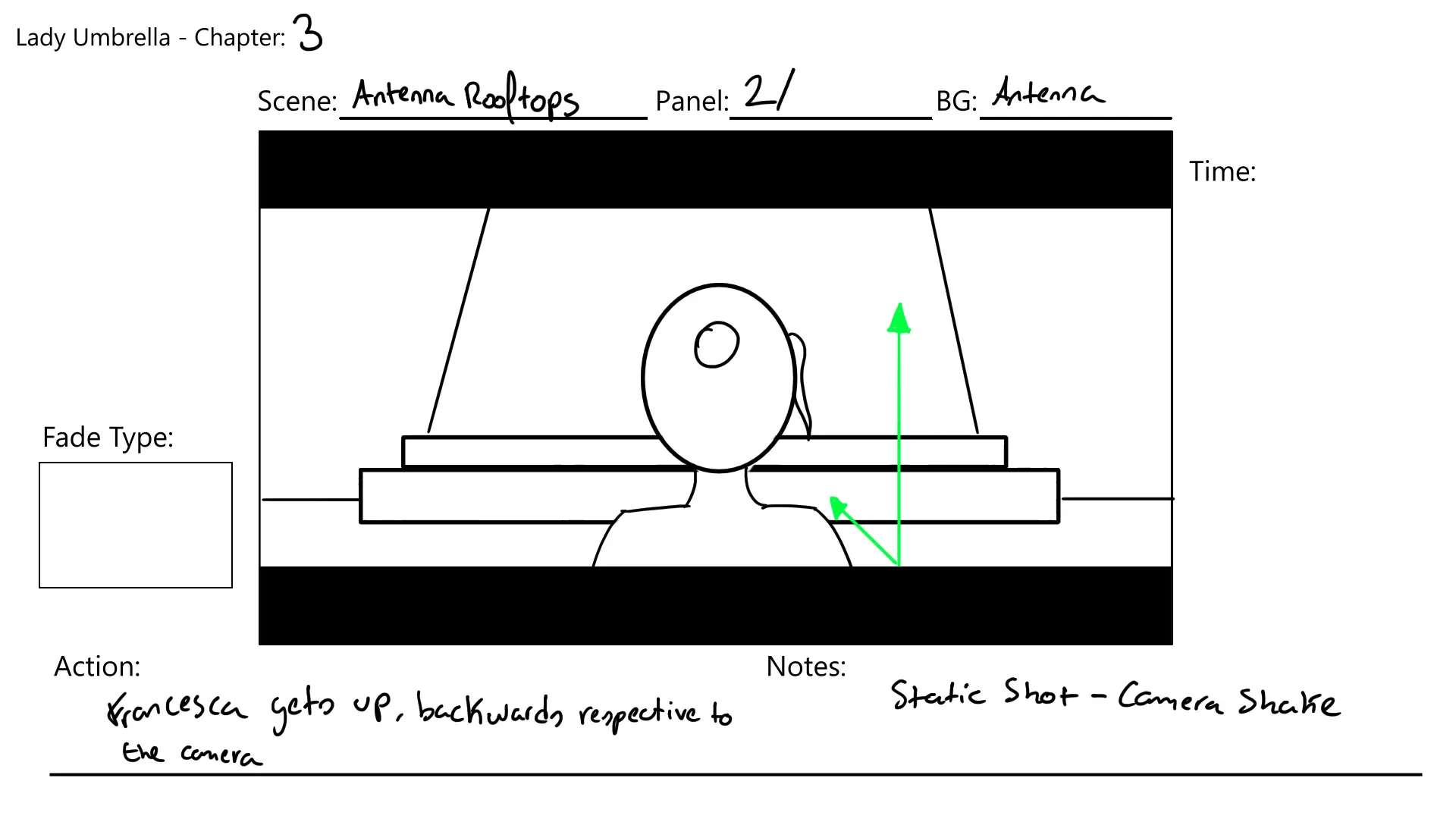
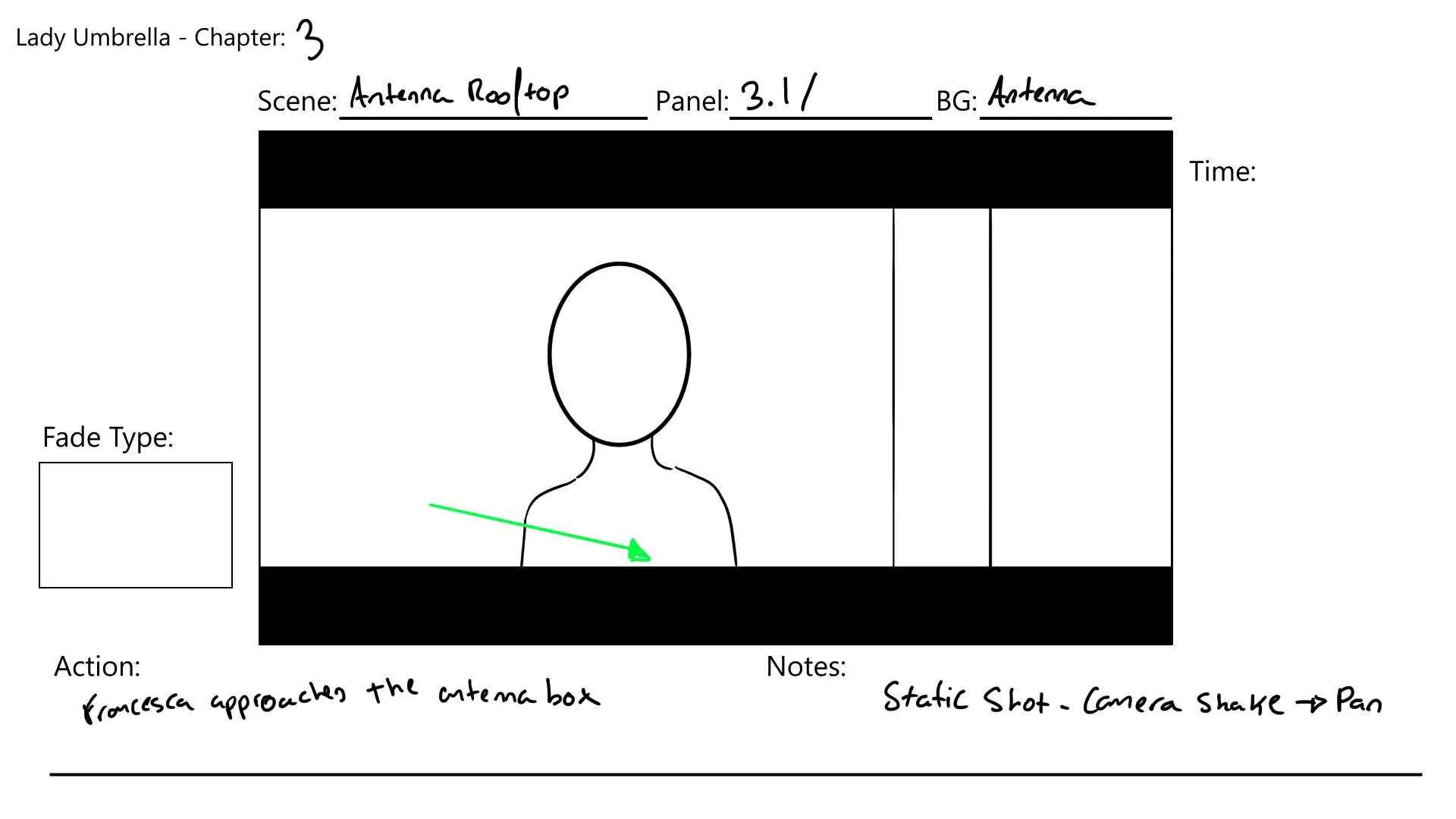
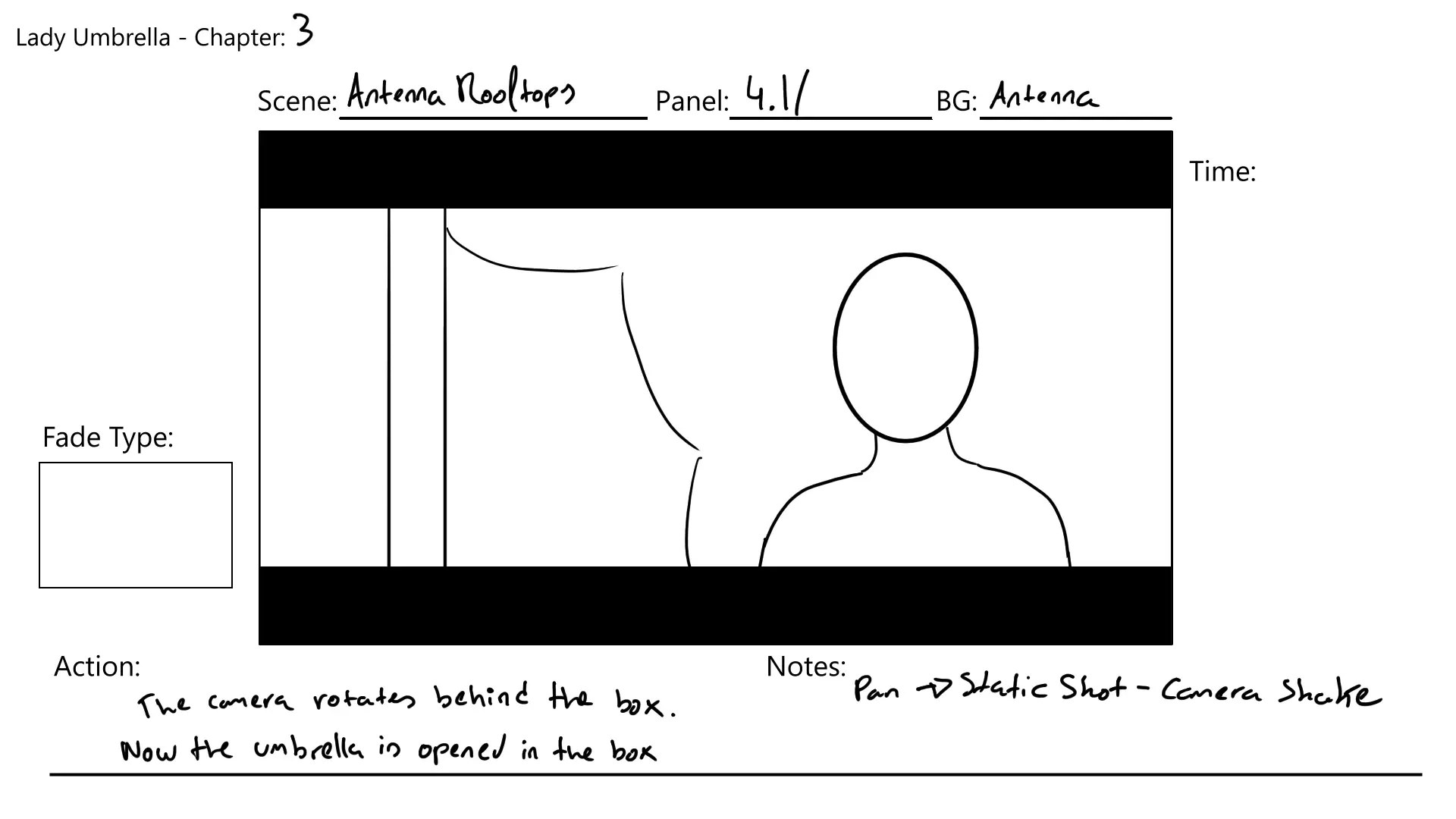
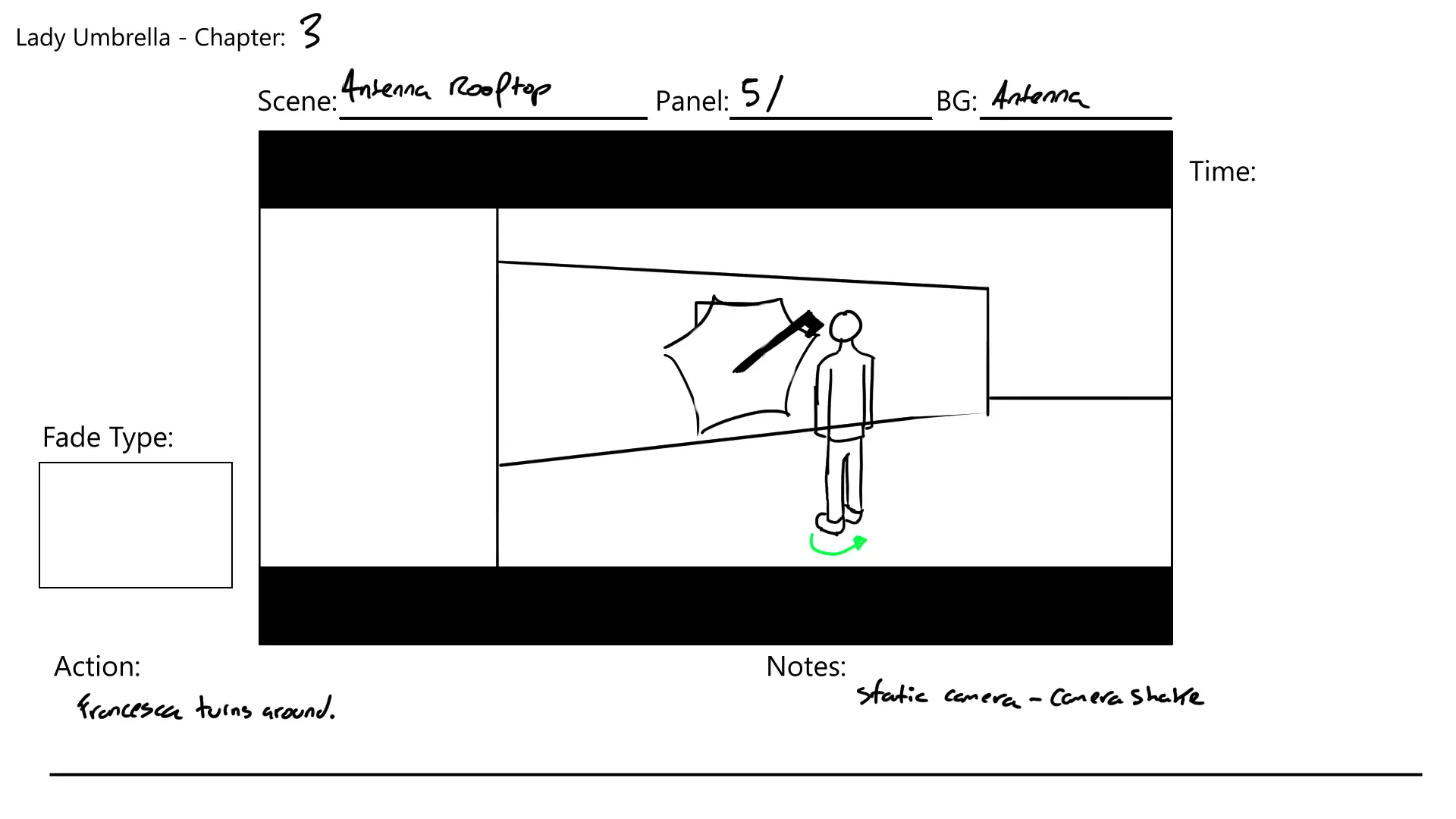
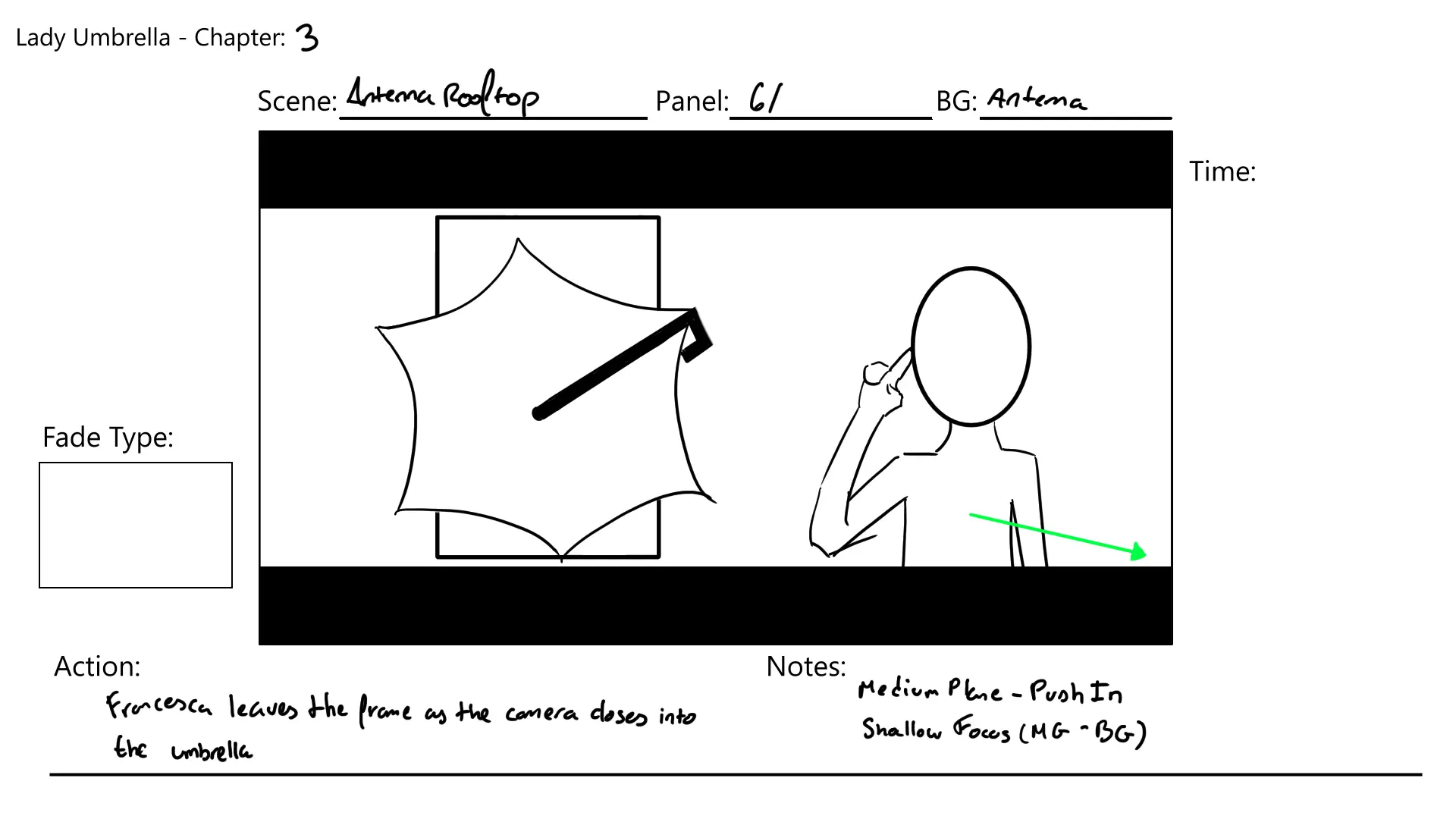
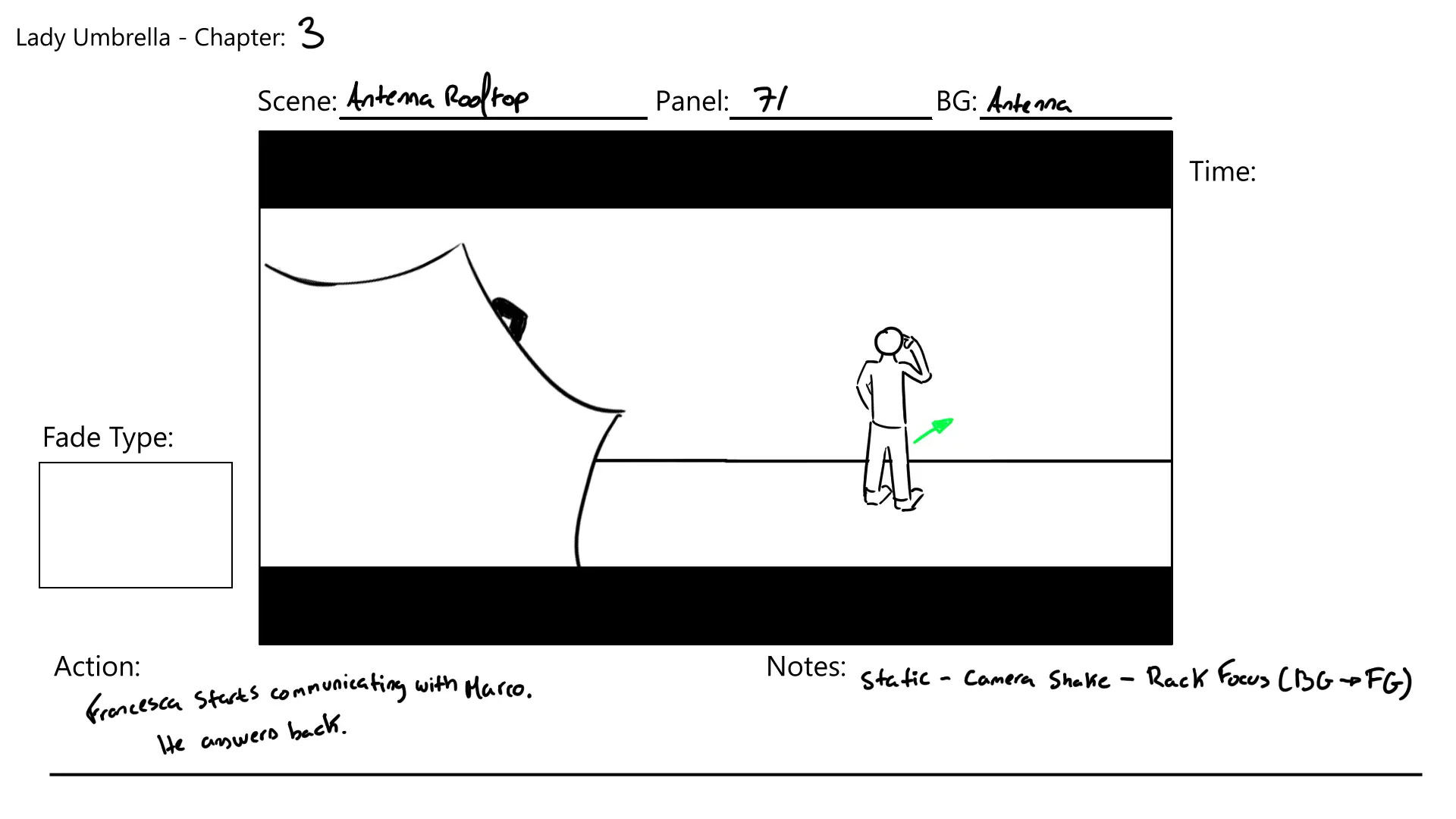
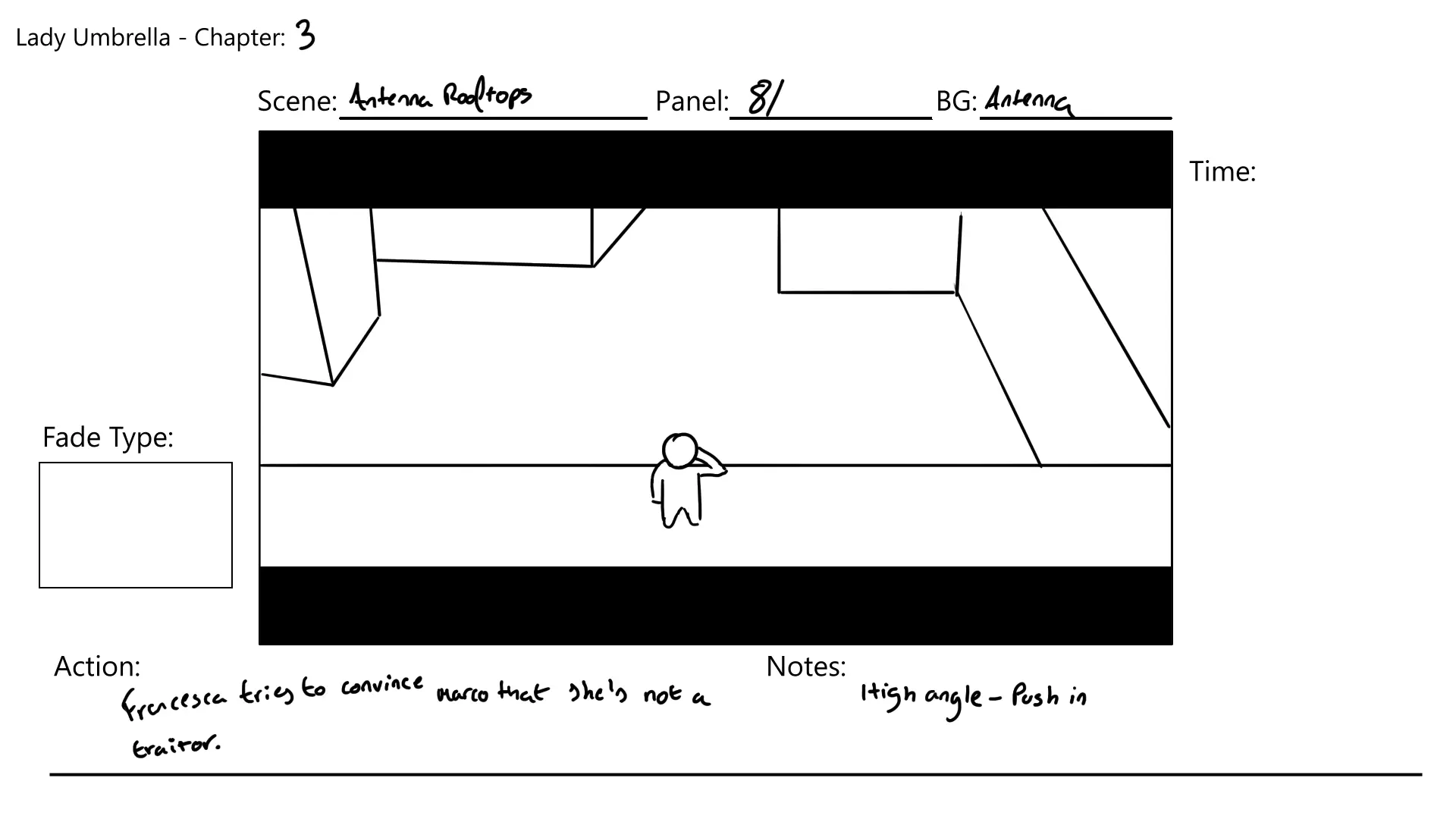
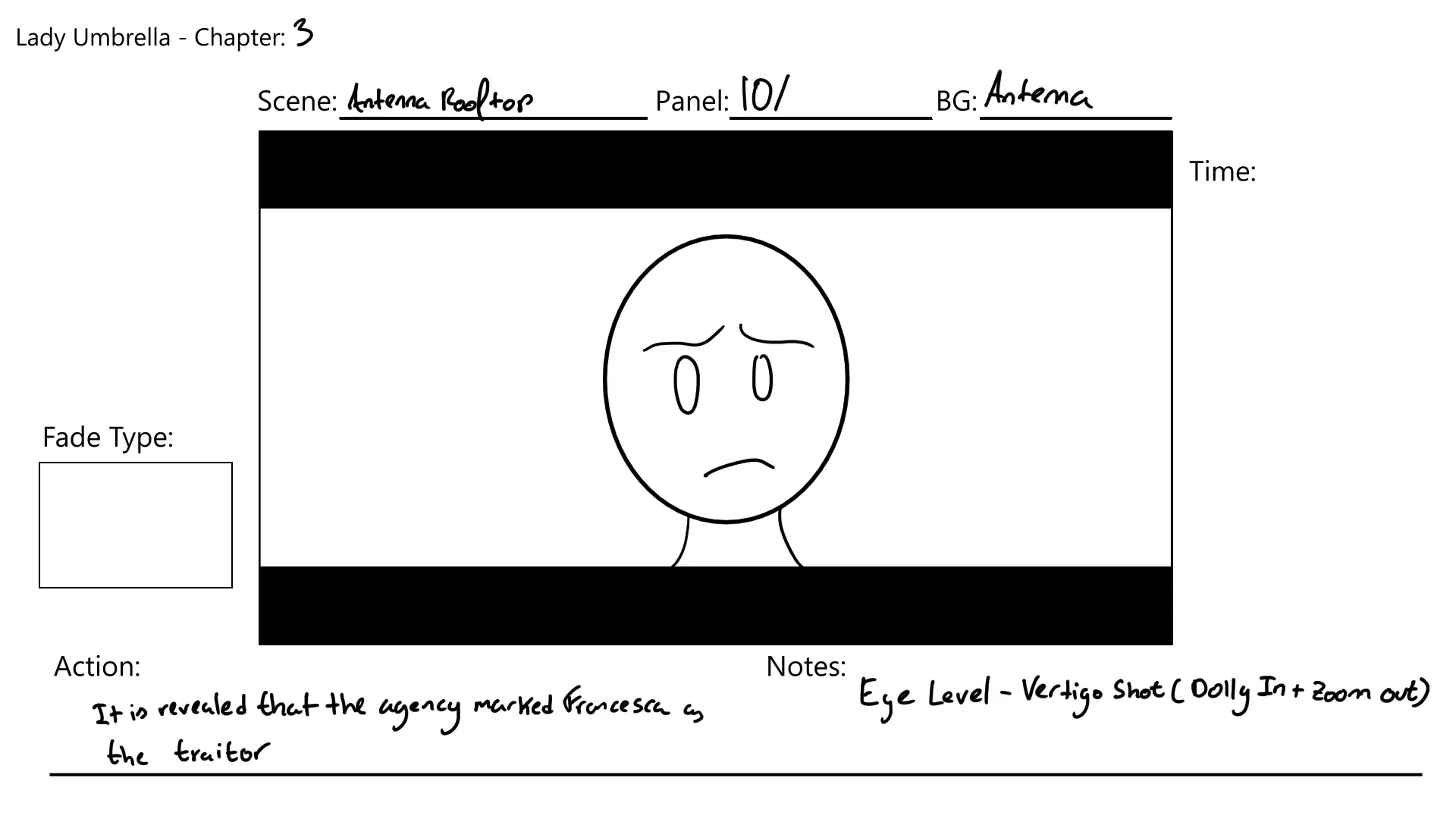
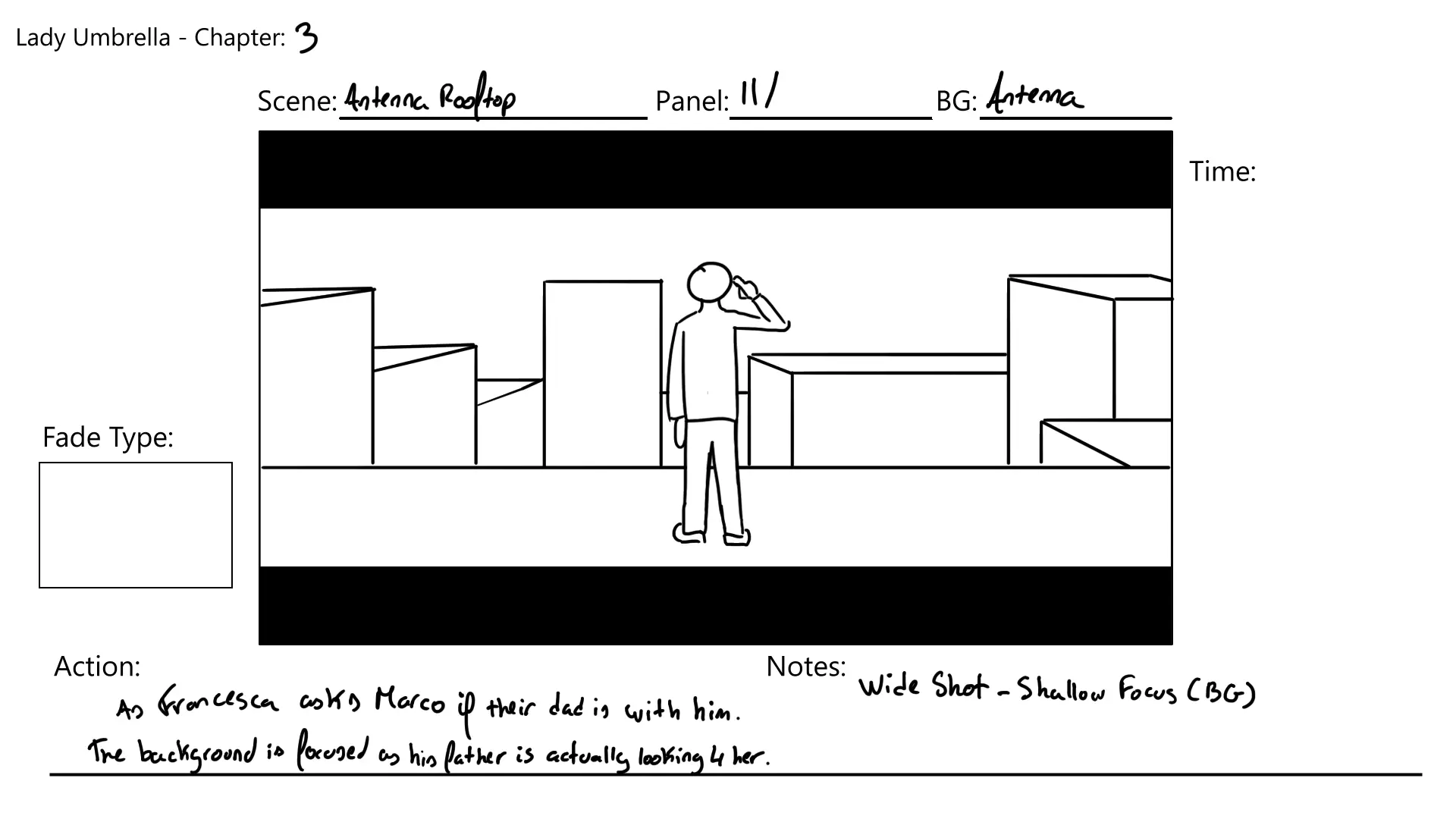
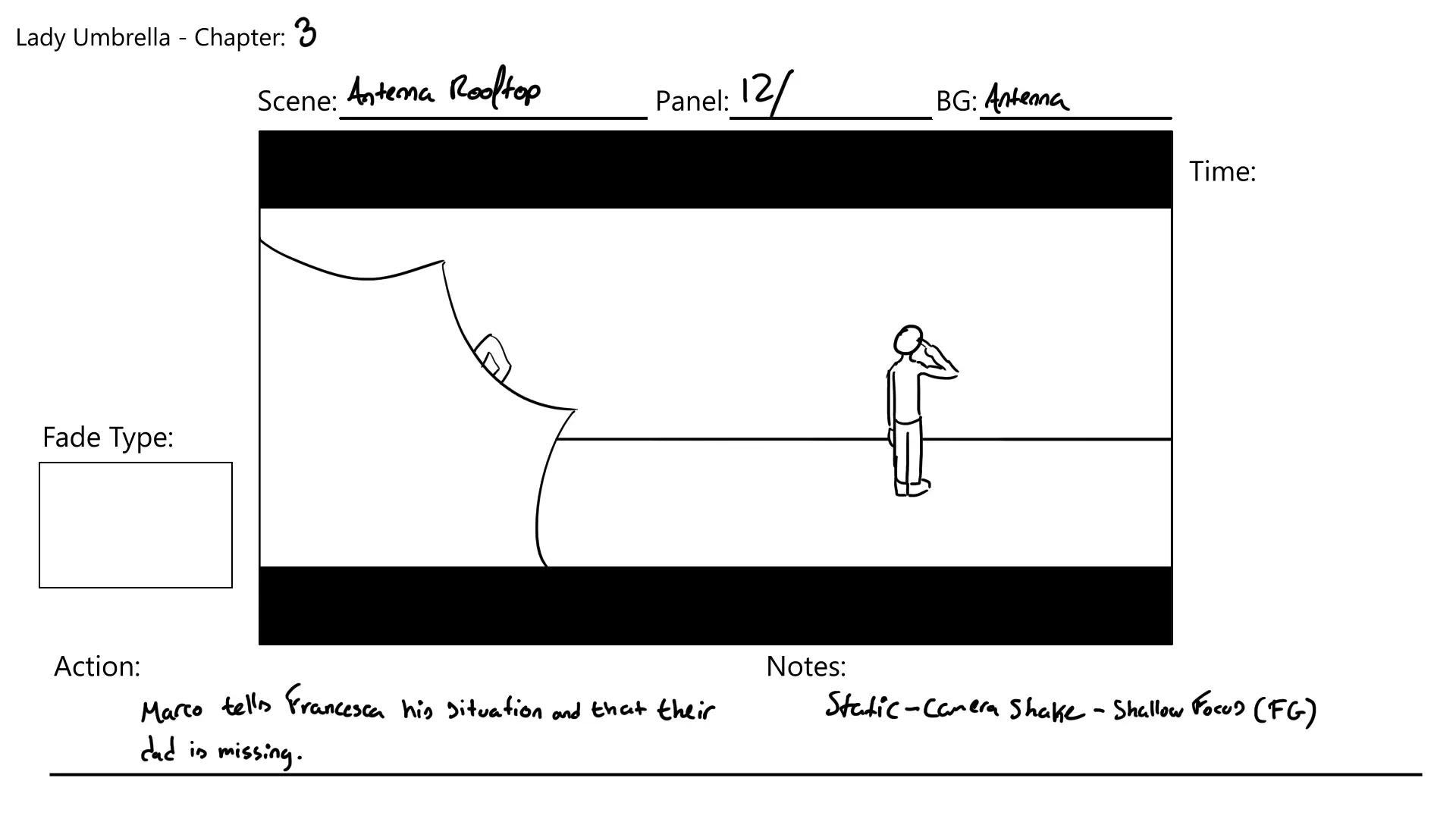
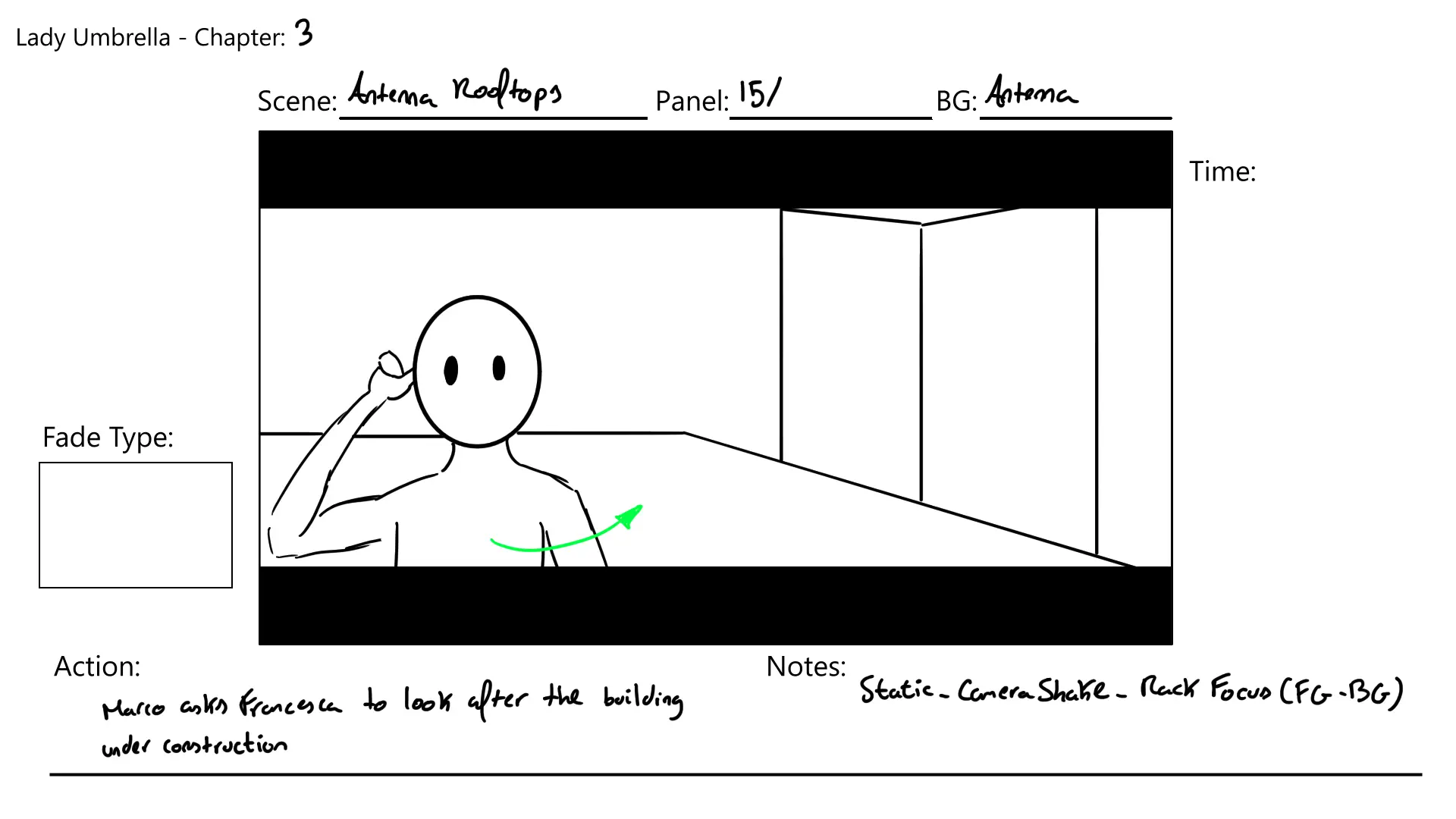
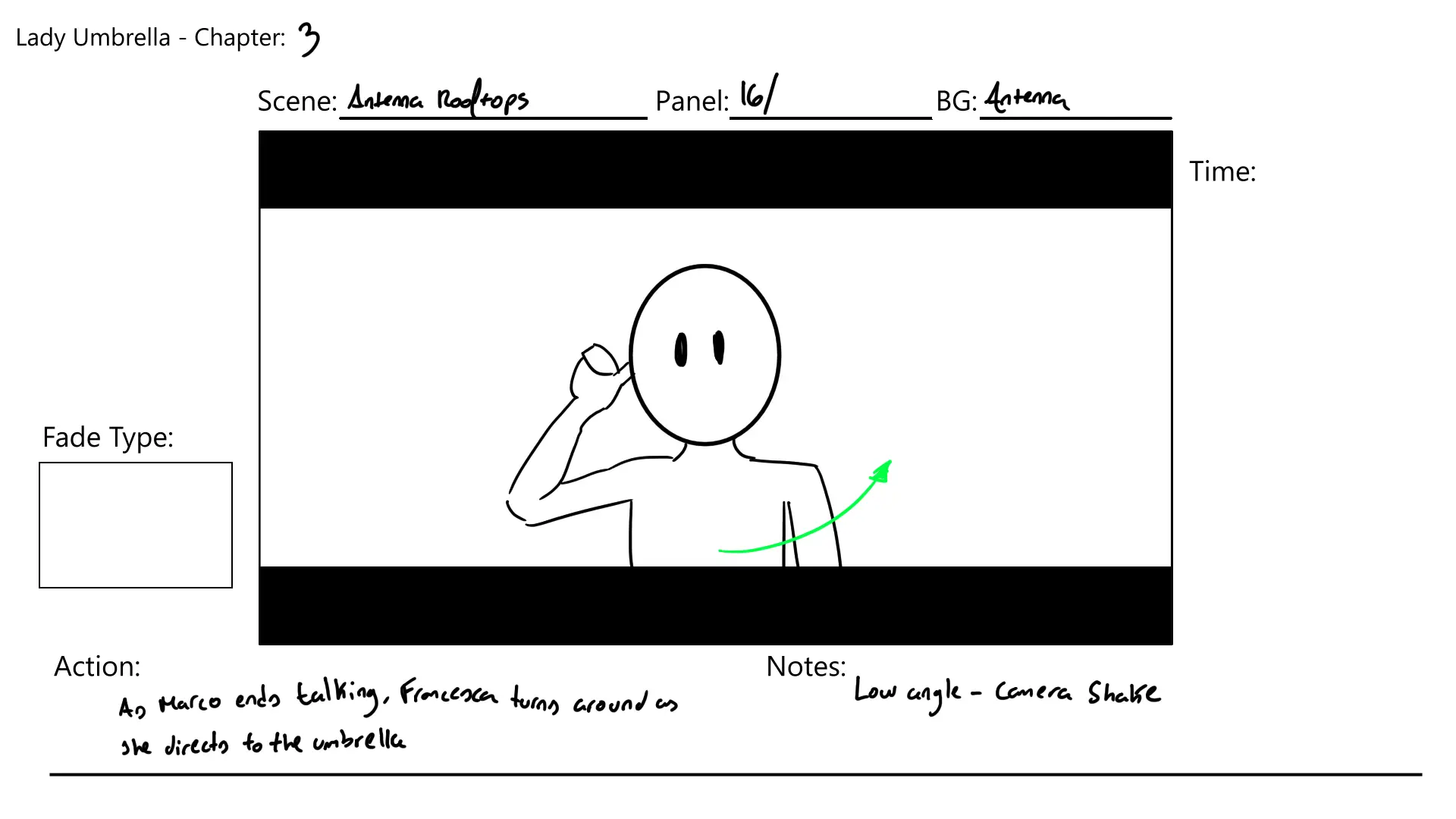
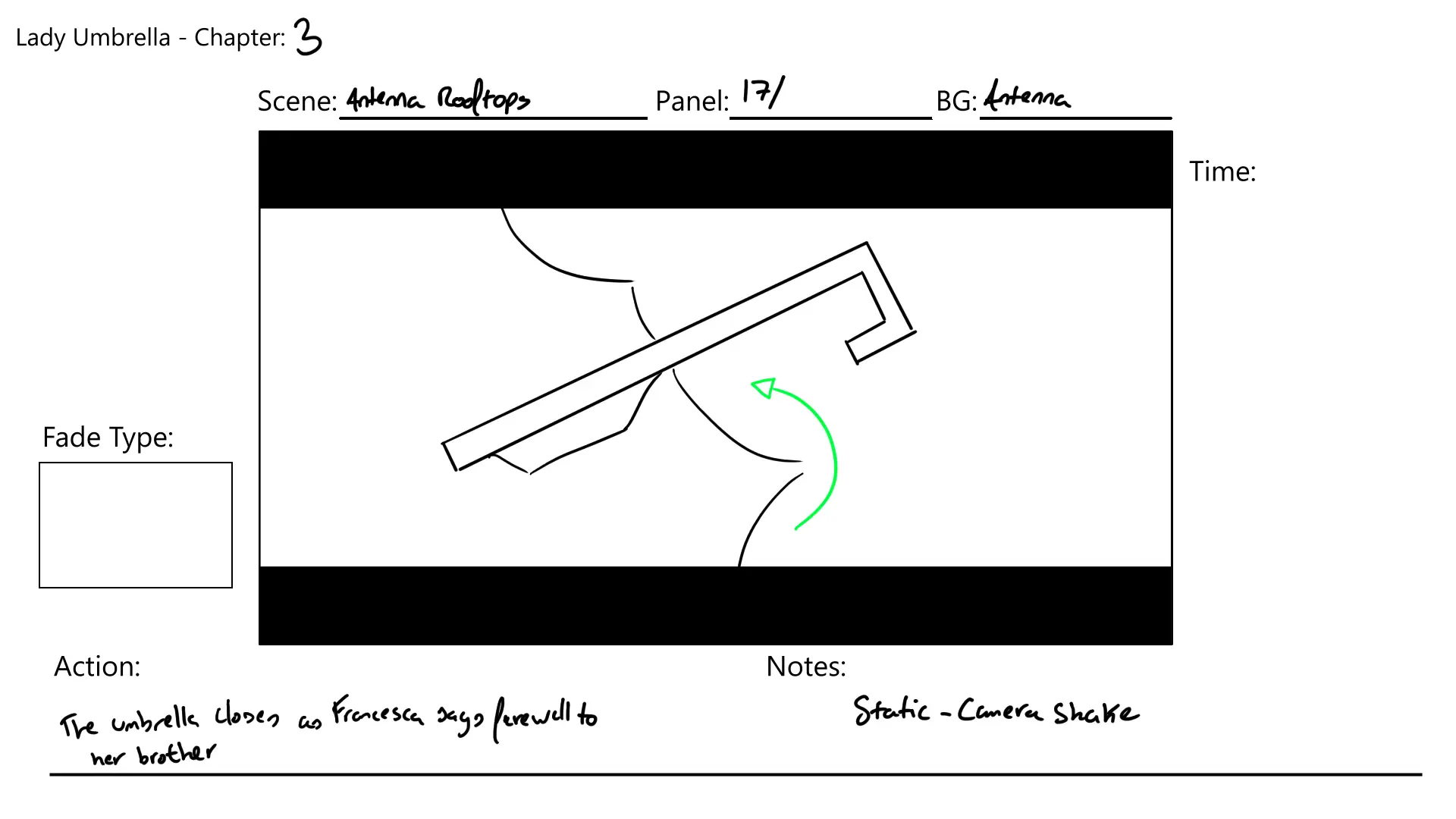
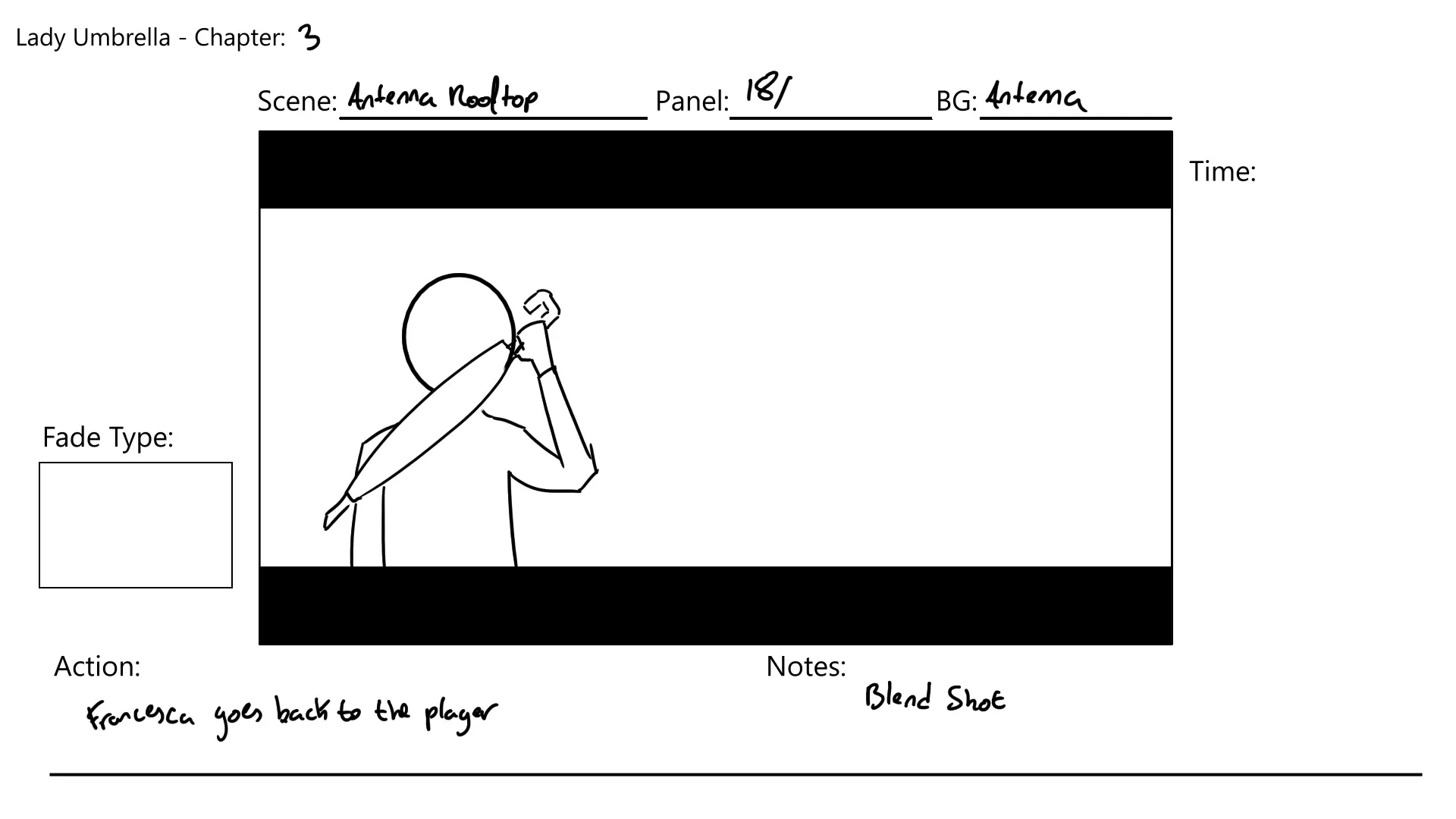
Wrote and designed a storyboard for four cinematics of the game, iterated alongside with the art time through several approval phases:

  1. Defined the camera shots and actions on every take. 
  2. Took into account the environments, models, and scenarios to minimize the impact on the art team’s work.
  3. Defined character movement and poses with the objective of evoking certain feelings that work alongside the dialogue.
  4. Designed the cinematic to help setting the tone of the game, as well as to know the stakes that will be put upon the player.

Cinematic Before & After

Character Posing

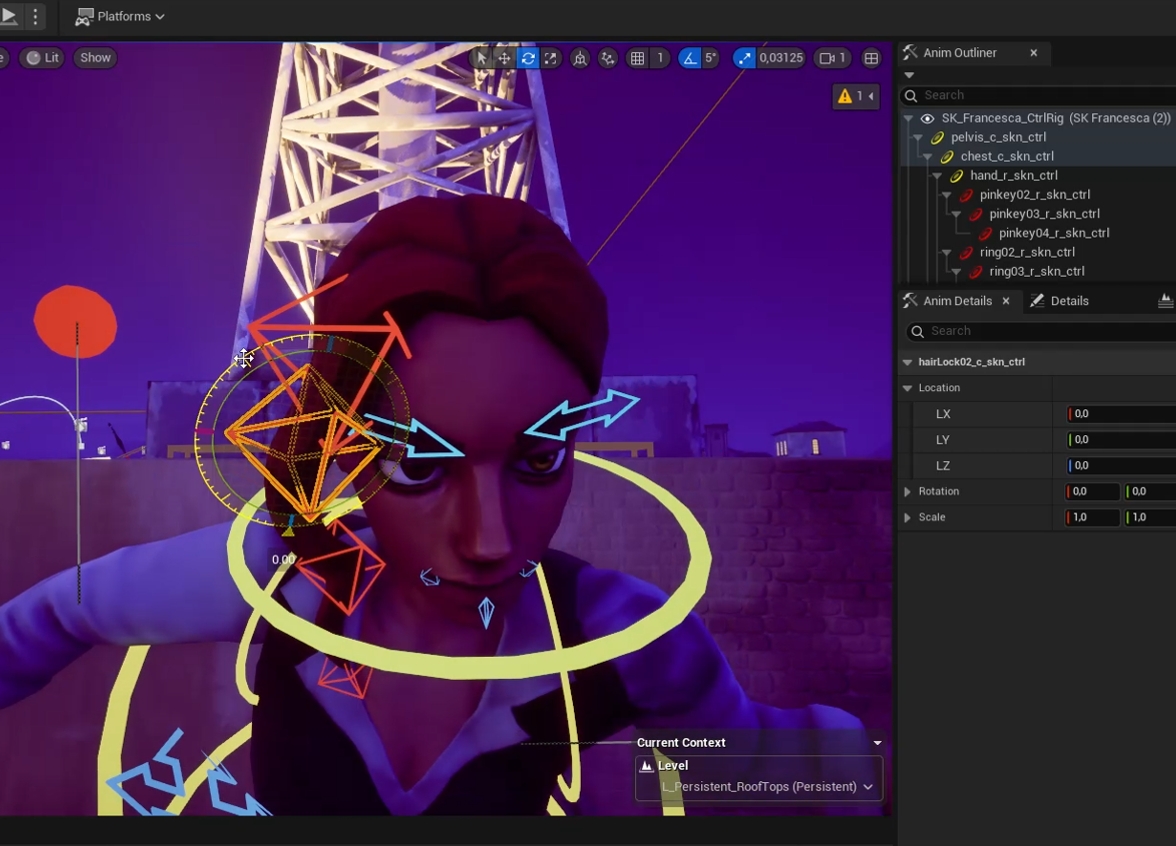
I manually posed each character in the cutscenes, creating a new control rig to use within the engine. This allowed me to precisely control each character’s posture, expressiveness, and facial features as desired, with the goal of capturing the emotions that the narrative design intended to evoke.


Similarly, I designed, integrated, and animated all camera shots, angles, and movements myself, always seeking to evoke the desired sensations through very specific decisions from blur to aperture.

The decision to pose the characters in-engine rather than request them pre-posed was made based on the following considerations:

  • A lighter workload for the small art team, given the short timeframe to meet deadlines.
  • It streamlines the process of ensuring the characters evoke the desired feelings.

Worldbuilding

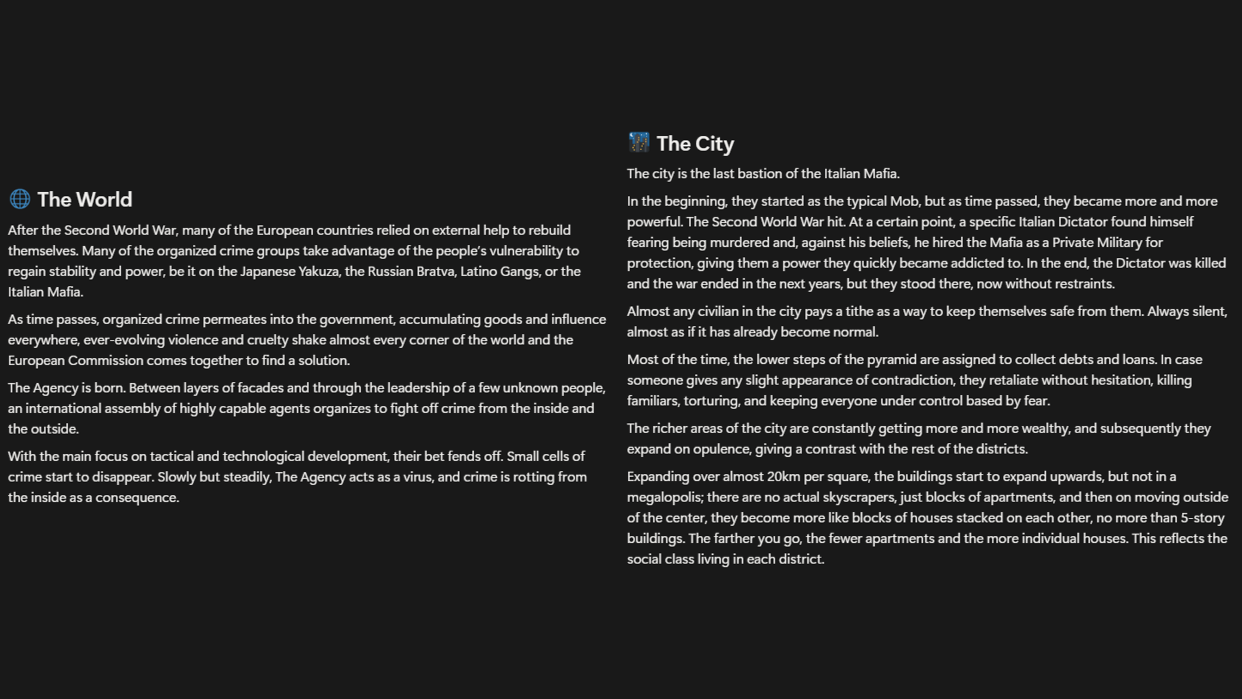
Expanded on the world where the game takes place through several iterations. Designed the city where the game takes place, emphasizing on the era and place it is set on. Designed the lore of each character as well as a short story setting the tone for the main villain. The main points everything was based upon were:

  • Italo-mediterranean setting.
  • Big fictional city in control of a mafia.
  • An agency fighting back organized crime around the world by any means necessary.

Systems Design

I designed the following systems:

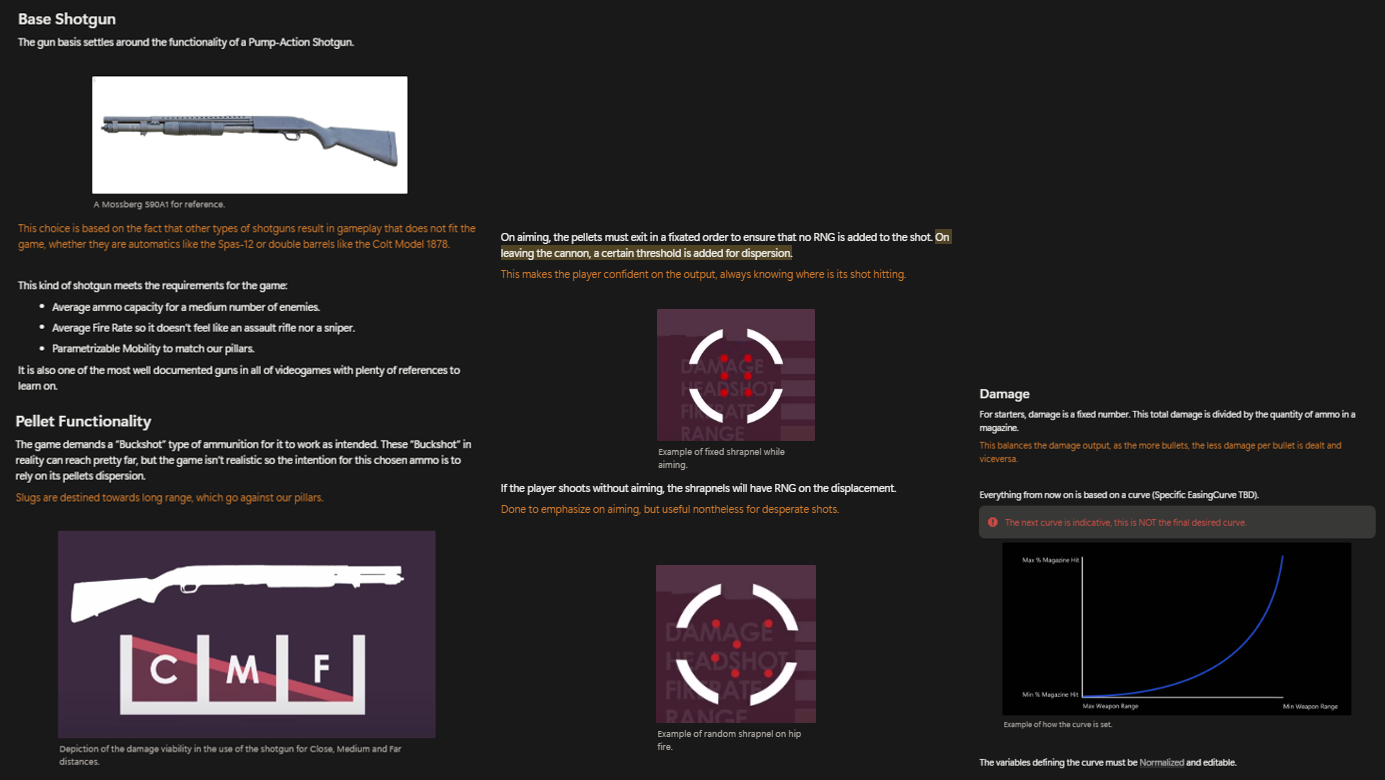
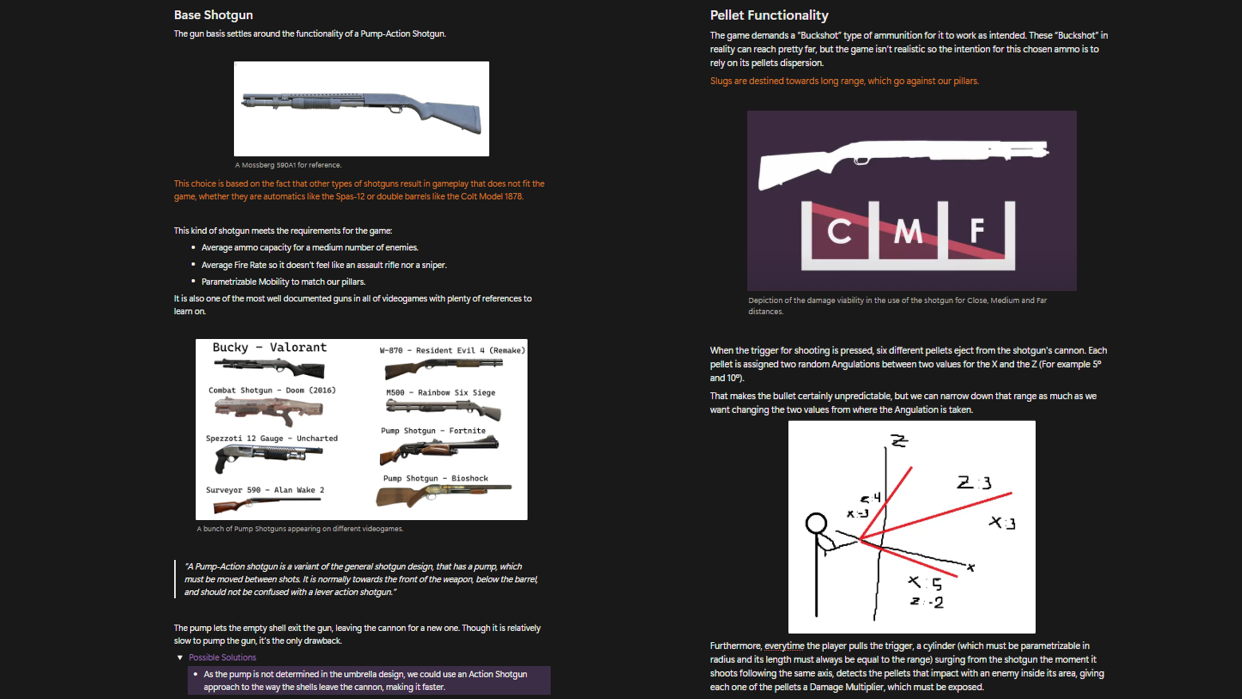
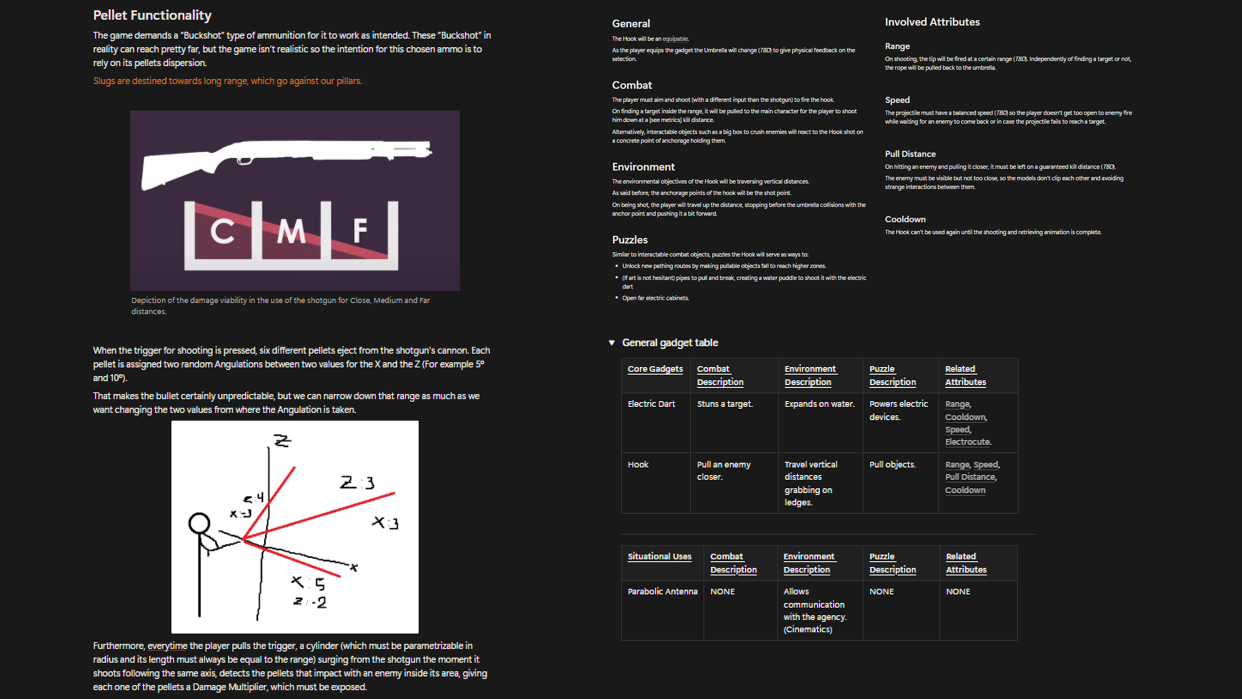
  • Shotgun mechanics.
  • Shot spread.
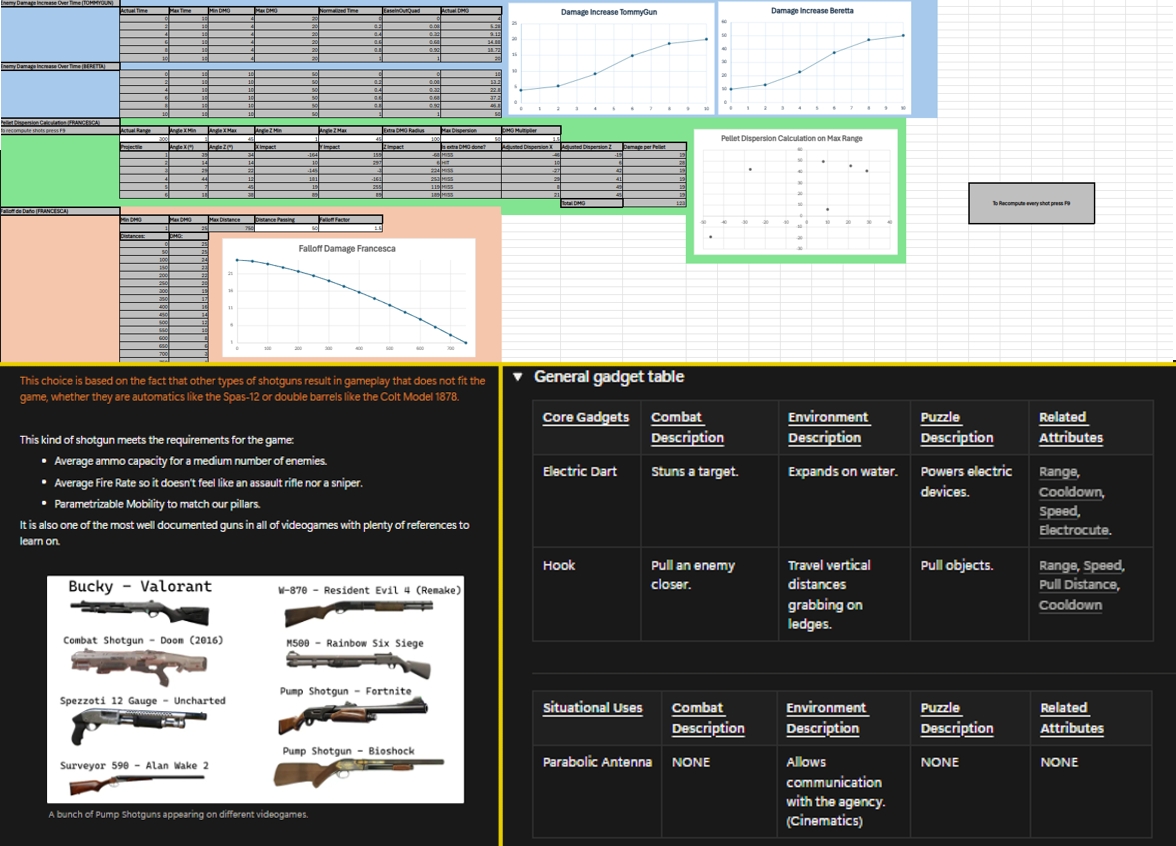
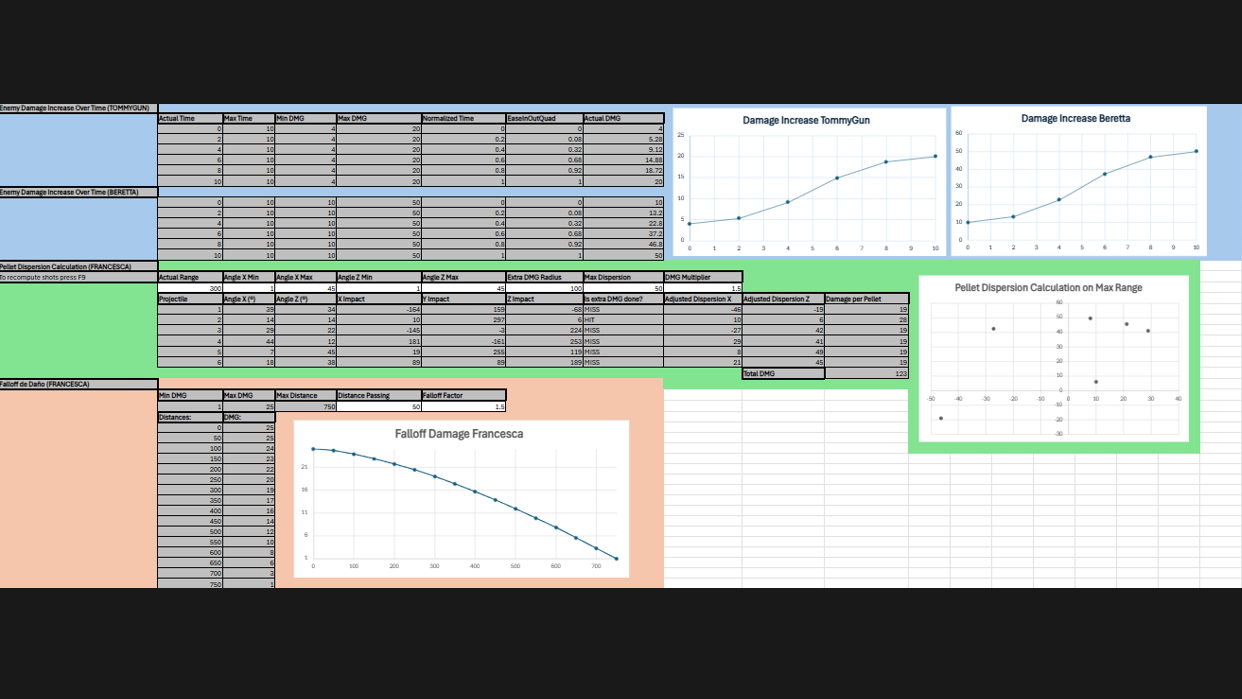
  • Damage-over-distance system.
  • Ammo dropped by enemies.
  • Excel spreadsheet that simulates how the systems work for balancing purposes.