Renegade
- Genre: Fantasy Hack n' Slash
- Type: Quest
- Narrative Tools: Arcweave, Excel, PPT
- Duration: 13 weeks
- Role: Narrative Designer / Game Writer
Responsibilities Overview
Goal
- Design and write a game concept from a production standpoint by industry experts through 2 week sprints.
- Upgrade writing and design skills throughout several iterations from an industry standard.
- Designing and writing with the team in mind, always trying to achieve the most without adding work to other branches.
- Forming a solid base from which team members can rely through the development of any project.
- Forming an iterative, collaborative and resolutive mindset on every feedback contribution.
Linear & Branching Dialogue
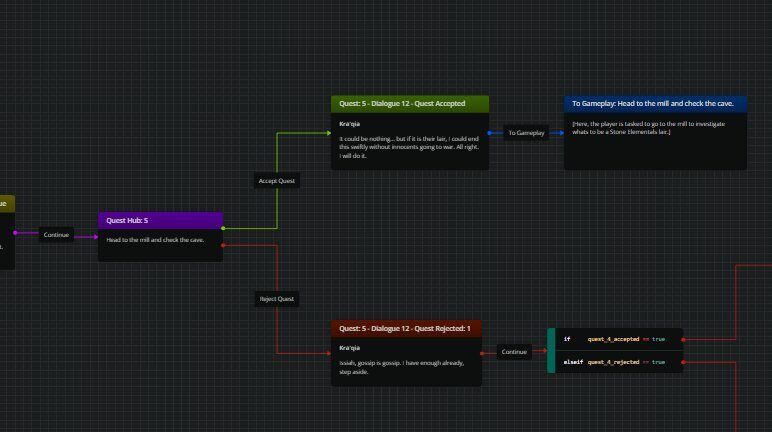
Preview Arcweave Prototype...
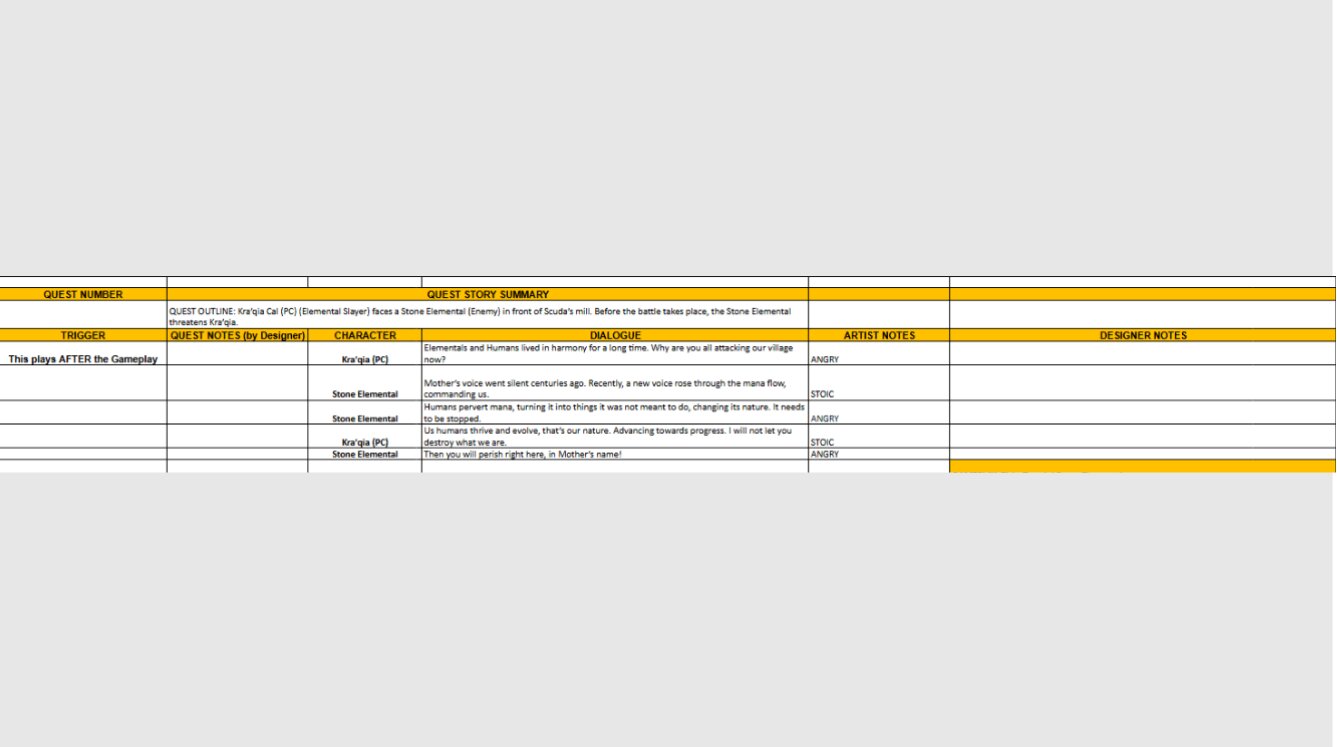
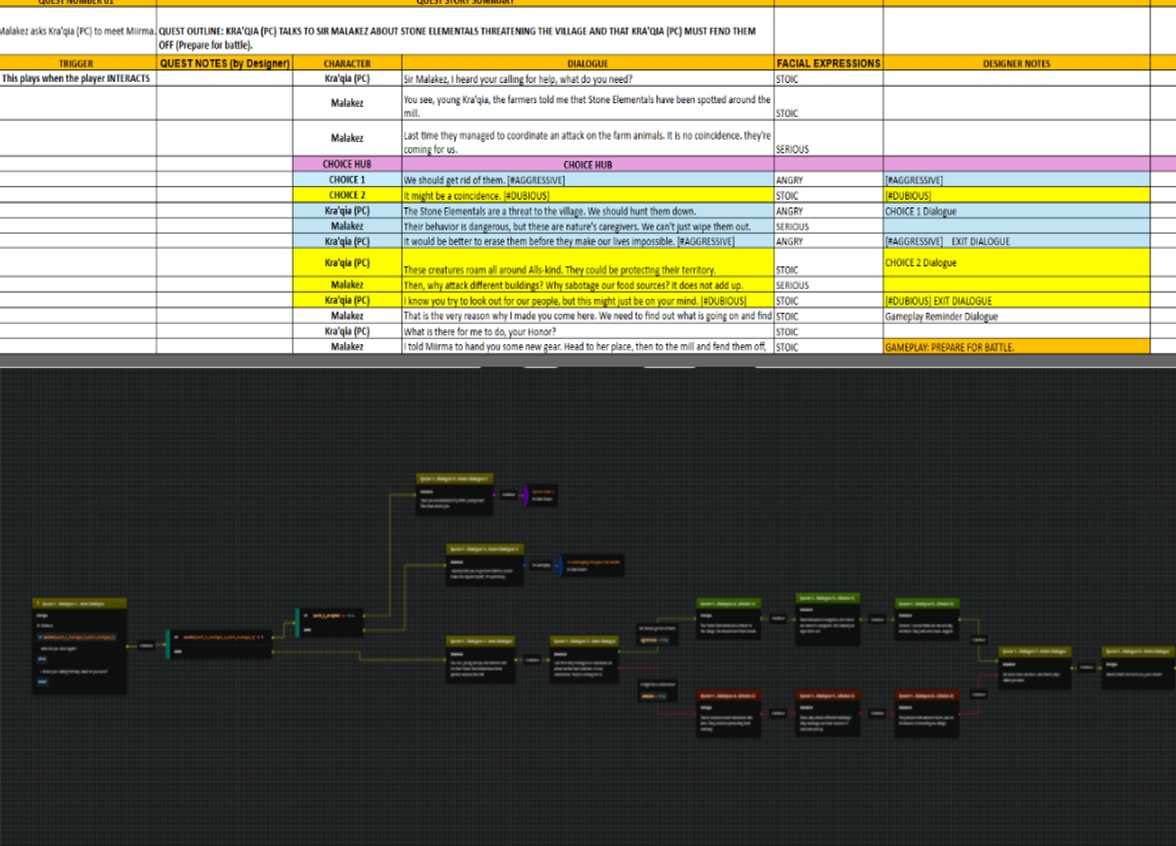
Designed Quest Branching Dialogue
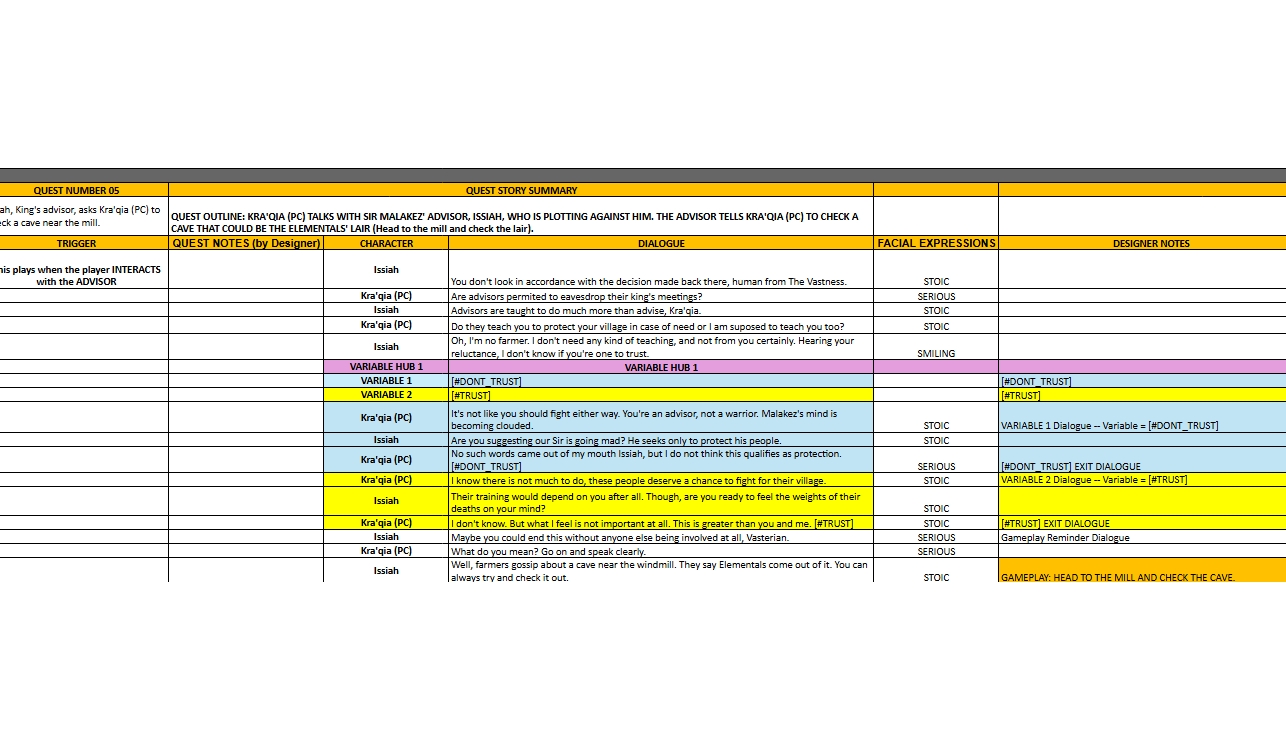
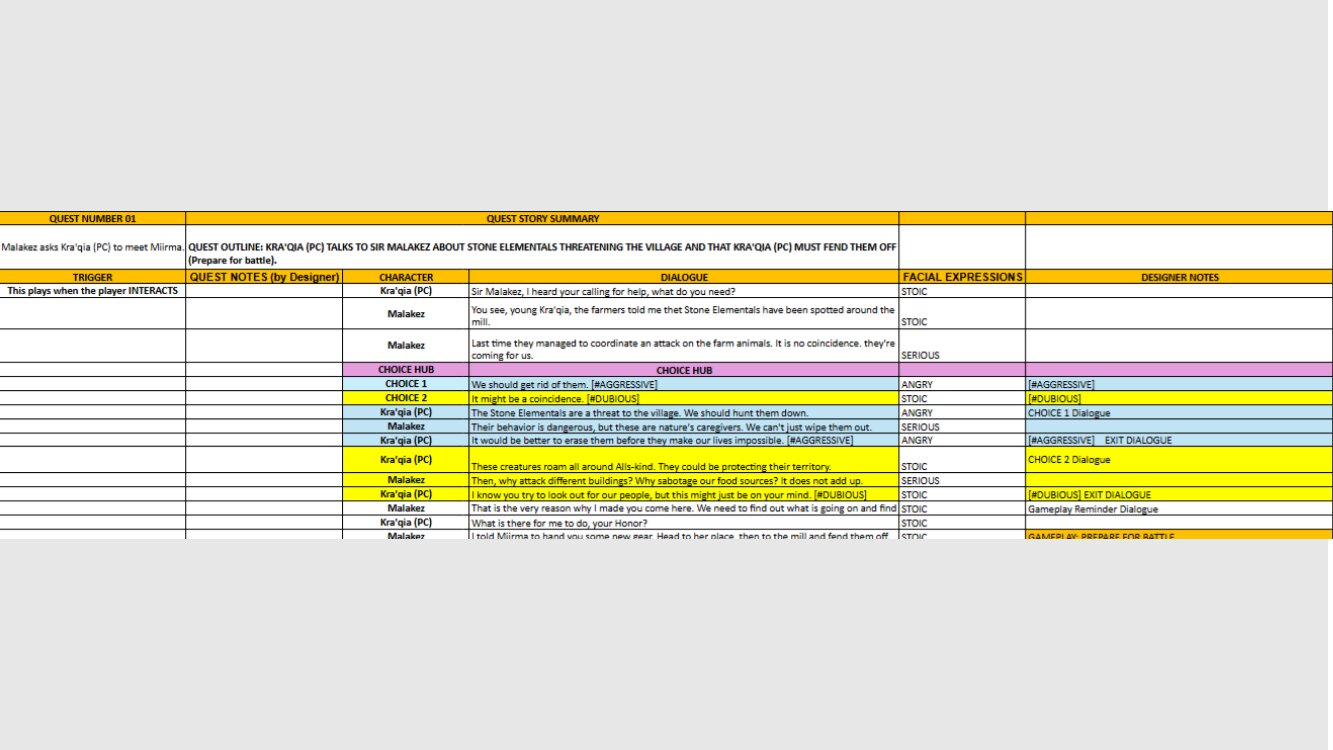
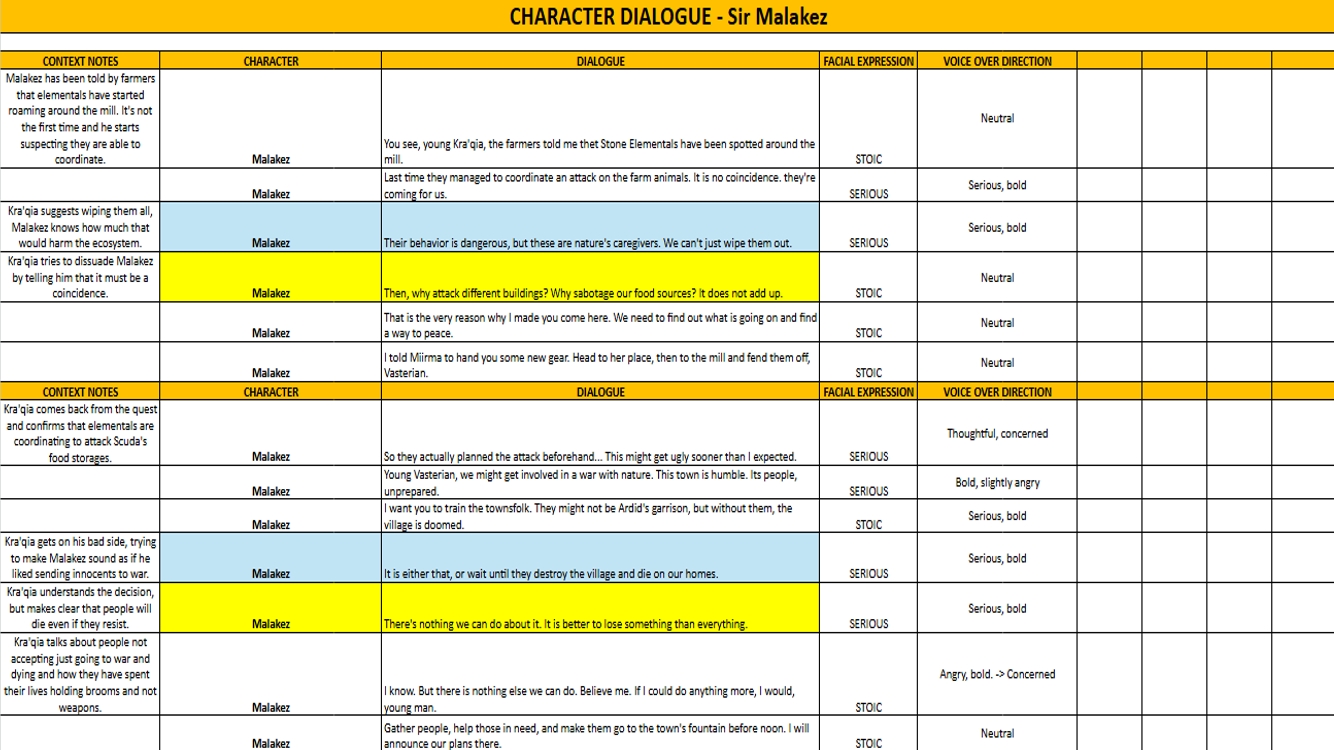
Designed a branching dialogue set in the village of Scuda, following a certain number of constraints:
New world – The player needs to be introduced to a magic world in a way that feels natural and understandable.Â
Expression and roleplay – Designed a quest hub to allow the player to get involved in the story.
Minimum lore dump – To prevent players from losing the thread of the story.
Executed the choice design with the following themes:
A ruthless world: Difficult decisions made in desperate situations, with one’s back against the wall.
Humanised responses: Facing adversities through the eyes of a regular human for the player to empathise and project itself.
Otherworldly influence: Emphasise mystery through powerful beings who pull the strings behind the scenes.
Created a clickable branching dialogue text prototype in Arcweave to simulate the dialogue in the context of narrative flow.
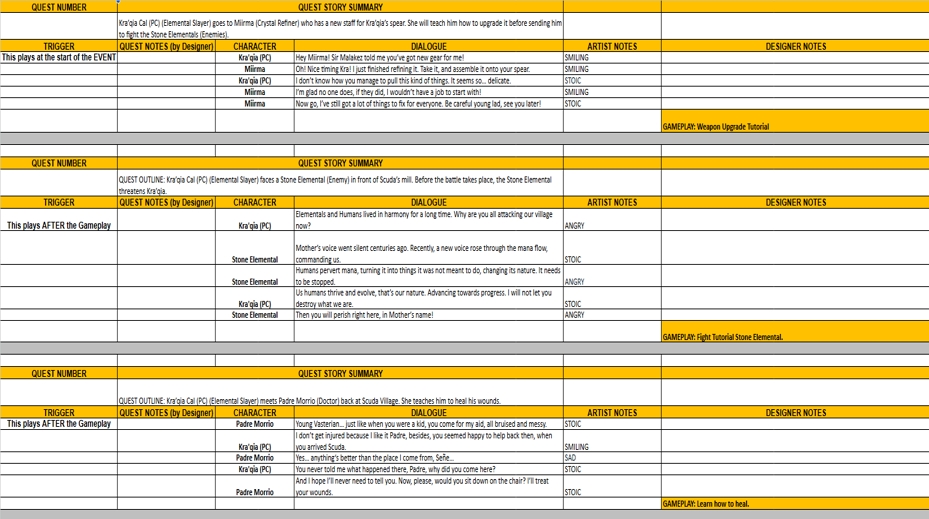
Linear Dialogue - Thought Process
Achieved the following writing goals with linear dialog:
- Clear relations – Directly highlight the relationship between the NPCs and the main character.
- Character traits – Show and clarify the distinct personalities of each character individually.
- Quests – Make the player’s objectives clear both implicitly and explicitly.
Character Design & Barks
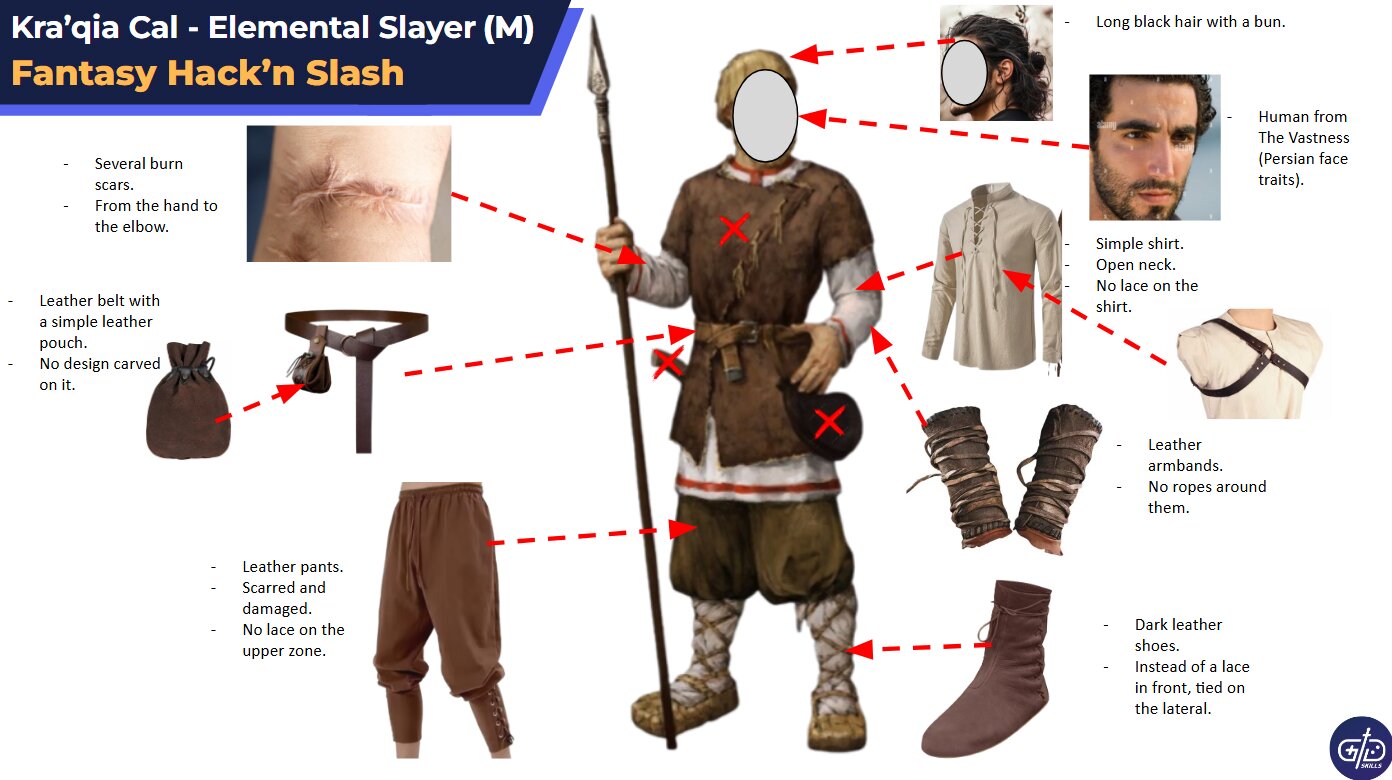
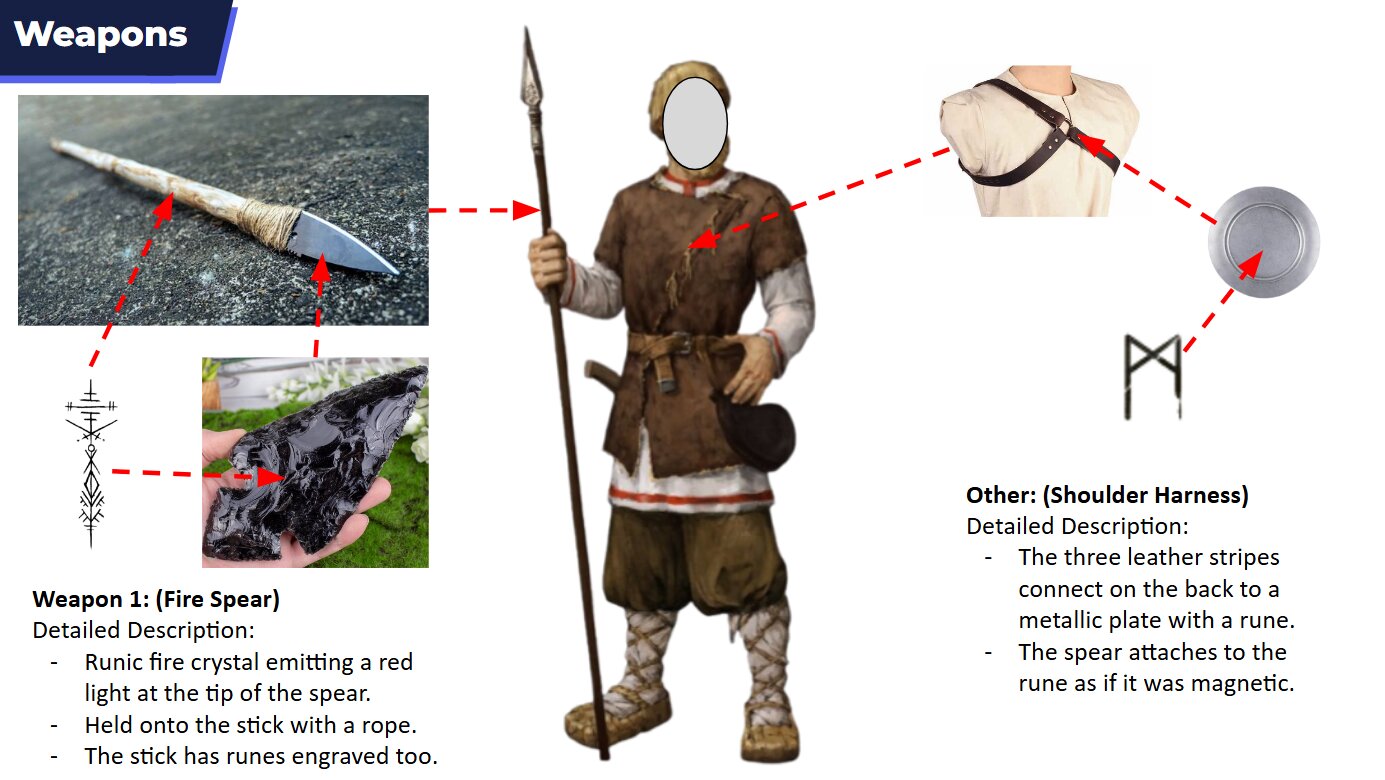
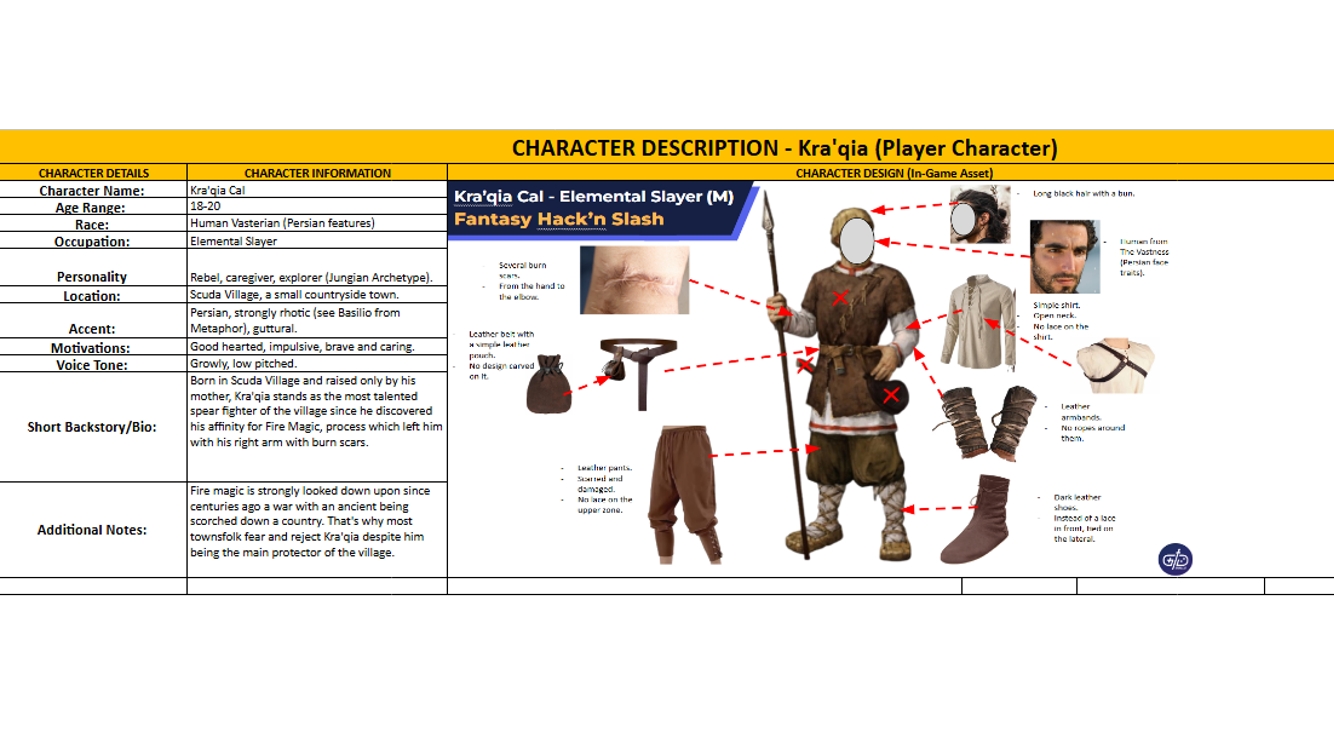
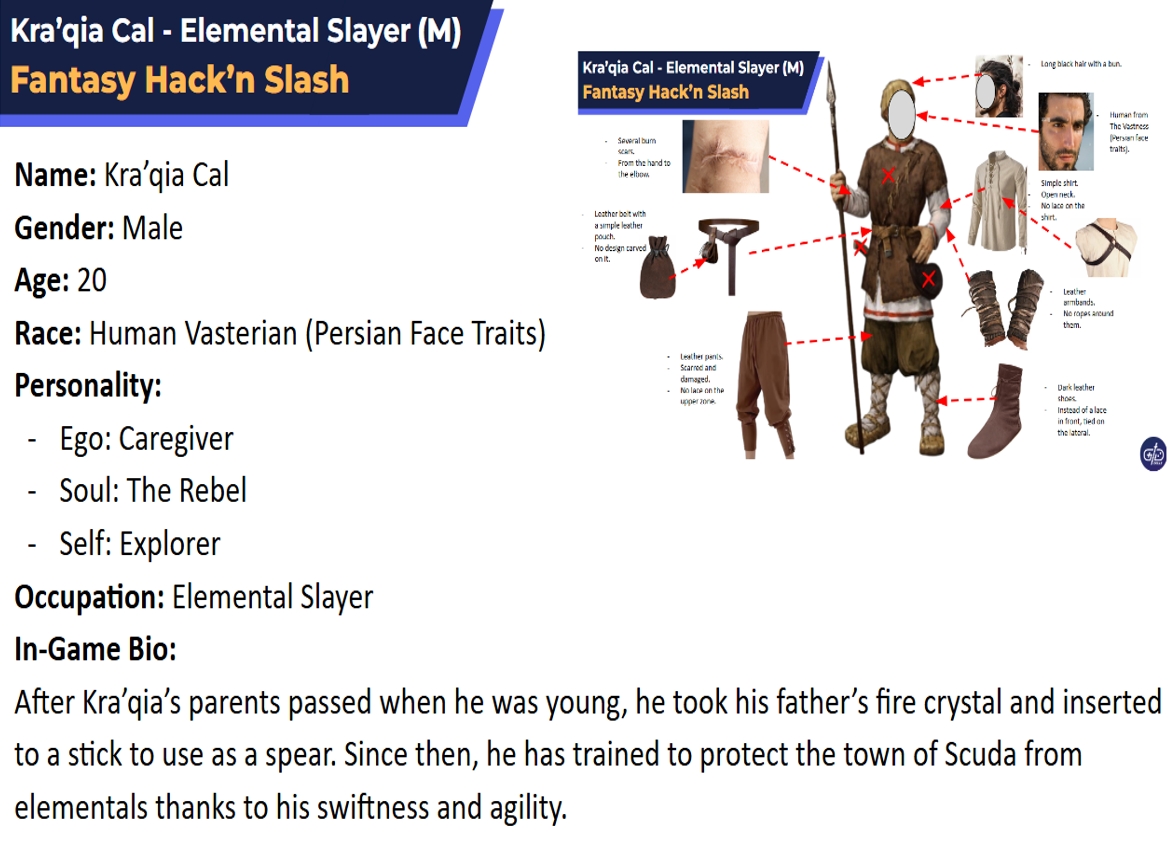
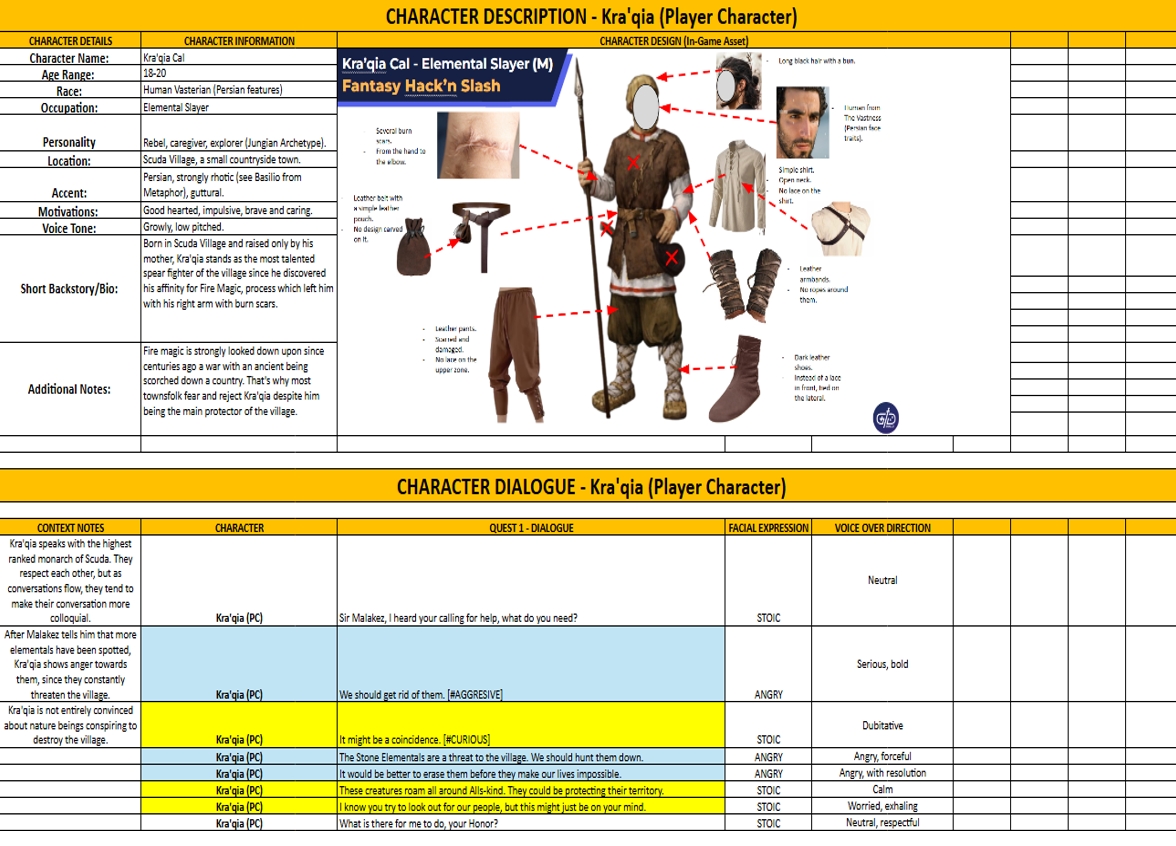
Player Character: Kra'qia Cal
Designed a player character with strong motivations and responsibilities that help drive the plot forward.
- It has been researched and designed to match the game’s theme and time period.
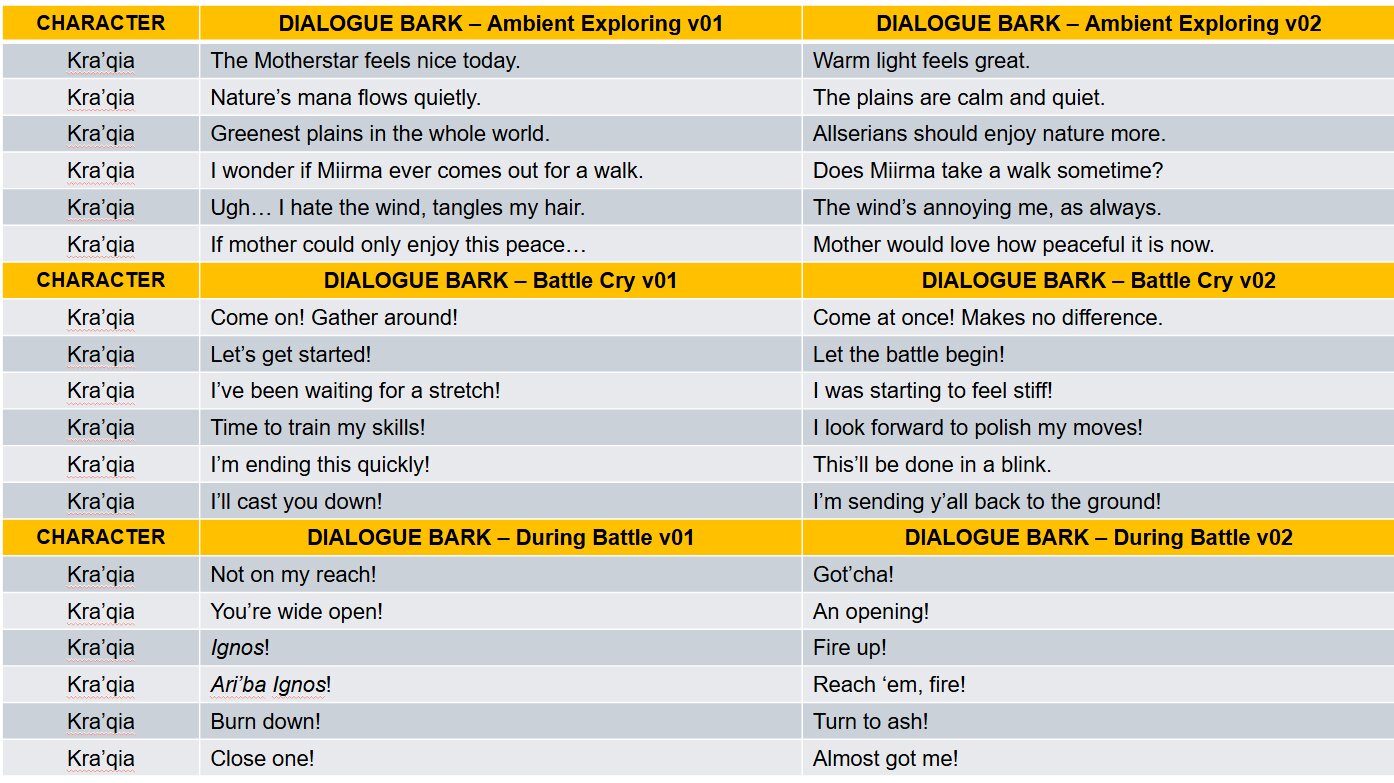
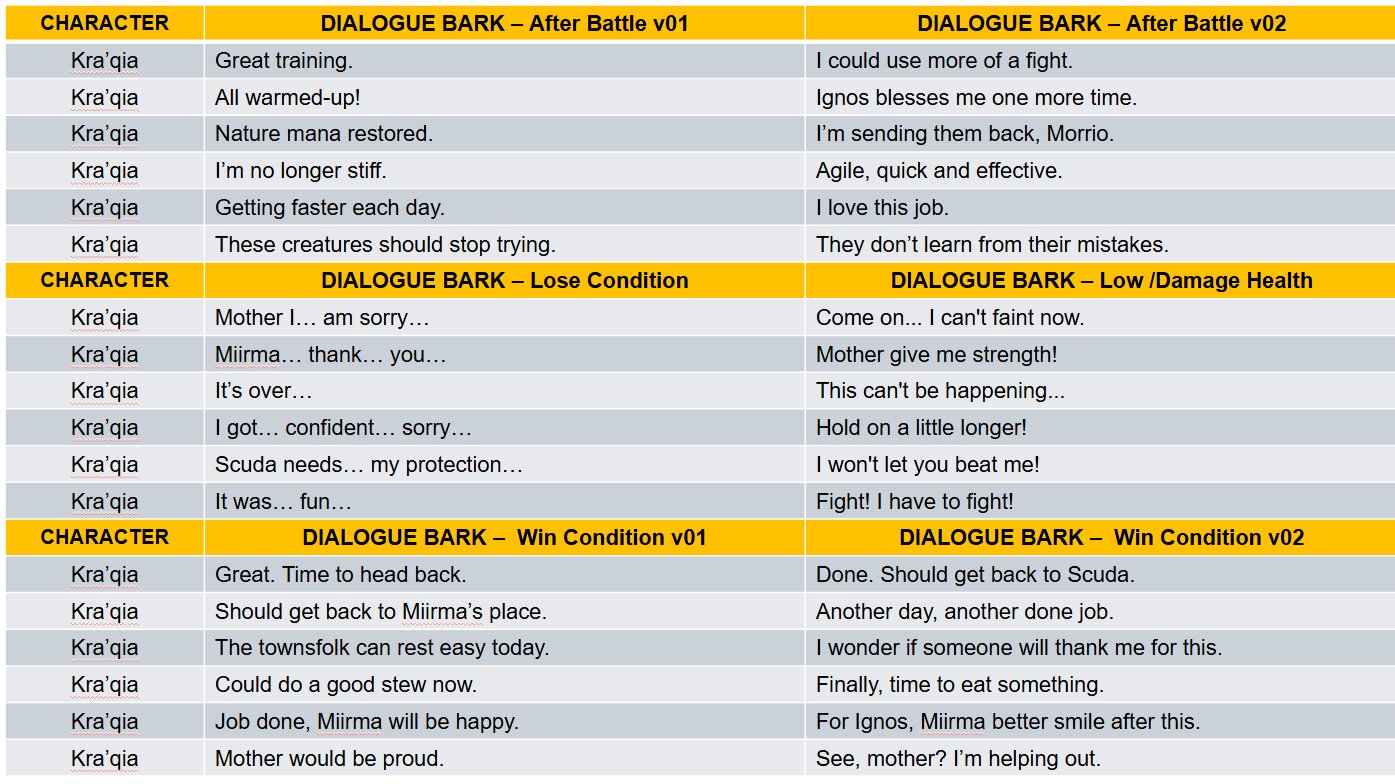
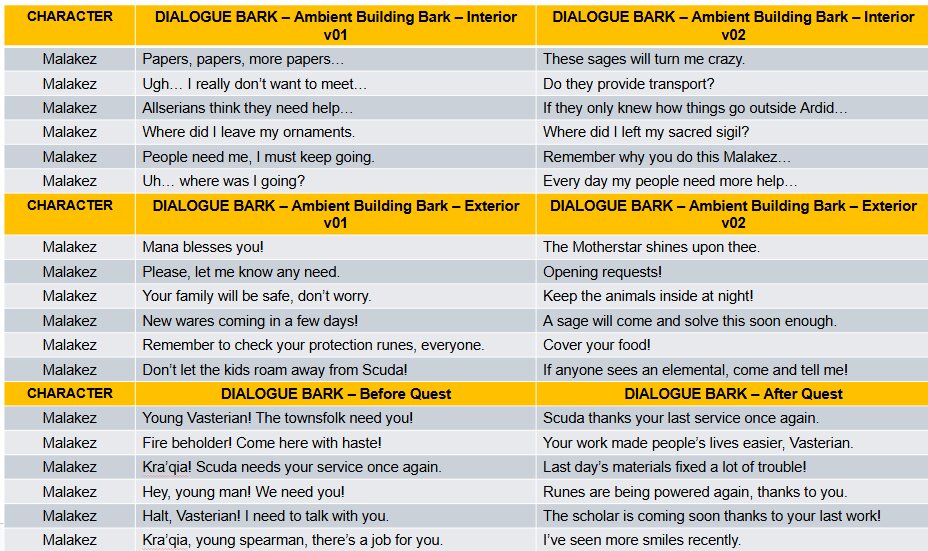
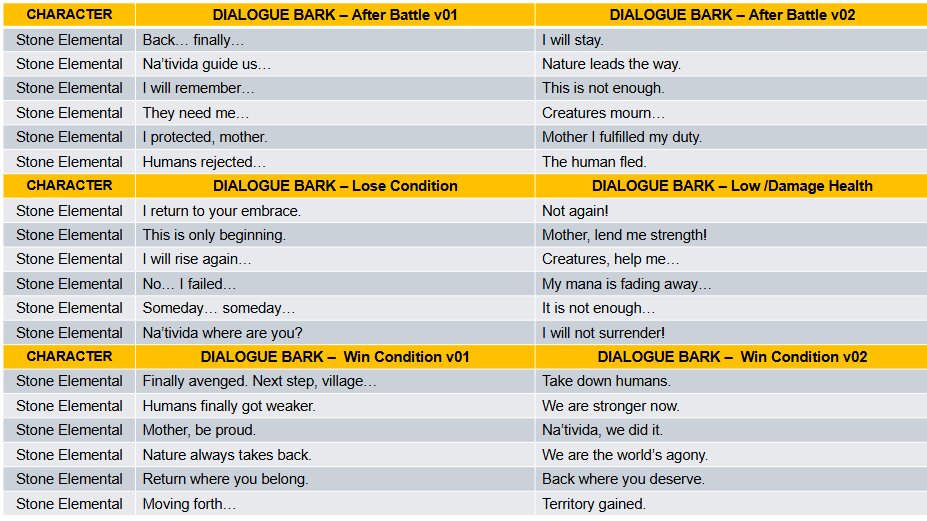
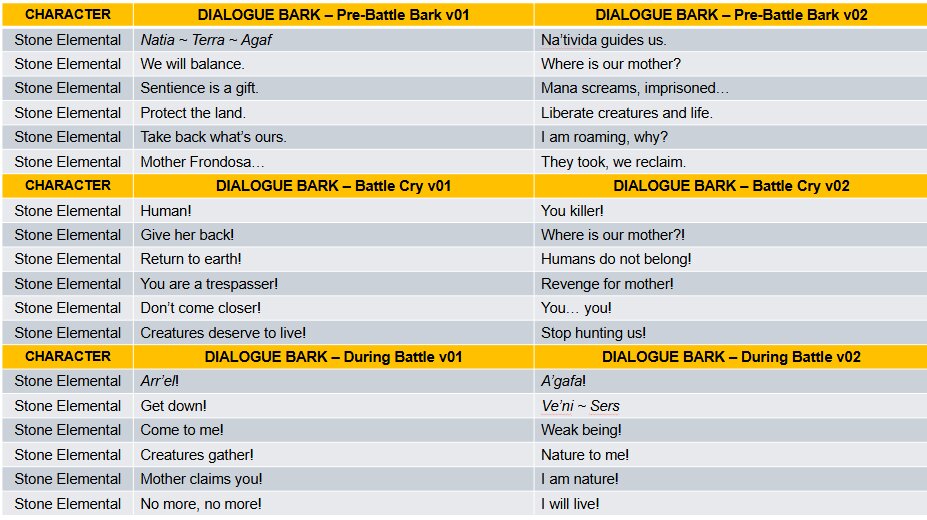
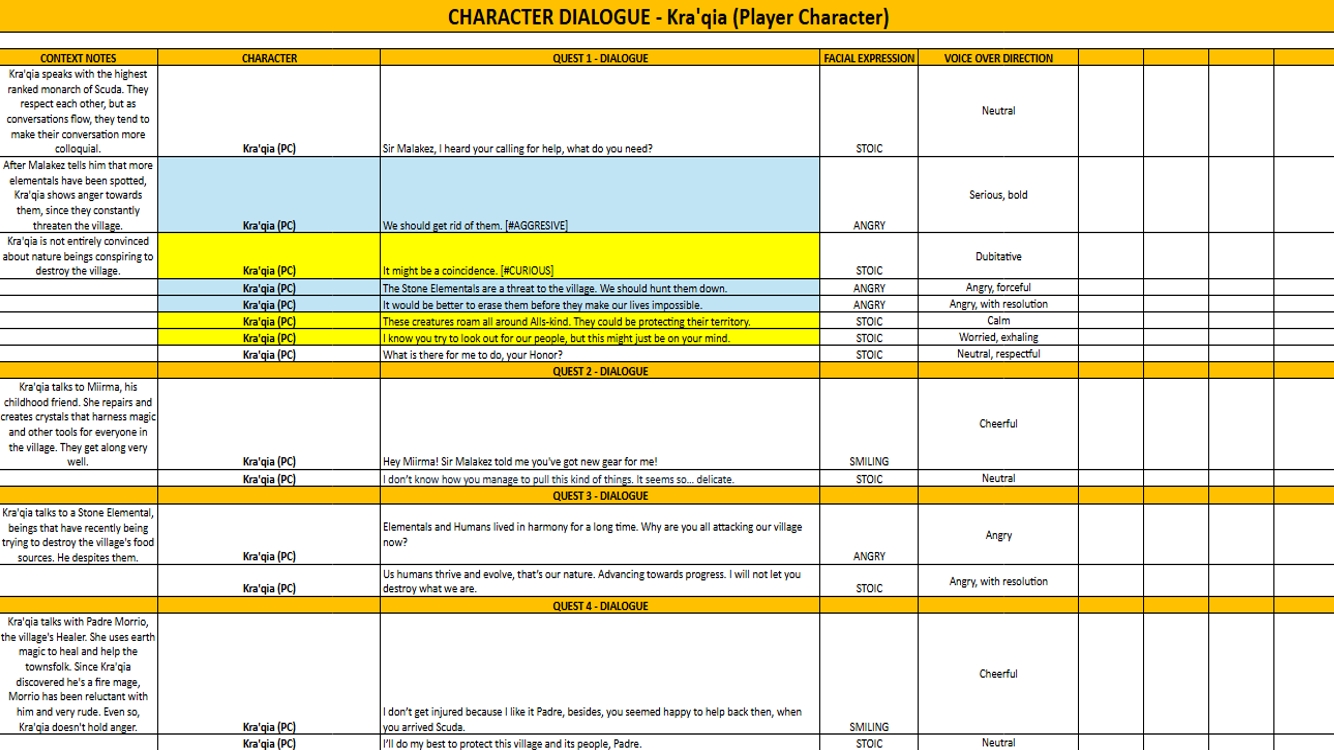
- Designed barks to reflect the characters’ personality, with the aim of enhancing the gameplay.
Created it as an outcast to allow the player to form an emotional connection with him, thereby reinforcing the narrative in the following chapters.
- Represents ordinary citizens making it relatable for the player and easier to form a connection with it as it acts as an audience surrogate.
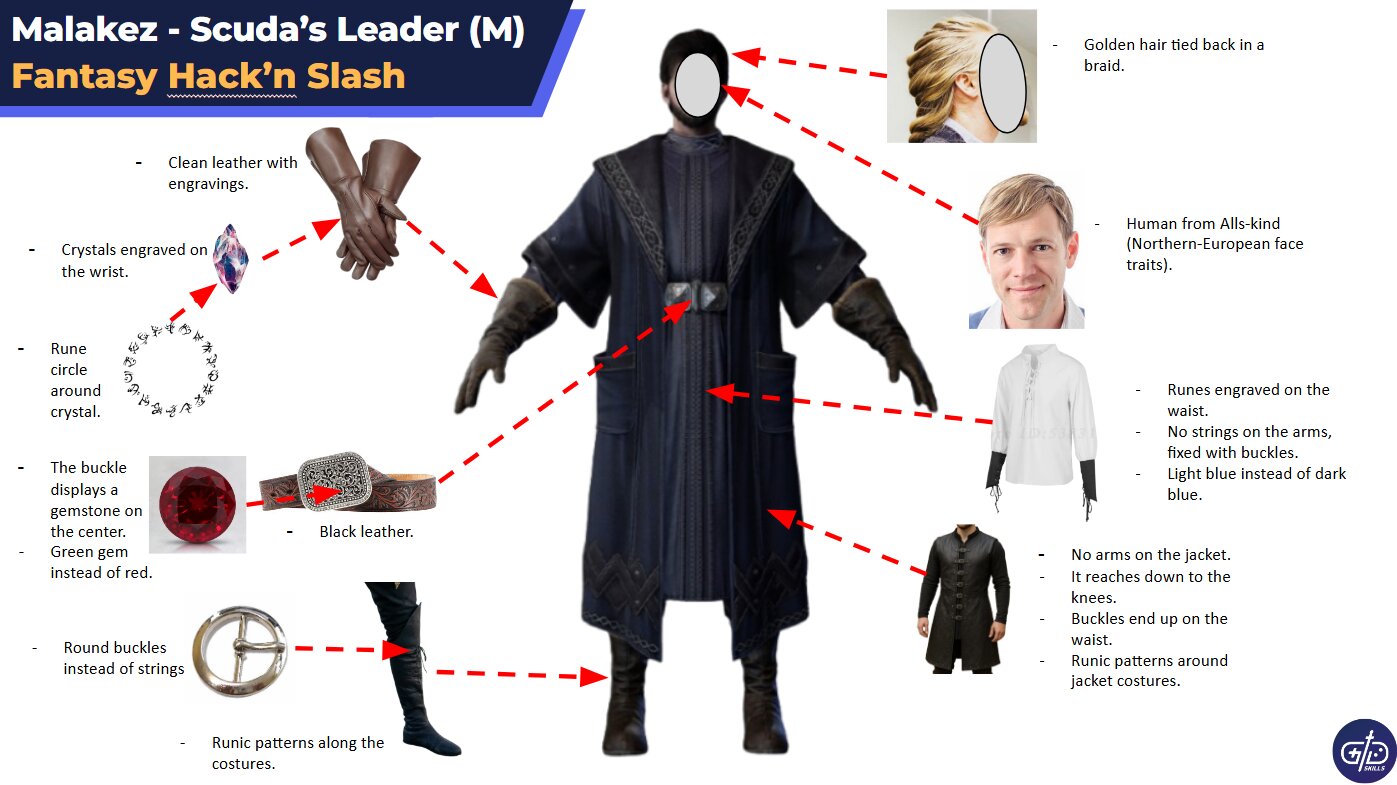
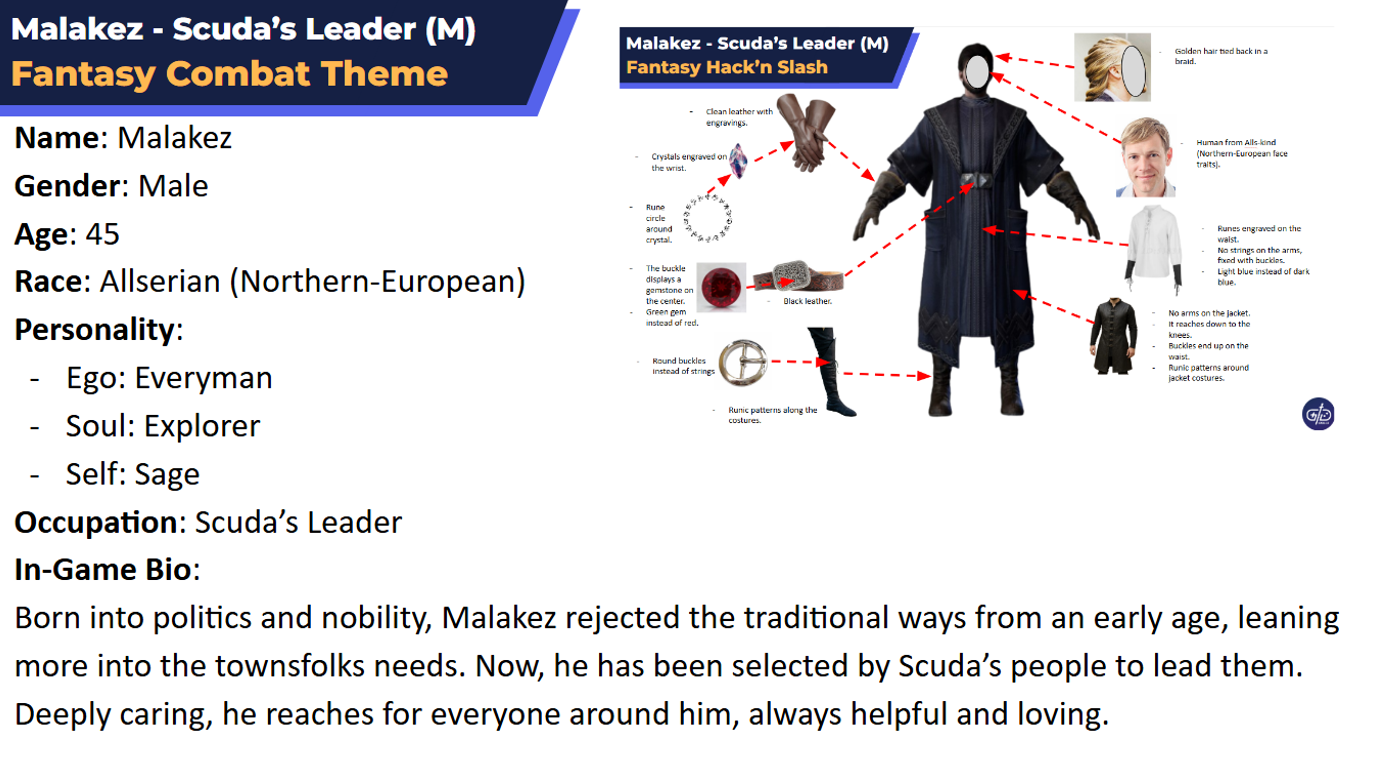
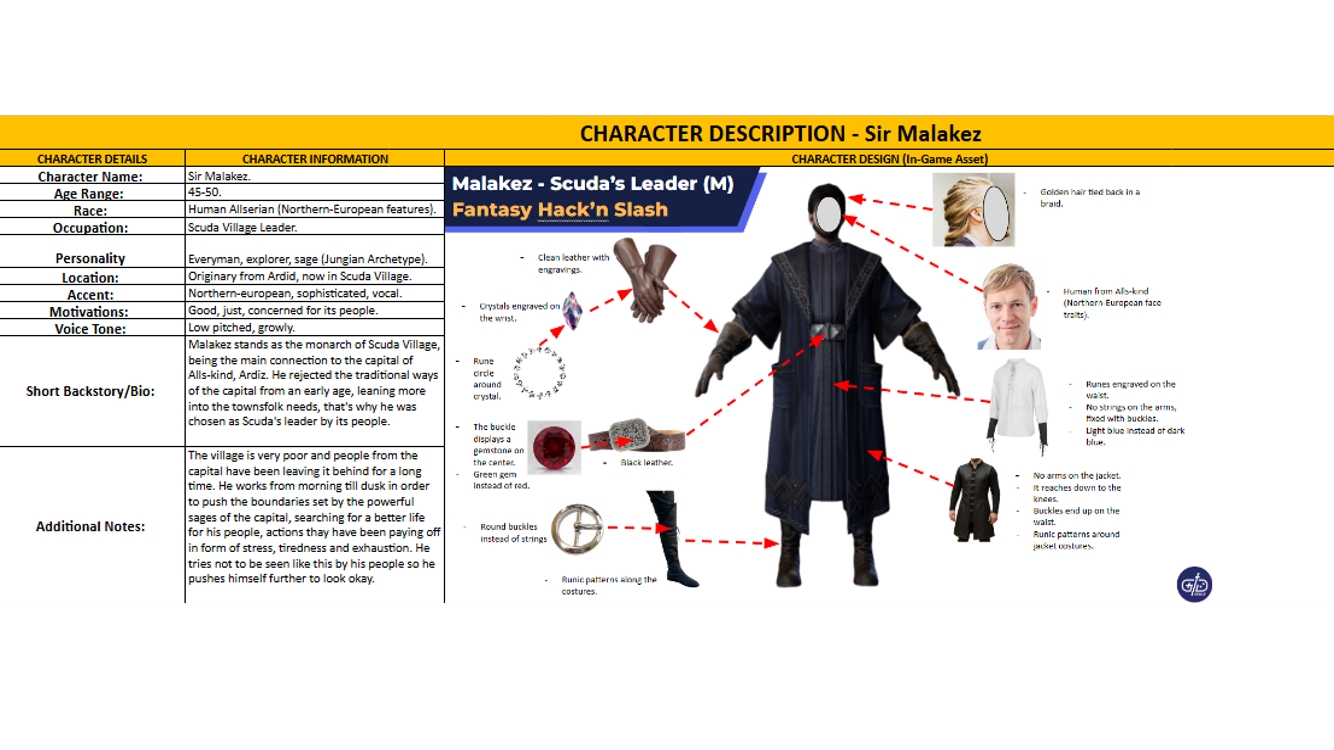
Ally NPC: Malakez
Malakez has been designed to provide the main character a “father figure” to look after.
- Creating a noble who seeks the well-being of their people helps the player establish themselves as trustworthy for later choices.
- Main quests giver, being the only noble on the town makes it easy to spot.
The relationship with the main character mirrors a “father-son”, with both characters lacking both. This allows for:
- A clear and relatable nexus between the characters.
- Setting up its later demise in order for the main character to grow and kick-off the adventure.
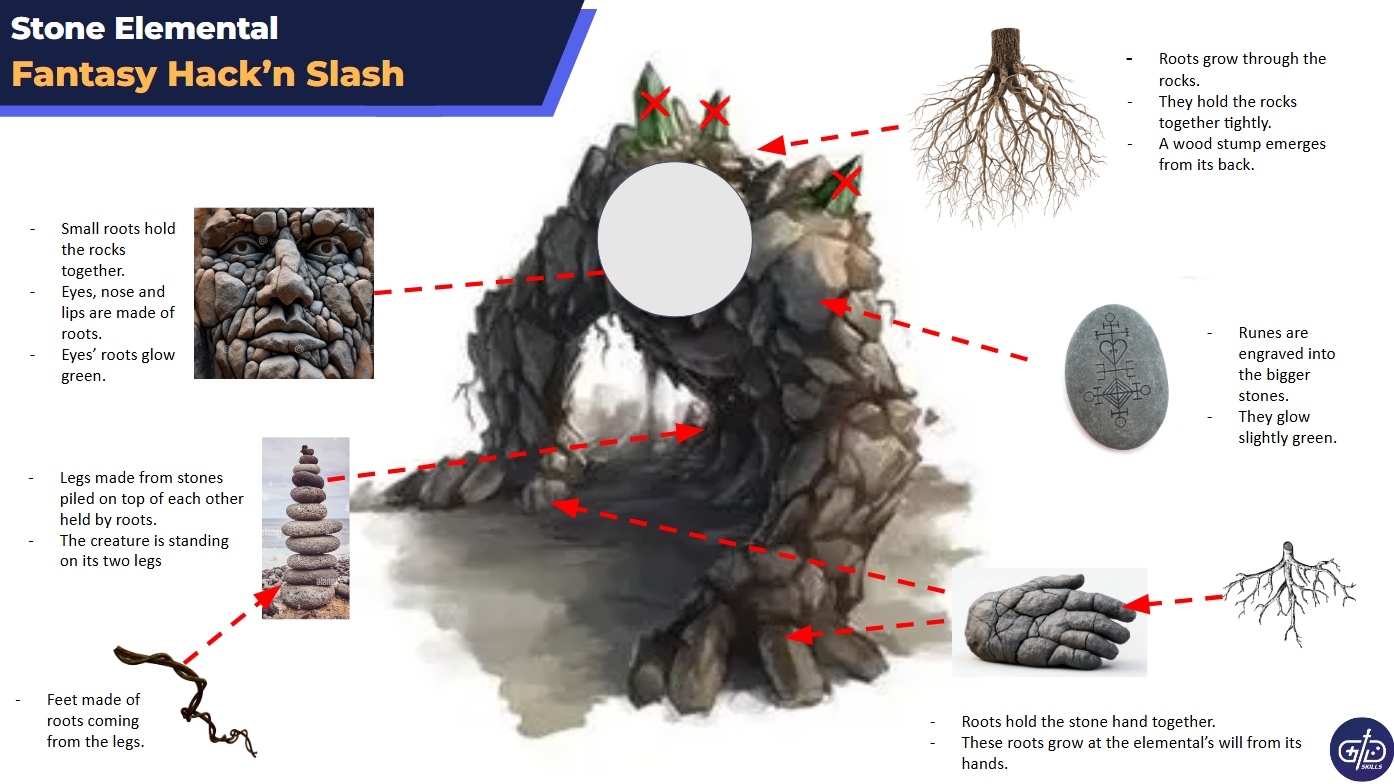
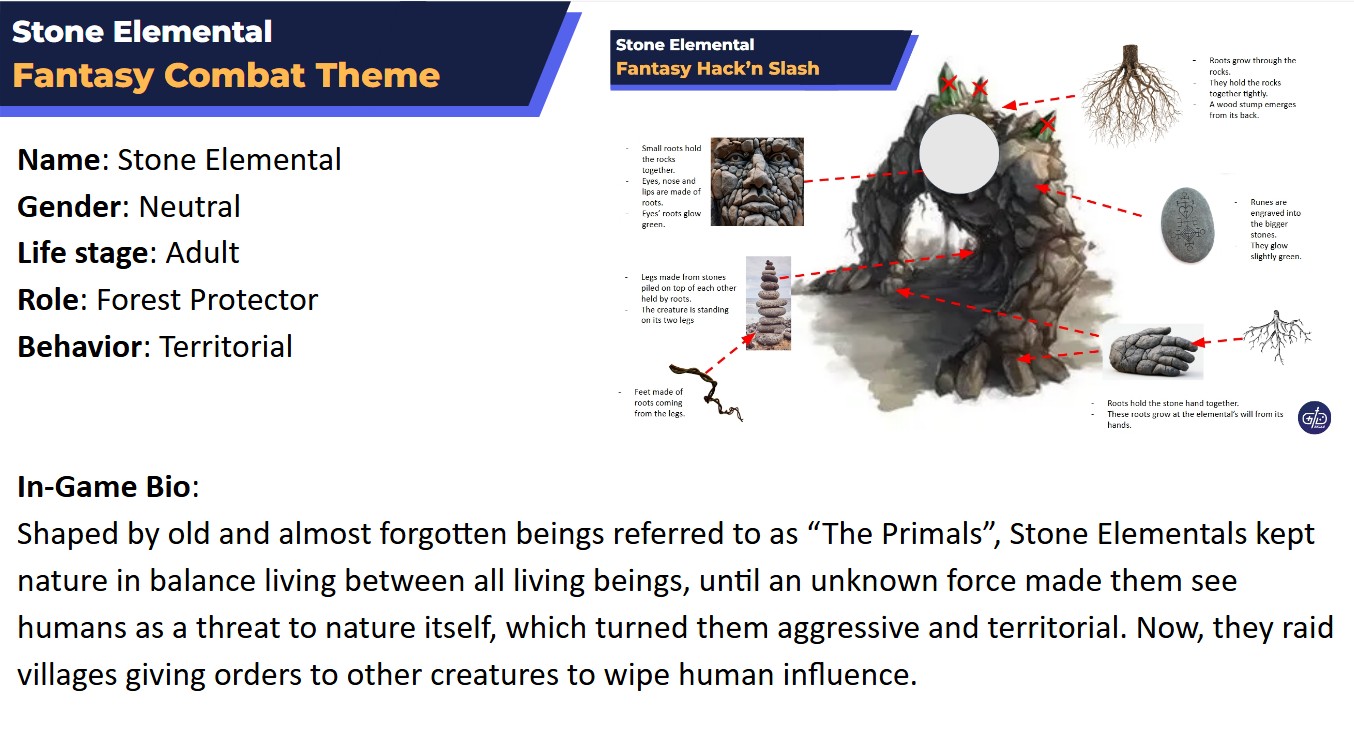
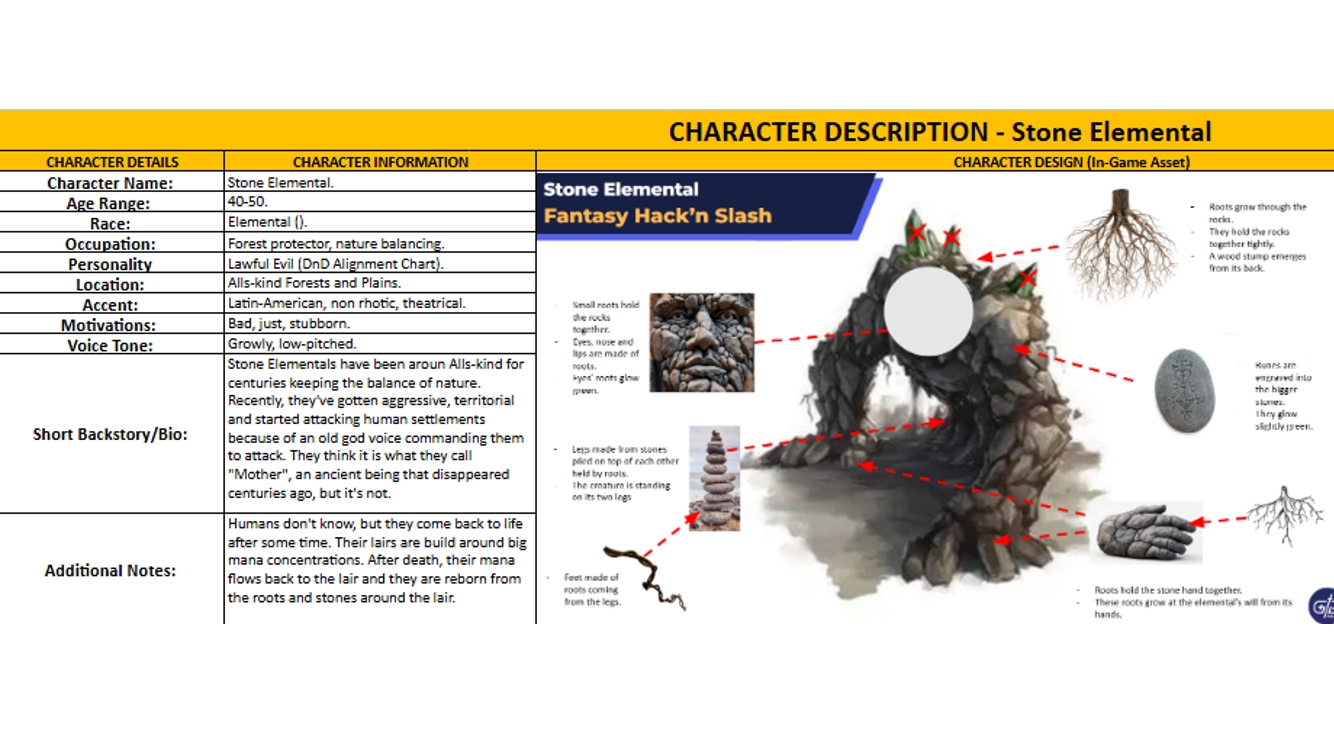
Enemy NPC: Stone Elemental
Designed an NPC who has been brainwashed into attacking humans, reinforcing the theme of ancient deities manipulating sentient beings, thus linking it to the player by
- Foreshadowing the deal the main character will make in the future with that same deity in exchange for power, power which will start the main conflict.
- The concept of the rank-and-file soldier, treating them as equals fighting on opposing sides, thereby reinforcing the role of the enemy.
- Protecting his land: the NPC is an aspect of nature itself who has simply become brainwashed into thinking that humans are trying to steal their lands, directly linking this to the main character, who is doing the same thing.
- Â
Storyboarding & Trailer Script Writing
Â
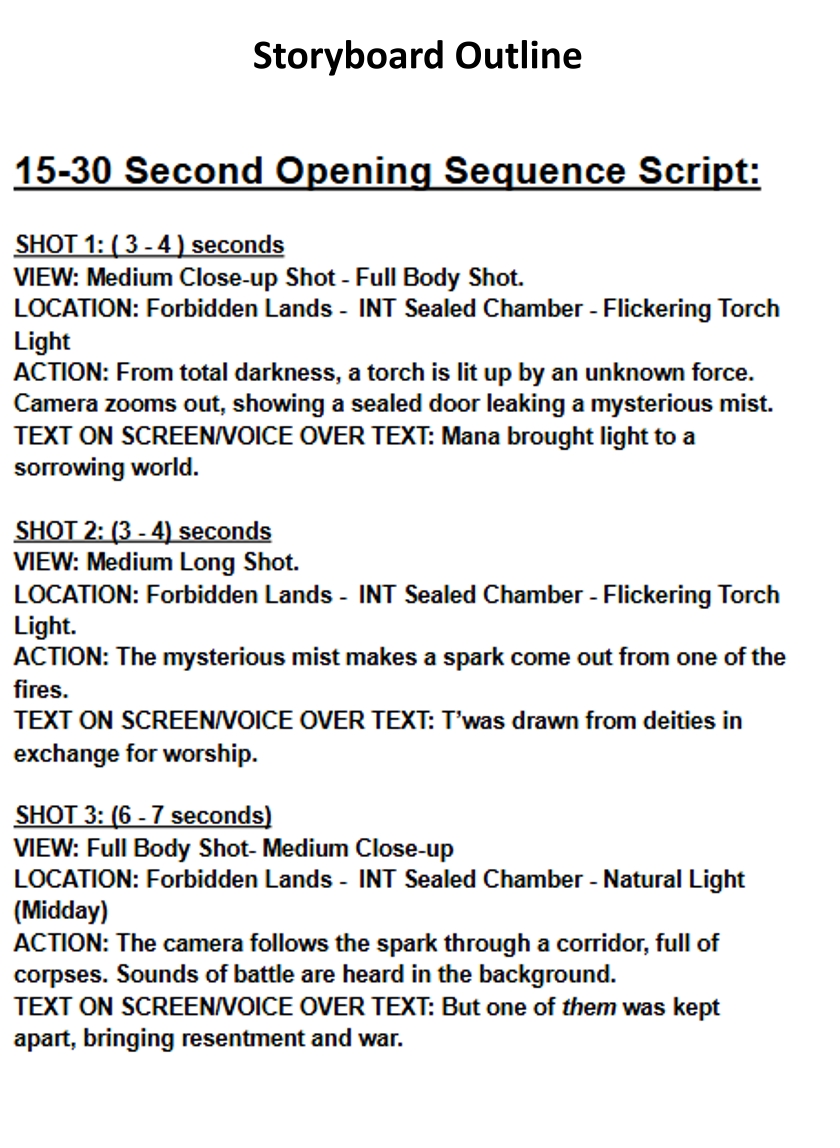
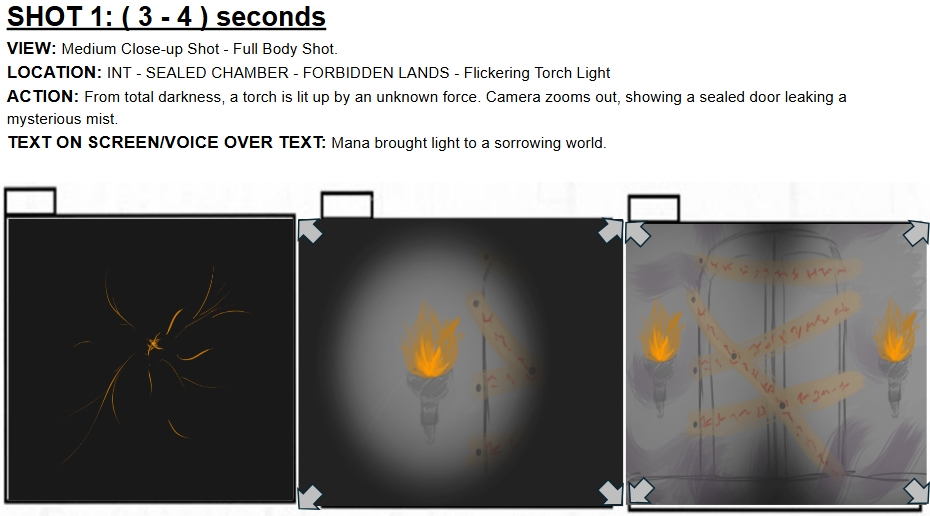
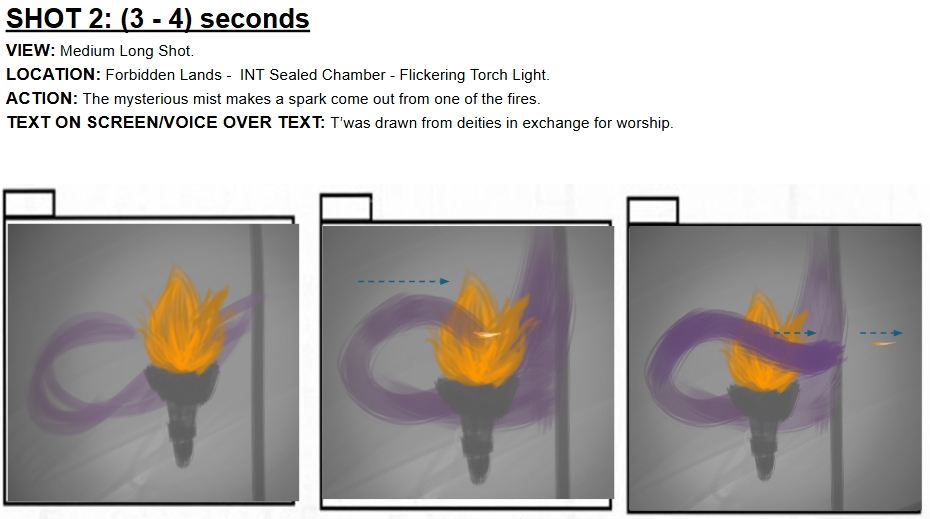
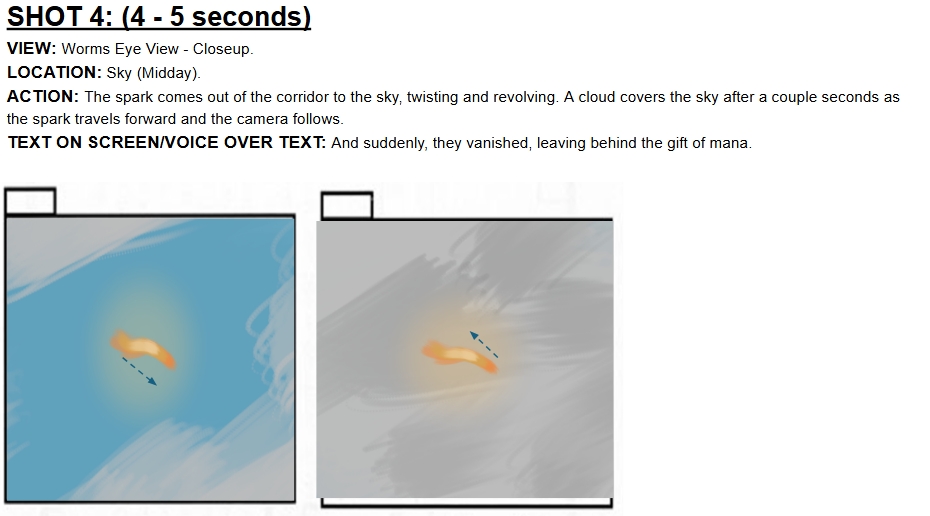
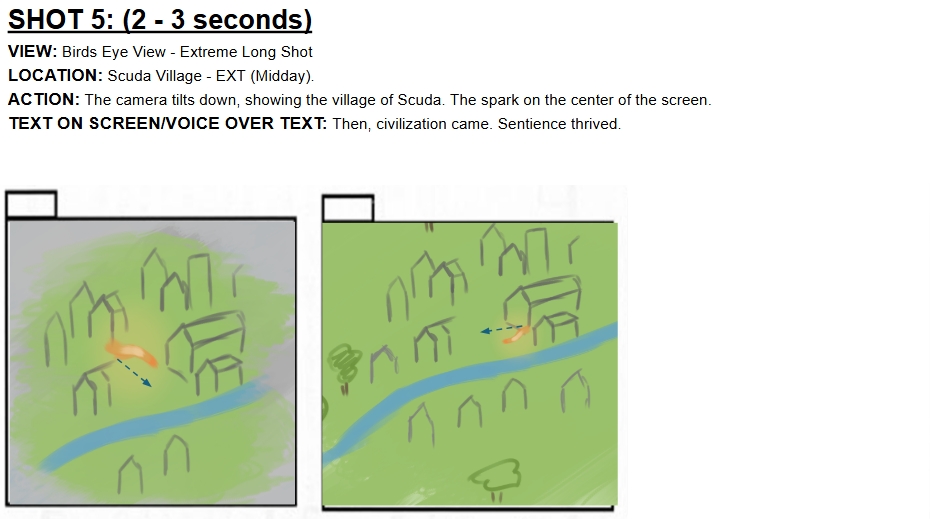
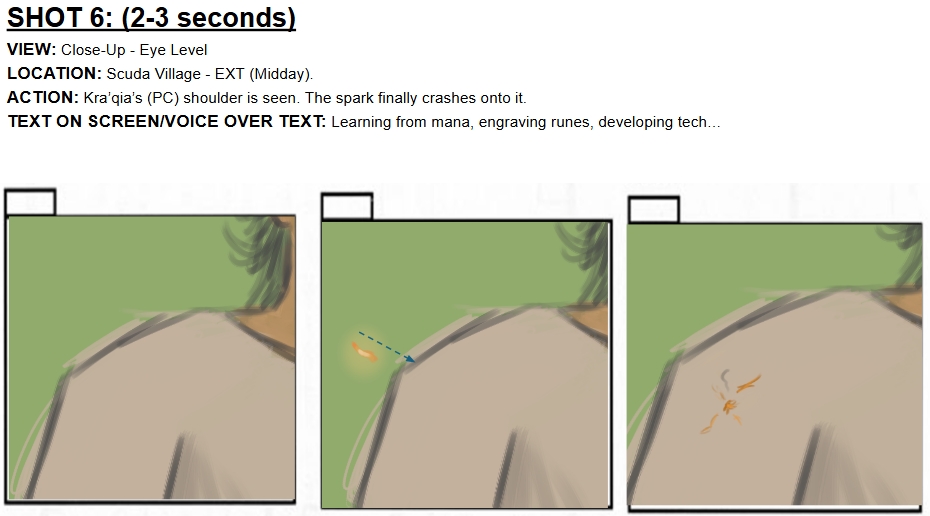
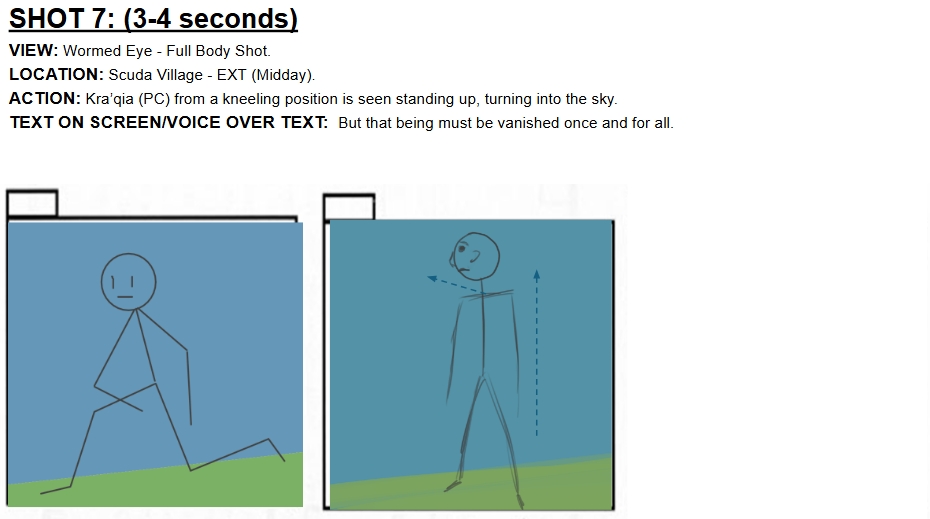
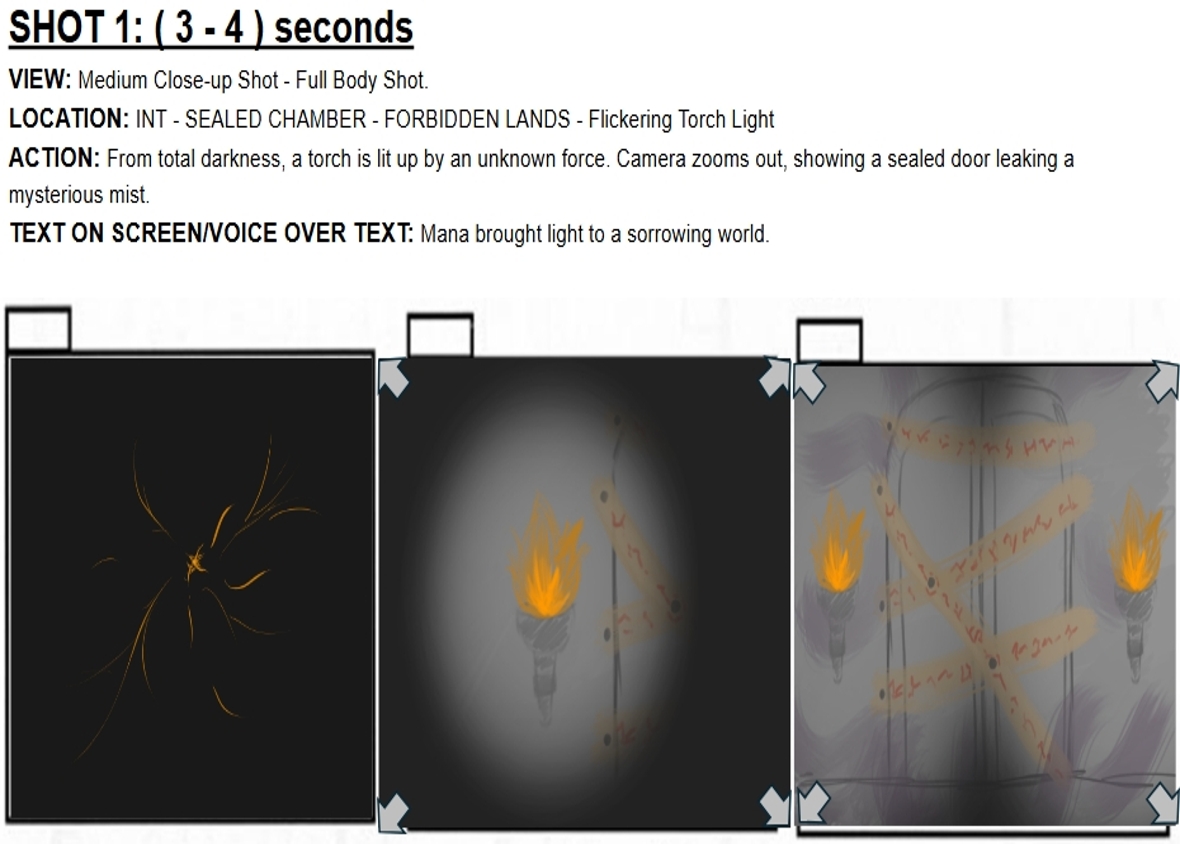
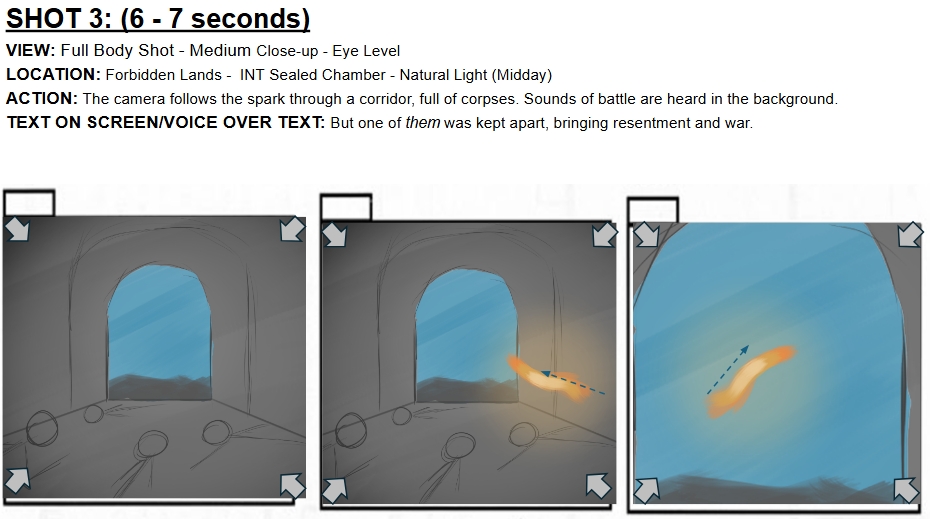
Wrote a storyboard script for the opening sequence of the game, and designed a preliminary storyboard to collaborate with the art and marketing teams, and get internal approvals:
- Defined the camera shots and illumination on every take for the cinematic and VFX teams.Â
- Took into account the environments, models, and scenarios to minimize the impact on the art team’s work.
- Narration explains the origins and the base of the by an obniscient narrator.
- The opening take, the third take, and the fifth take have been designed to be marketable.
- This prototyped helps the team to set the tone of the game, as well as to know the stakes that will be put upon the player.
Voice Over Documentation
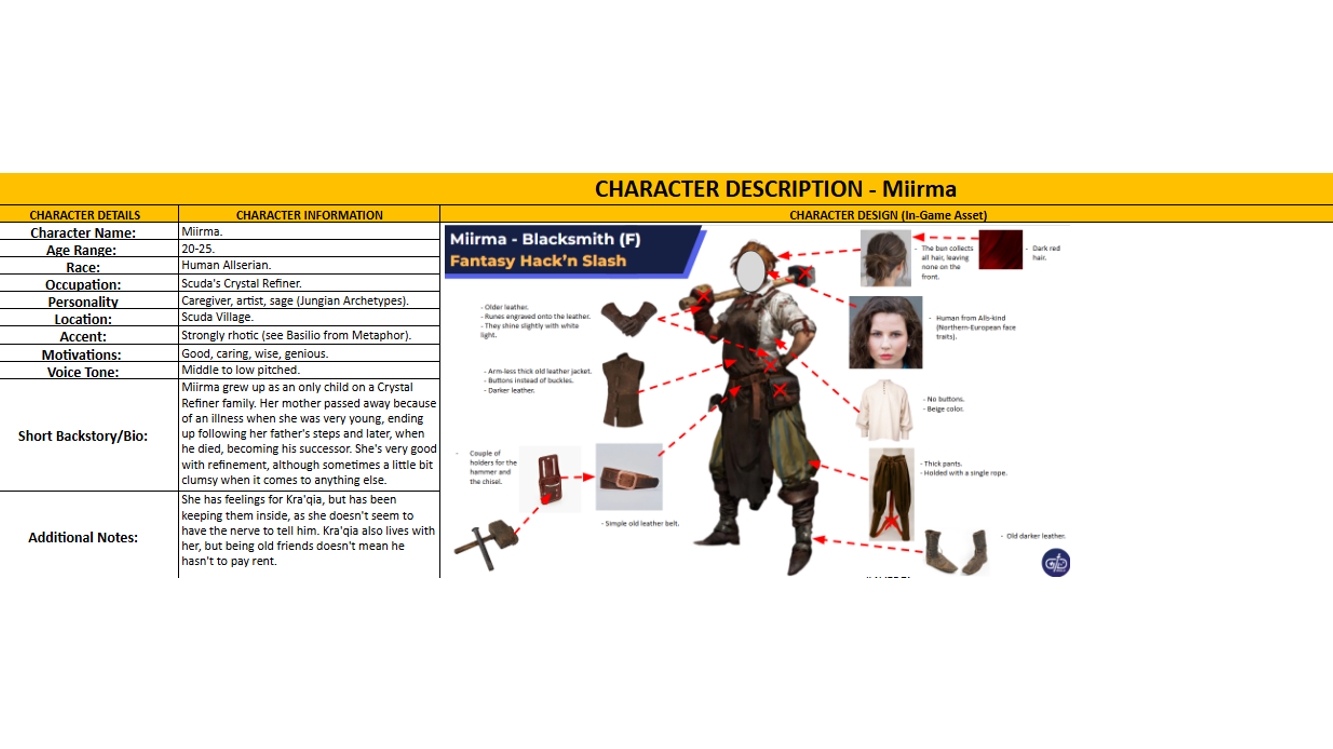
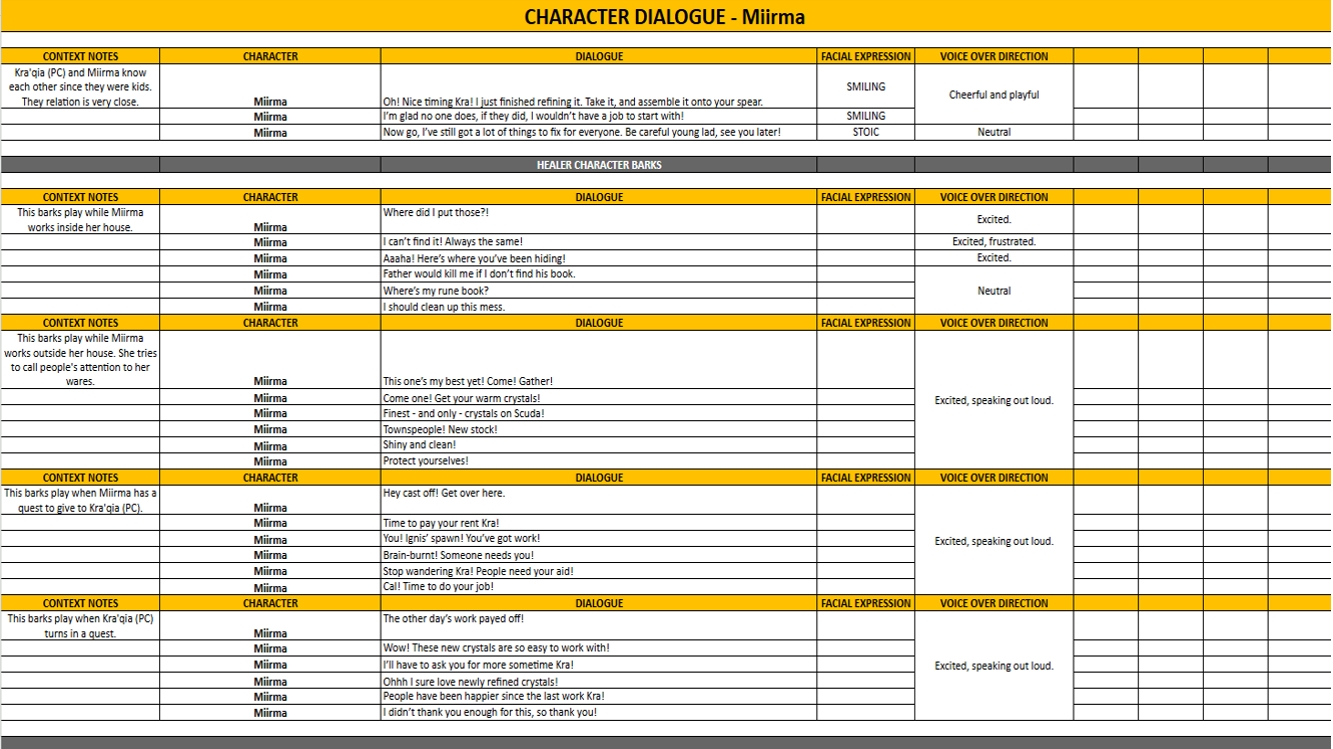
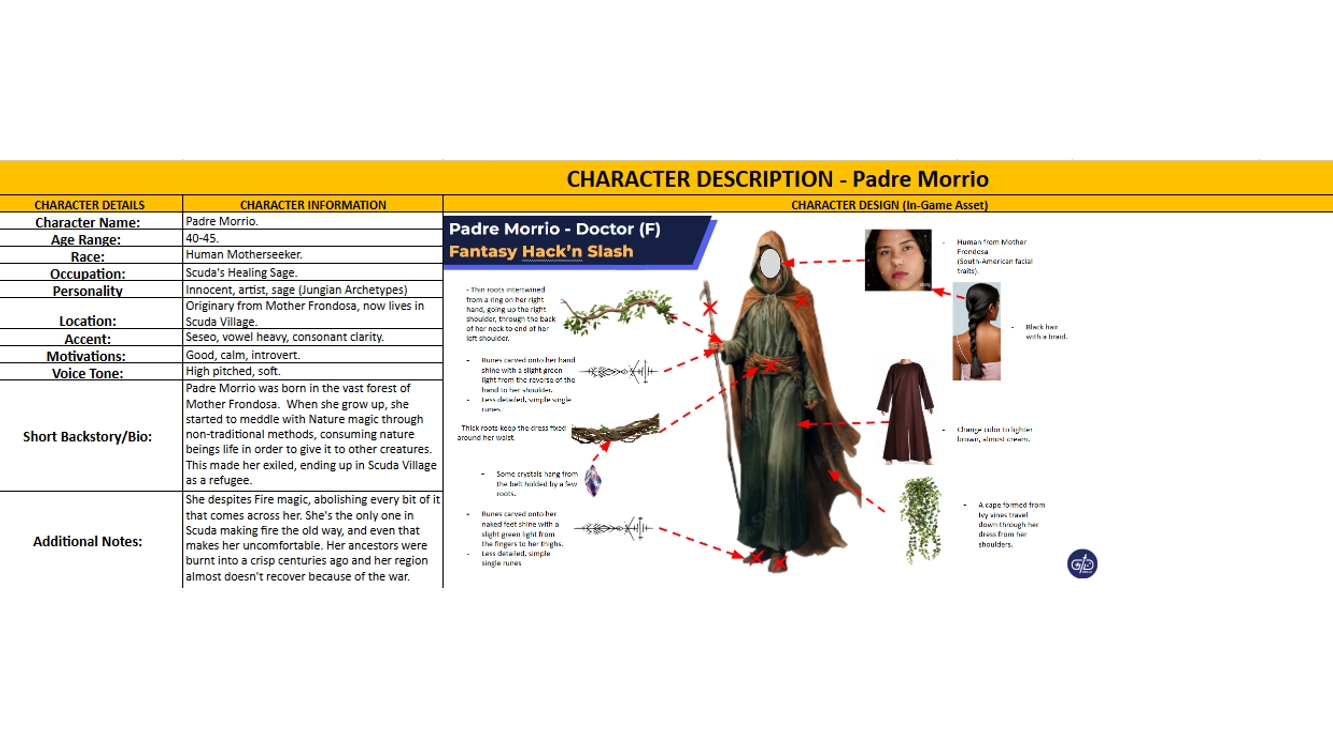
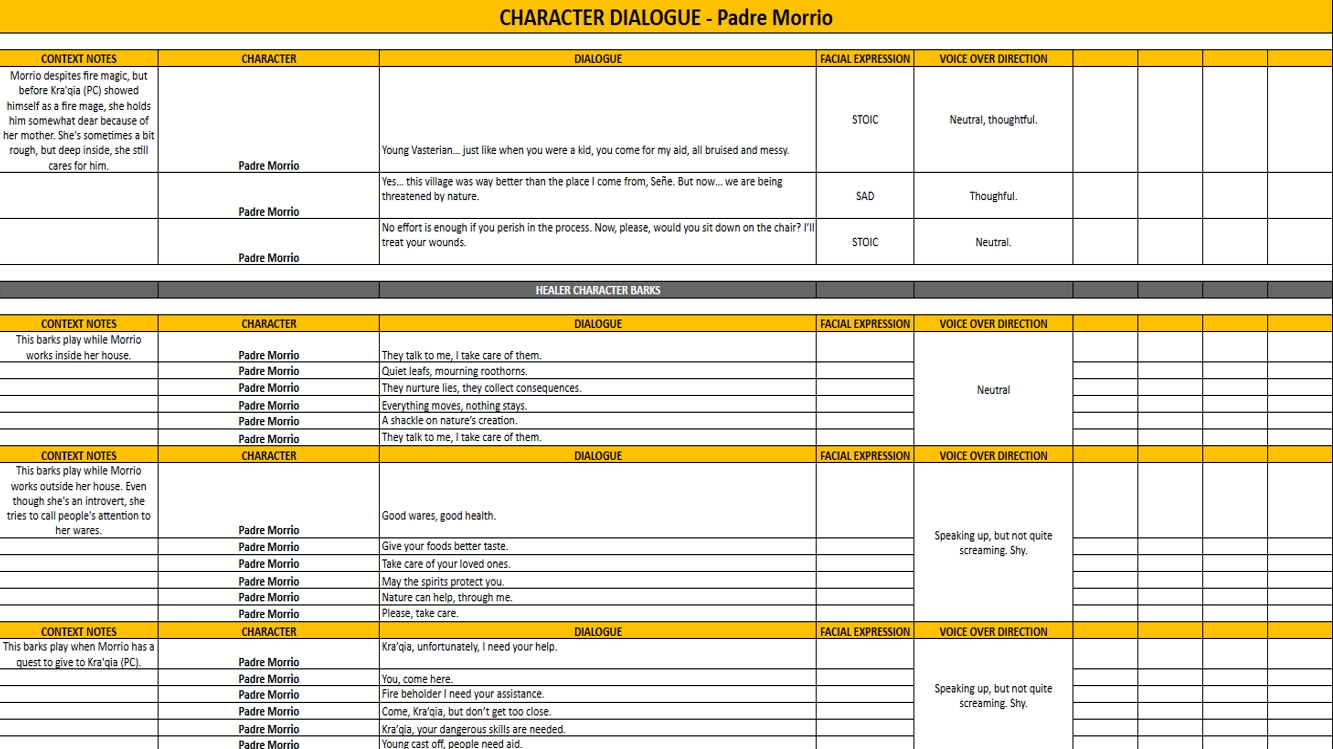
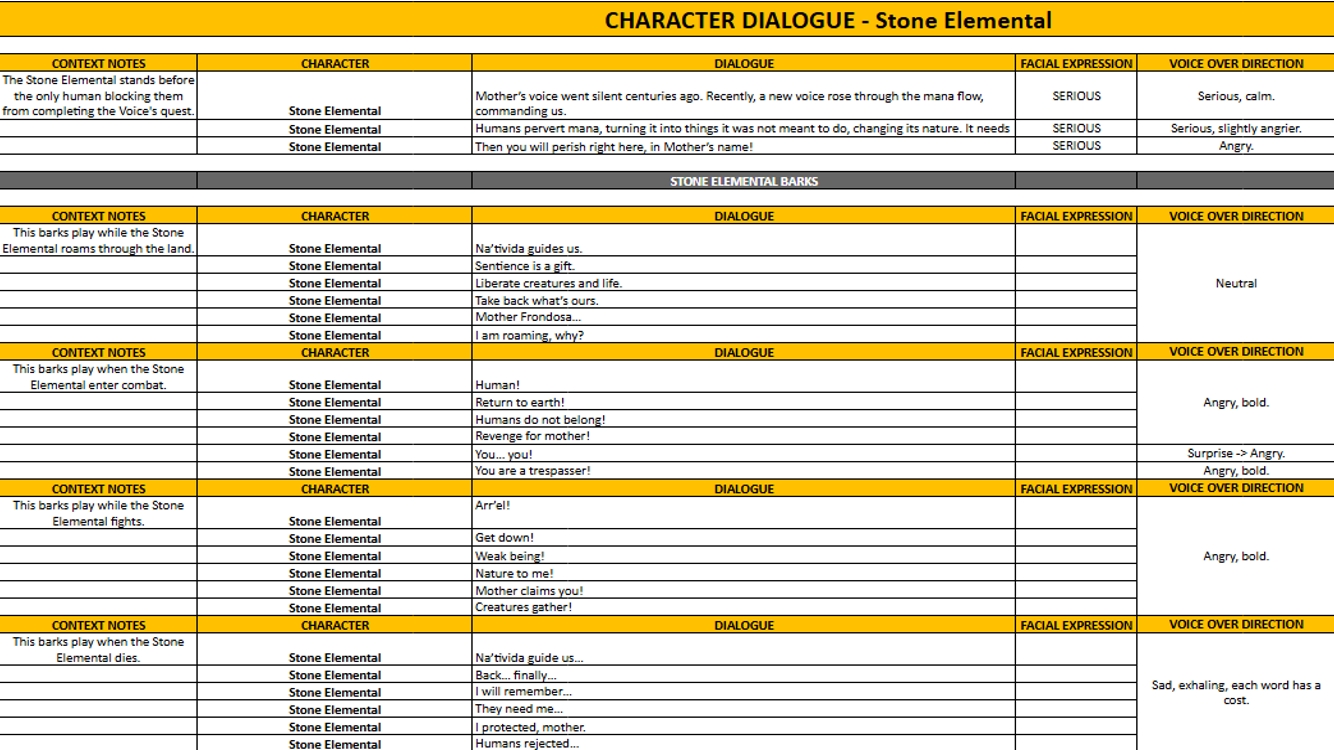
Created 5Â Voice Over Actor documents for the Player Character, Leader Character, Blacksmith Character, Doctor Character, and Enemy Character, respectively that provided detailed information to support the actor and provide faster and better voice recording sessions. Each document included:
- Character Design images, character bios, personality notes, motivations, and vocal directions for each characterÂ
- Dialogue, along with scene details and quest summaries to provide situational and mood context for the voice actor
- Compiled a Voice Over Actor Casting Document to help our team cast appropriate actors/actresses based on cultural, age, and gender requirements for the characters.
Worldbuilding
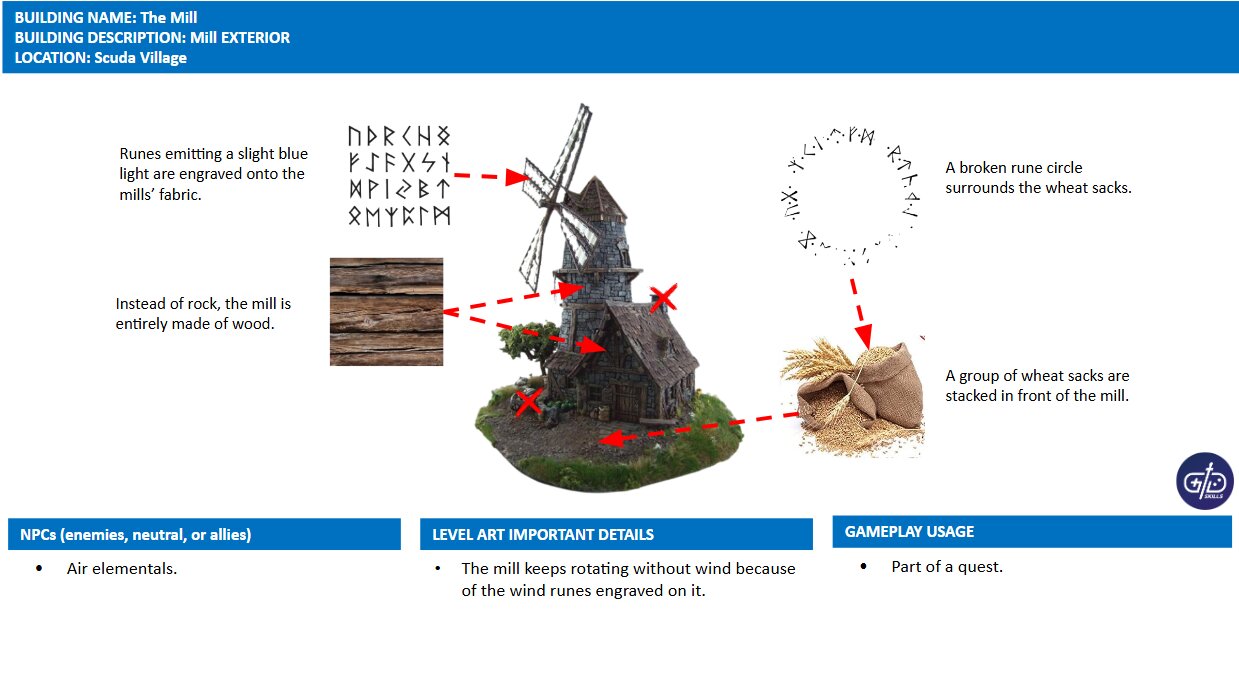
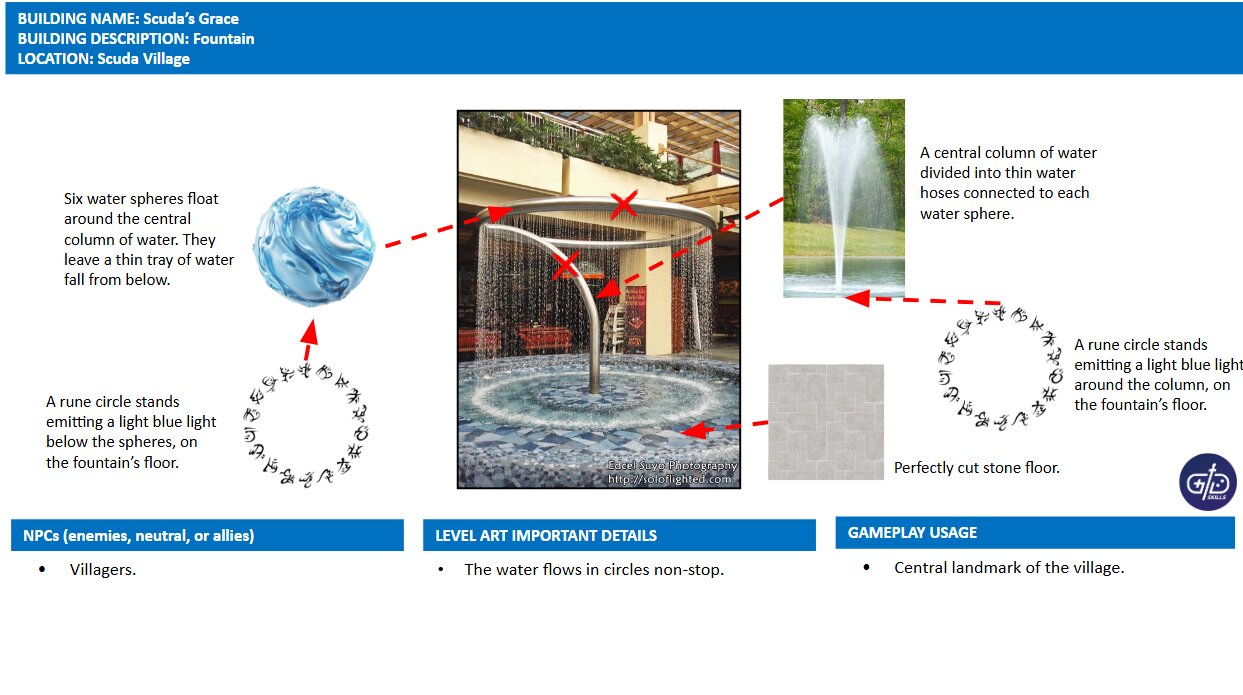
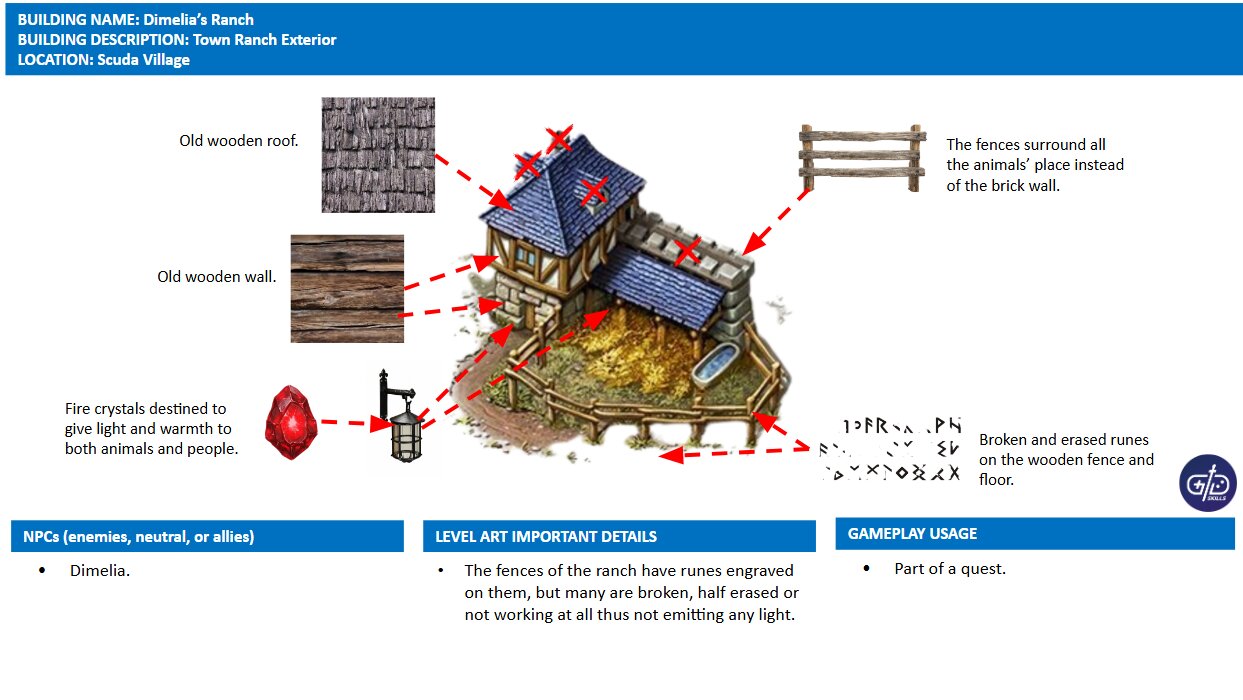
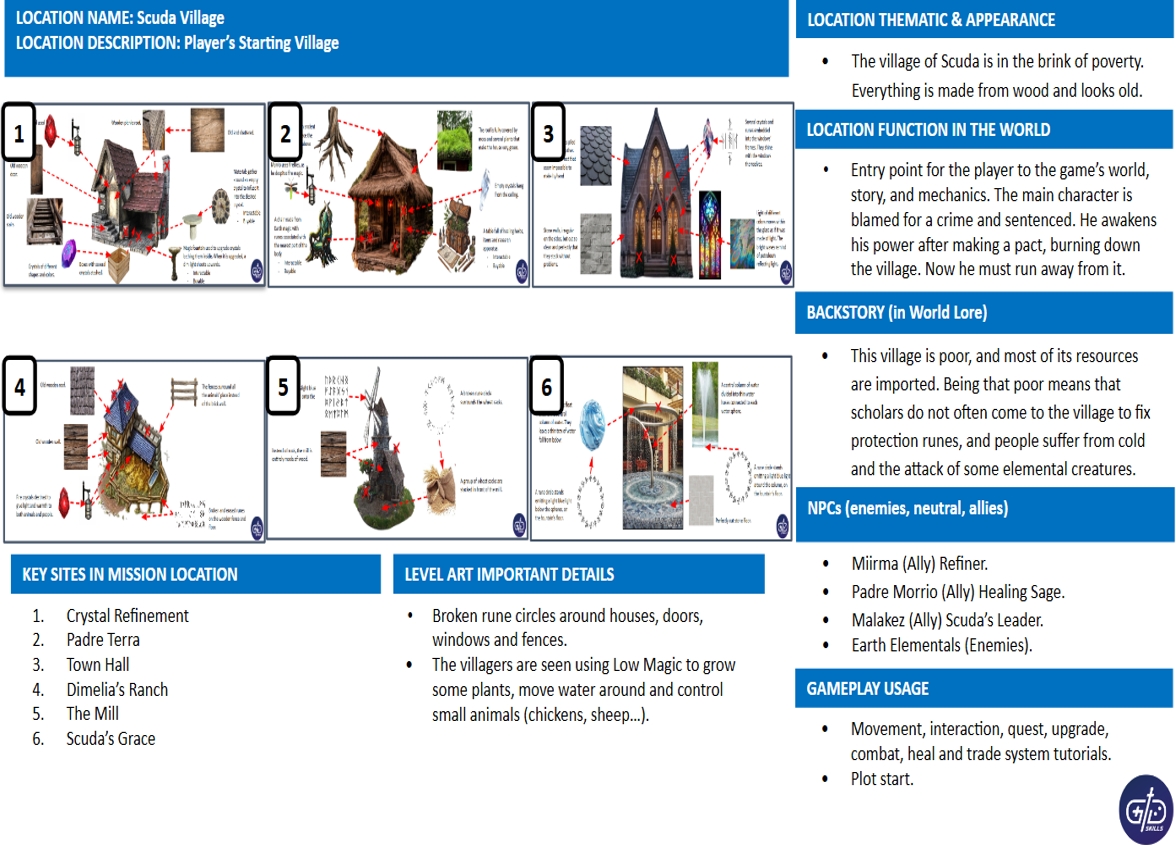
Designed the building documents for the art and design teams to achieve the following design goals:
- The design of the following buildings is key to helping the art teams understand the overall scope of the village, as well as providing the production team with a streamlined workflow.
- These added details help reinforce the game’s theme and lore, while also effectively communicating its purpose to the player.
- These designs blend artistic elements with level design and environments specifically crafted to support these teams.
Fleshed Out The Locations for The Map​
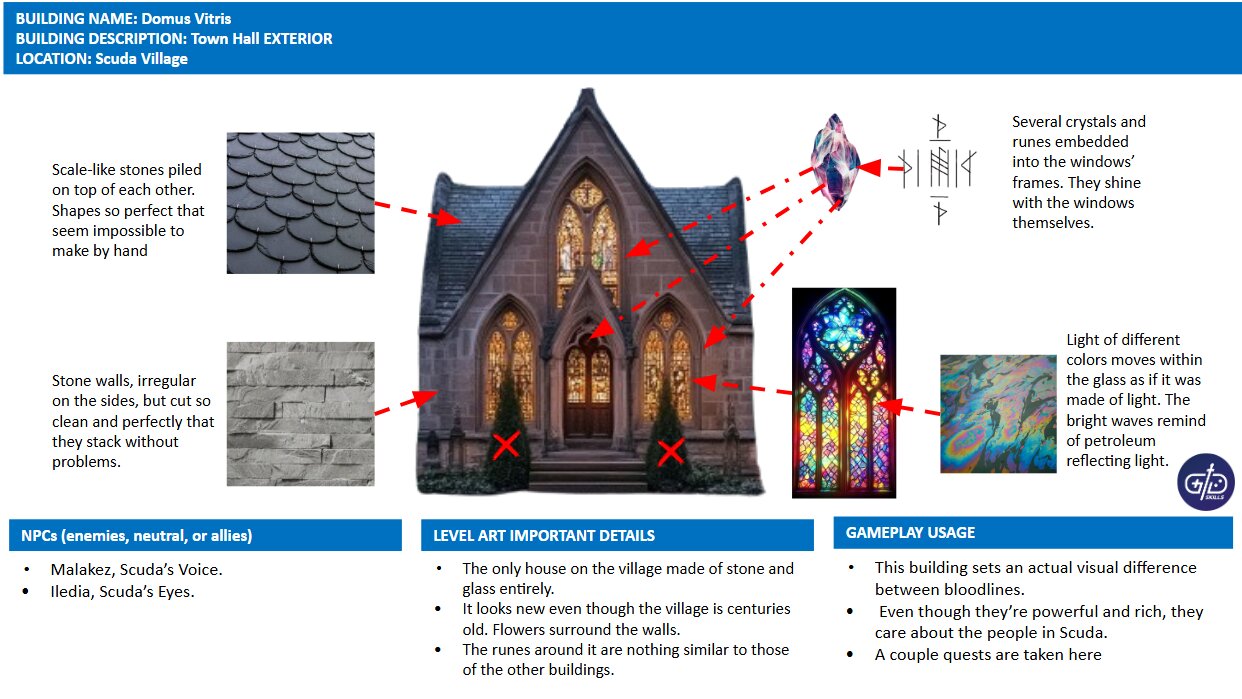
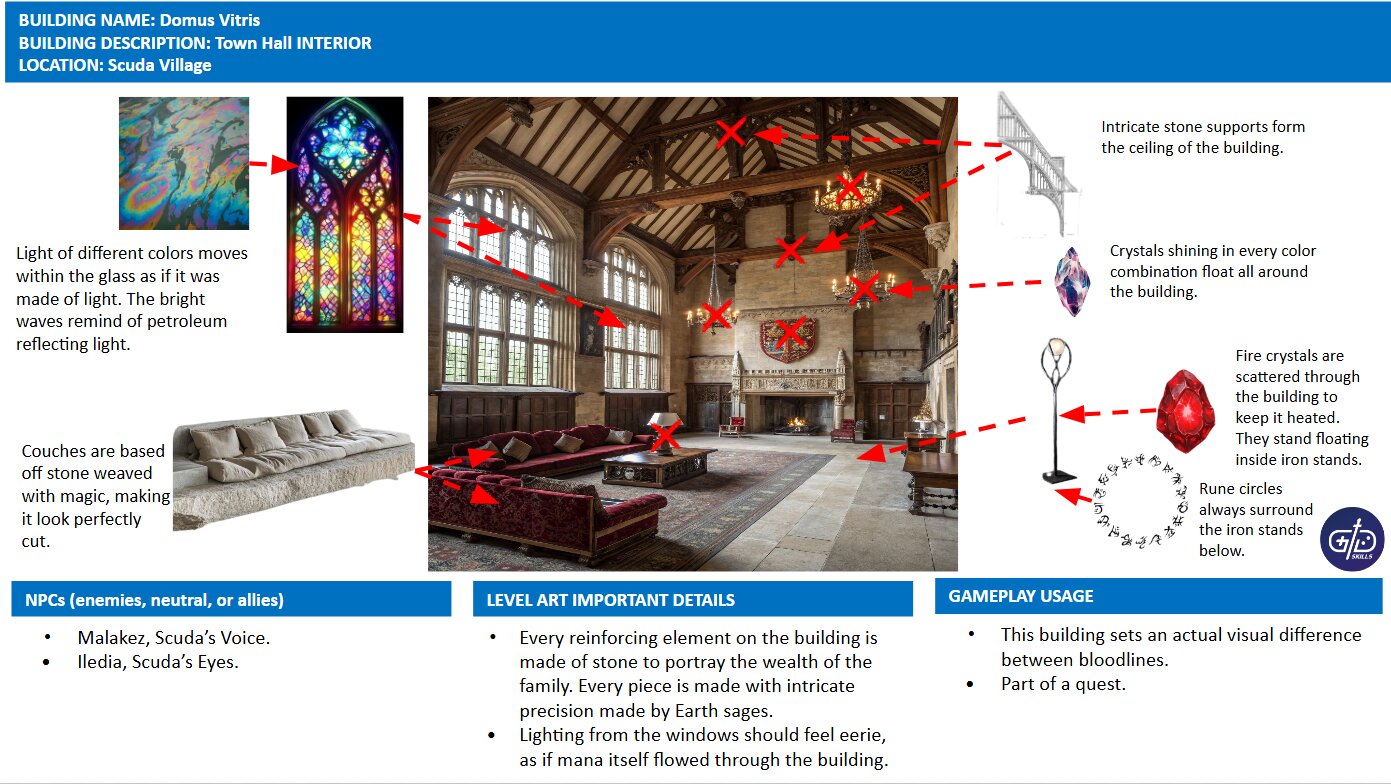
This design takes into account the following elements that reinforce the game’s narrative, lore, and theme:
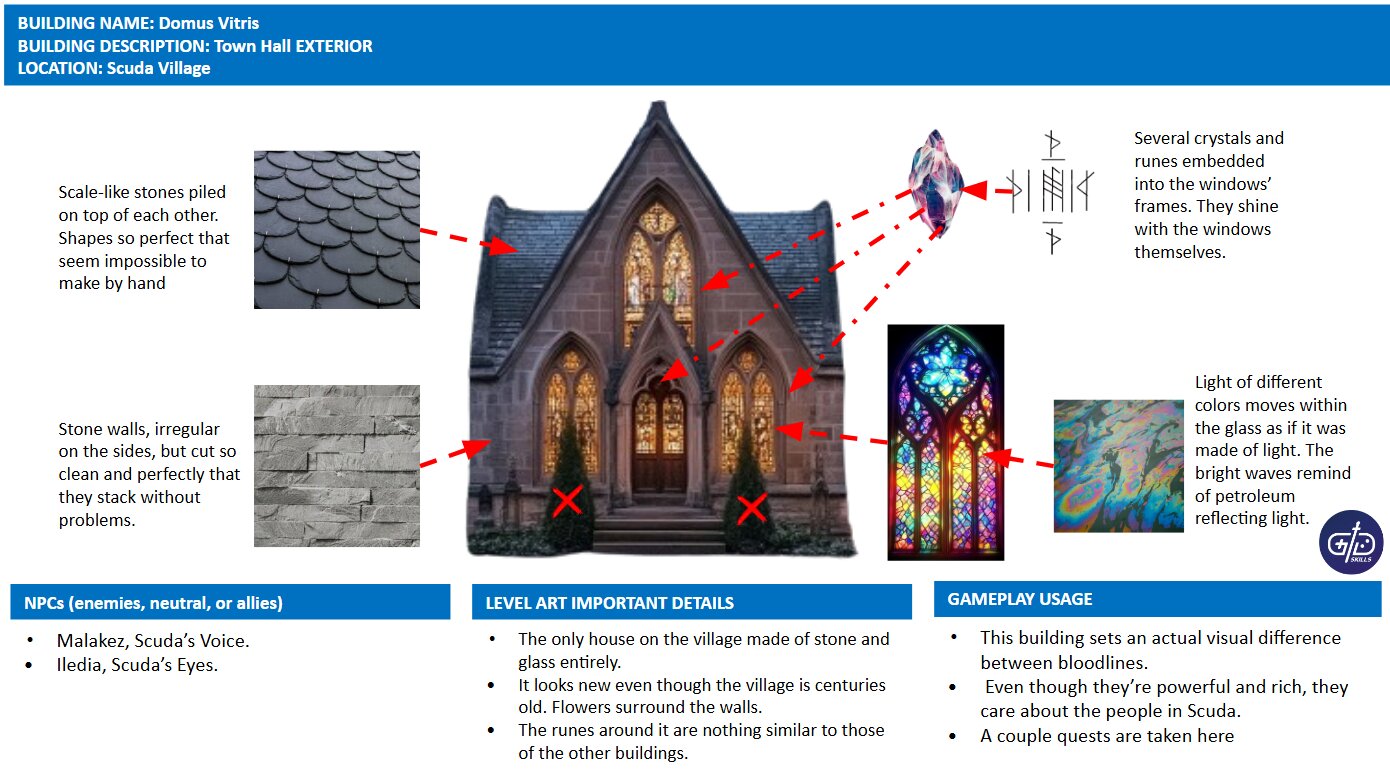
- This is the only stone building in the village, making it stand out as a main location between the others.
- Its windows are infused with pure mana, exuding grandeur and significance.
- Intricate stone supports are seen all through the interior of the building. Stone weaving from mages is expensive and requires a lot of skill, showing just how rich Scuda’s leader is.
- The runes found around the building do not serve a functional purpose, most people cannot even read them.
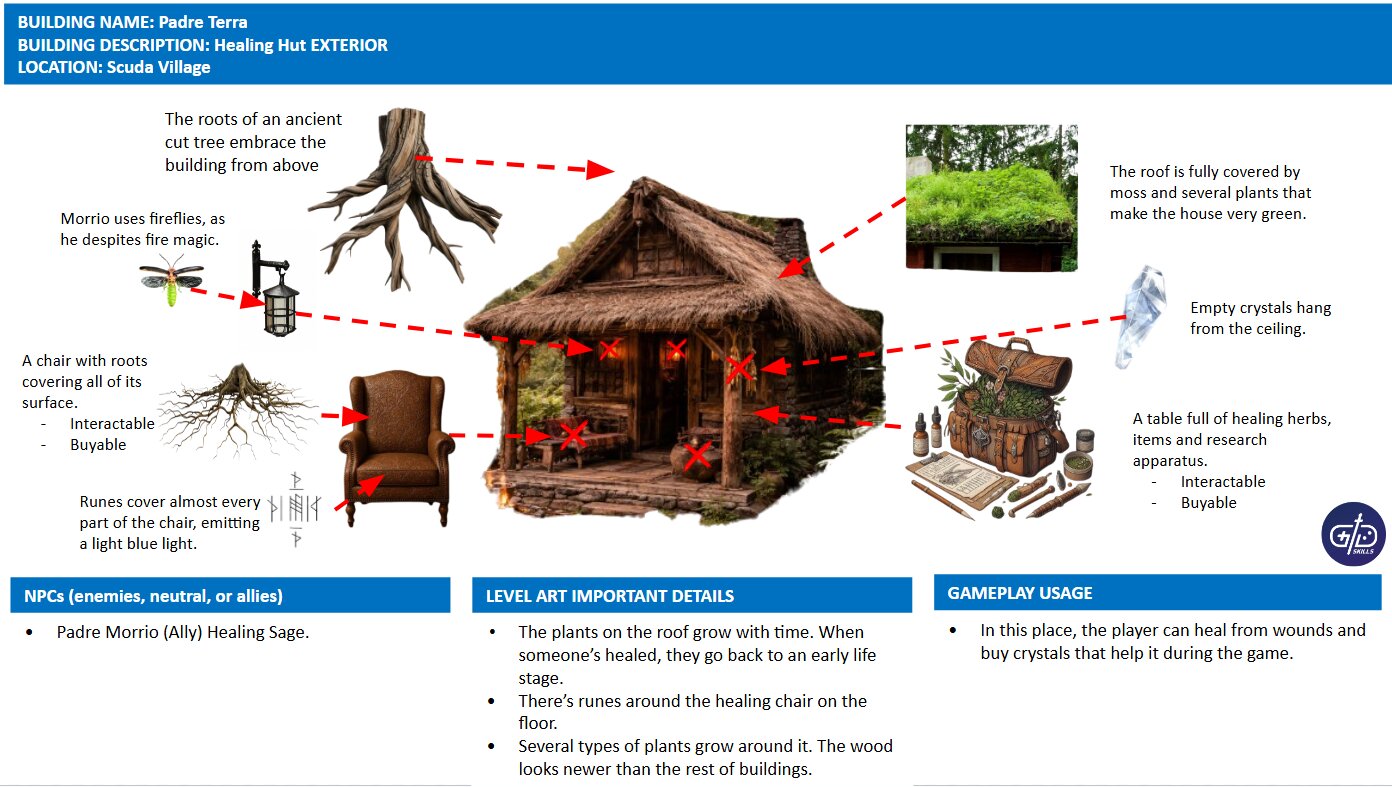
This design takes into account the following elements that reinforce the game’s narrative, lore, and theme:
- This building’s roof is covered by plants. Everytime Padre Morrio heals someone or uses her earth magic, the plants revert to their youth state as their man is drawn out.
- Roots form the reinforcements of the building. Padre Morrio is able to control those roots to change the building’s rooms at her command.
- Most of the elements all around the building convey the “doctor” theme, finding herbs, plants and liquids in bottles all around.
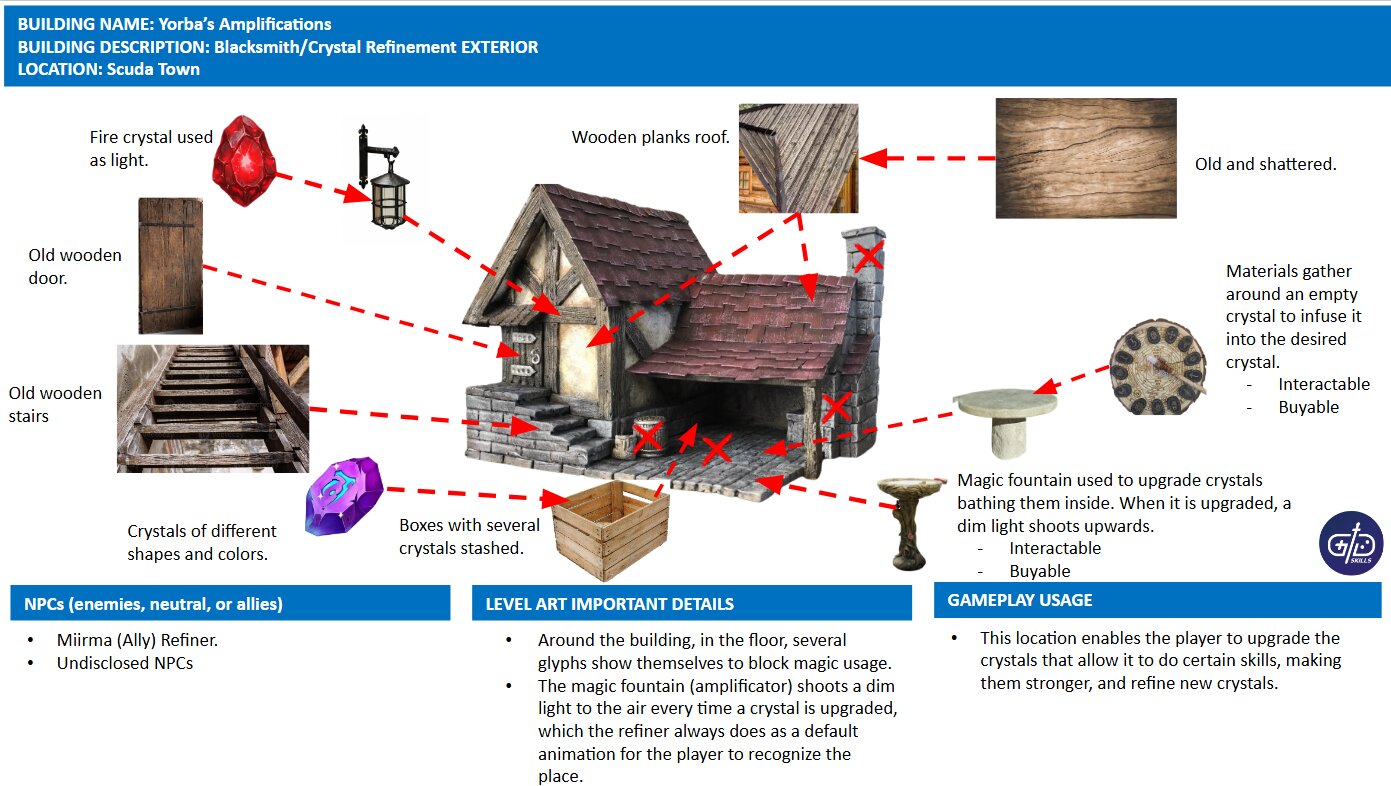
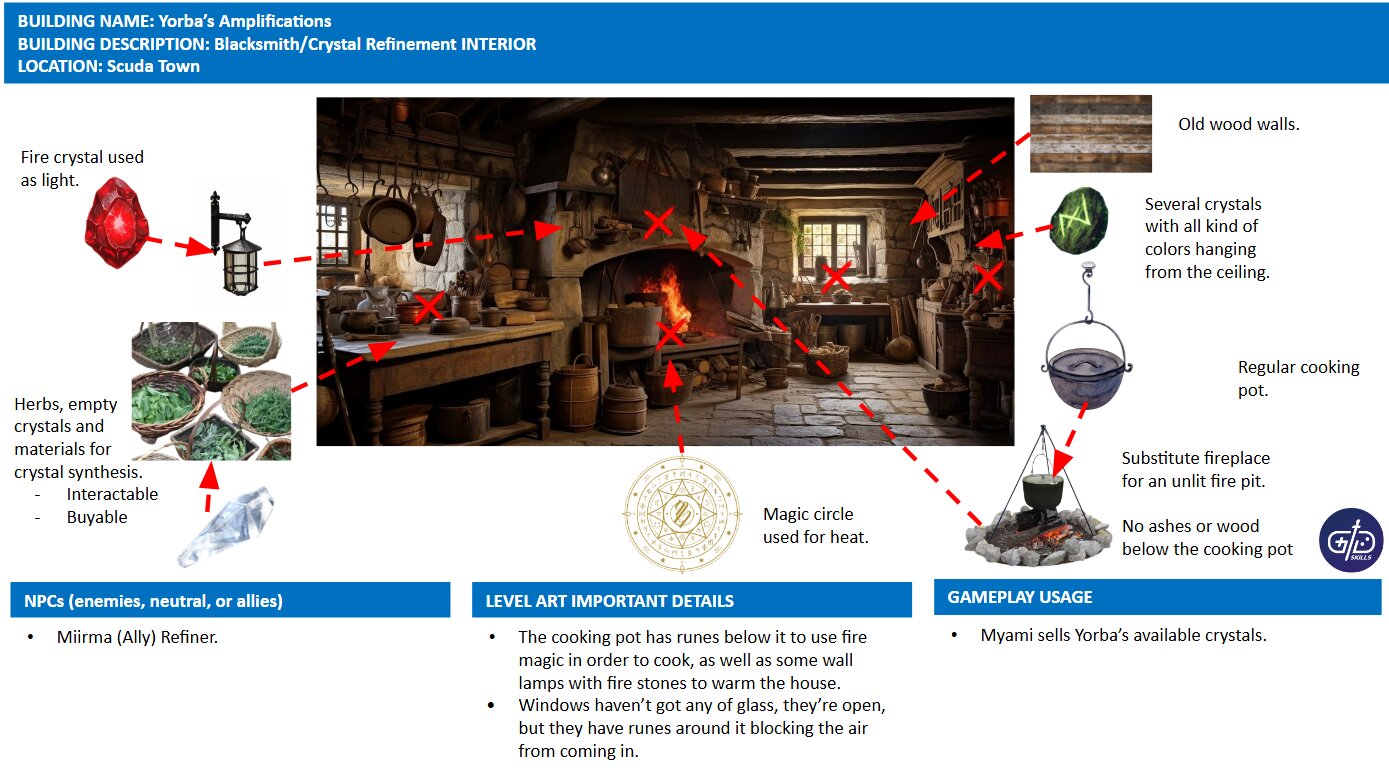
This design takes into account the following elements that reinforce the game’s narrative, lore, and theme:
- This building is the reflection of a blacksmith, but adapted to the Crystal Refinery needed for the game.
- A magic fountain serves as a crystal refiner, and every time is used, a light of pure mana shoots to the sky, making it easy for the player to locate it because of the refiner NPC always working.
- A lot of infused and not-infused crystals are scattered throughout the floor, as well as weapons with sockets for them, showing that they not only upgrade, but sell.
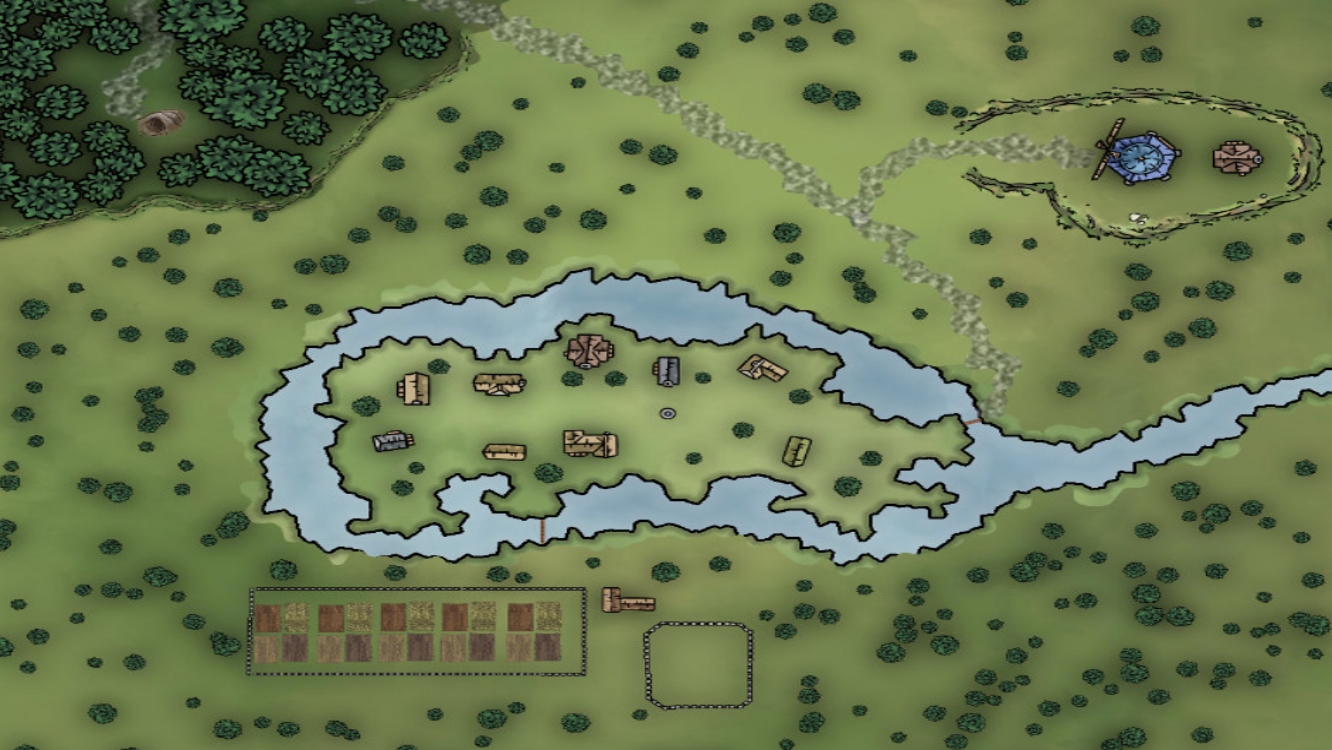
Designed the continent's Cartography
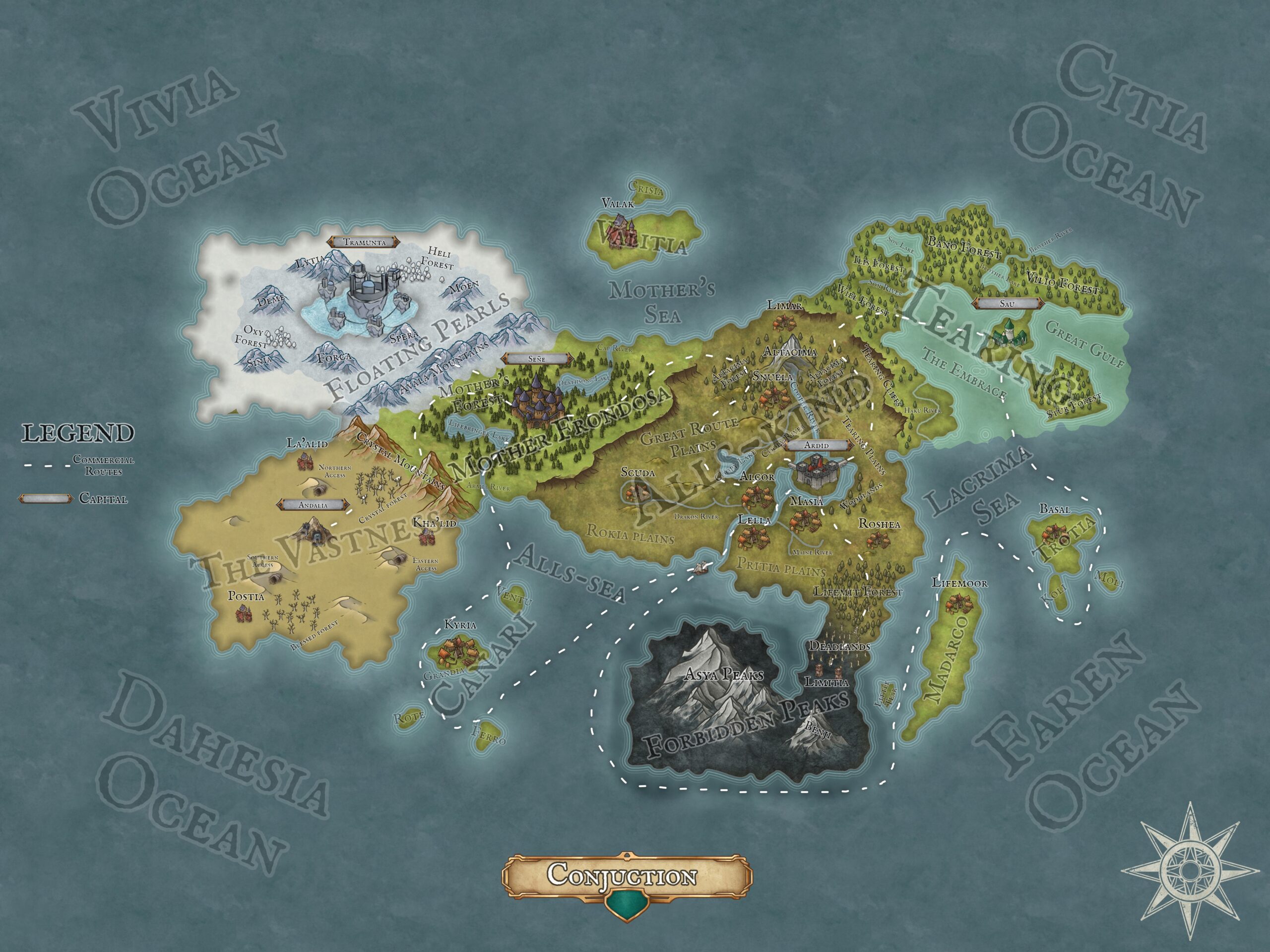
This map was designed to give the impression of a realistic setting in terms of its biomes and how their location on the continent affects them. The key elements are:
- Defined biomes all around the place, taking in account their location and landscape.
- Buildings and places that feel magical, like the Floating Pearls, which give insight about the wind and frost magic people living there.
- As the game is lineal, story wise, it is easy to assume that this first product starts in the middle of the continent and can be expanded to the rest in an episode-like development.
Genre and Content Research
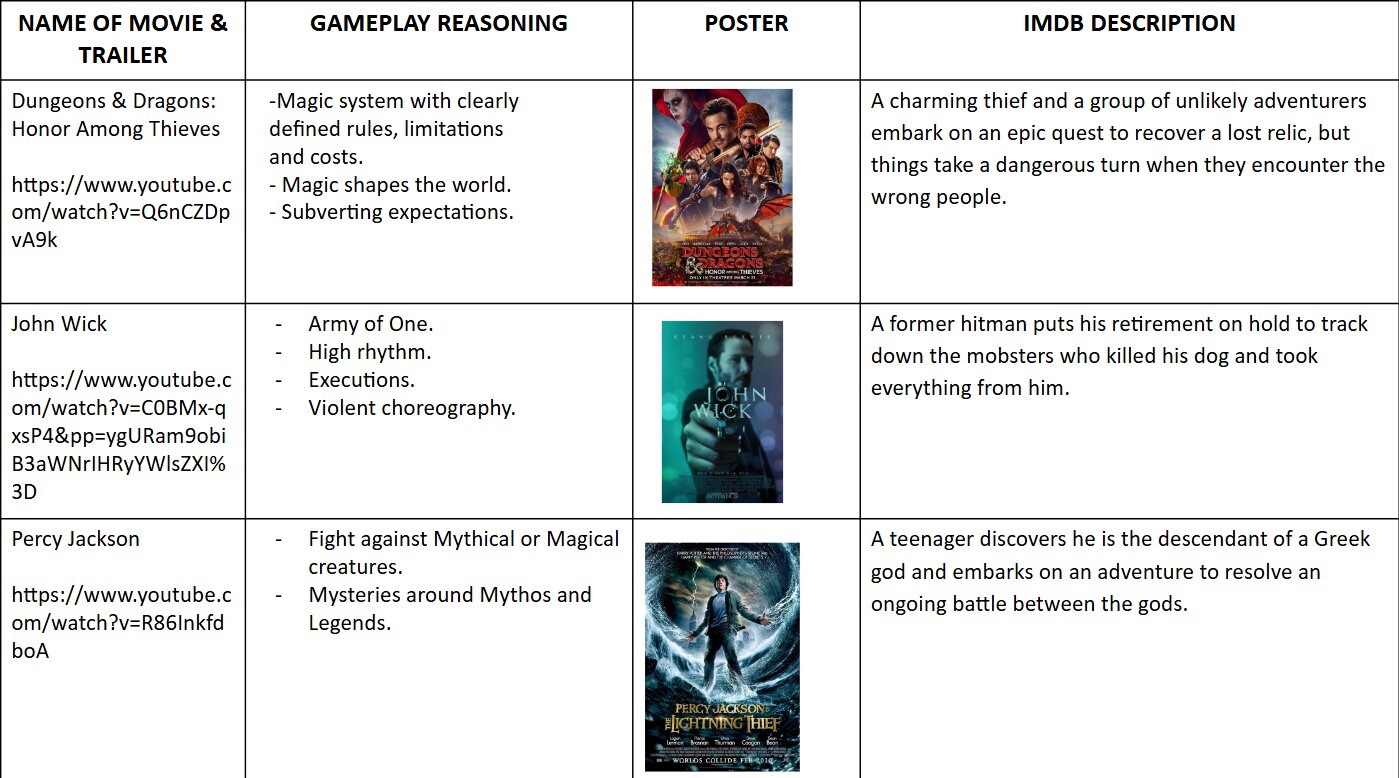
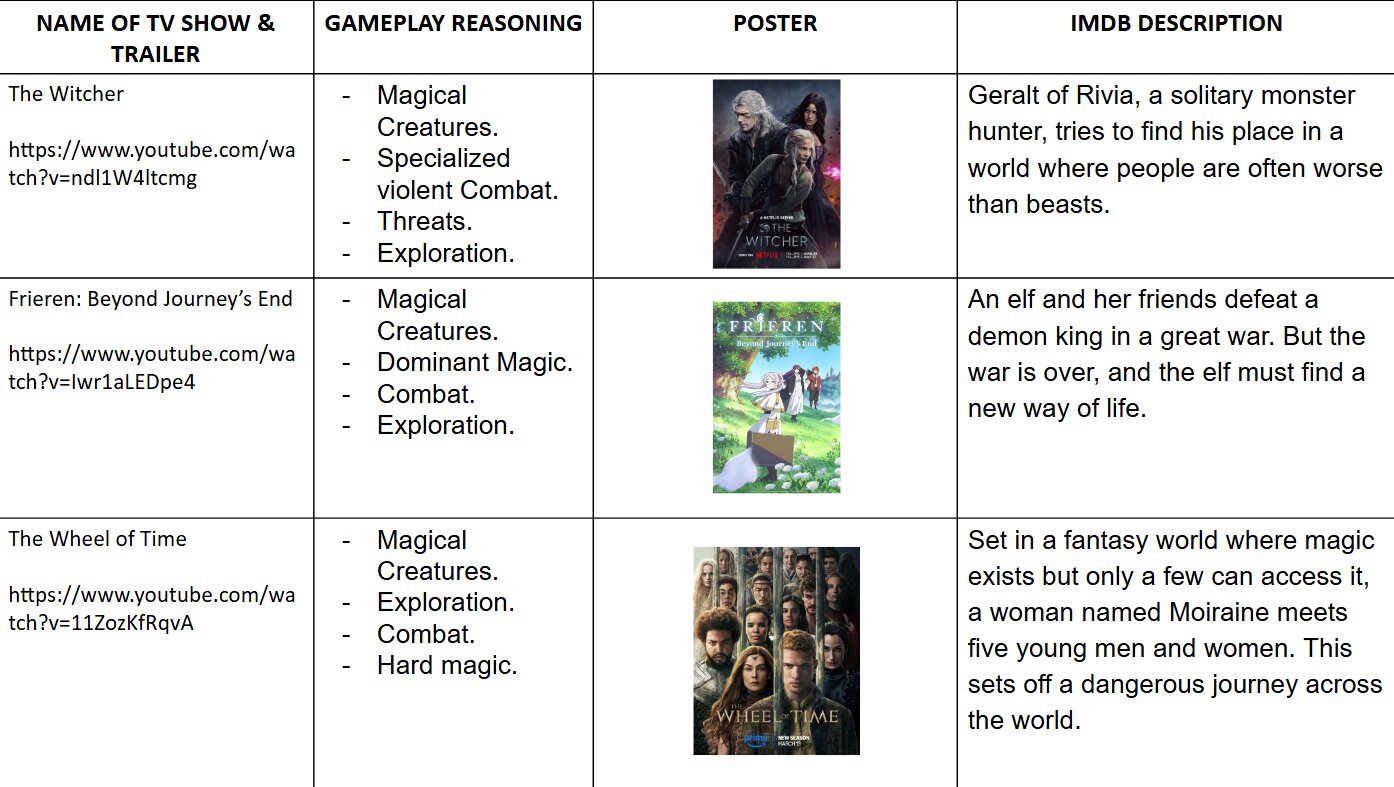
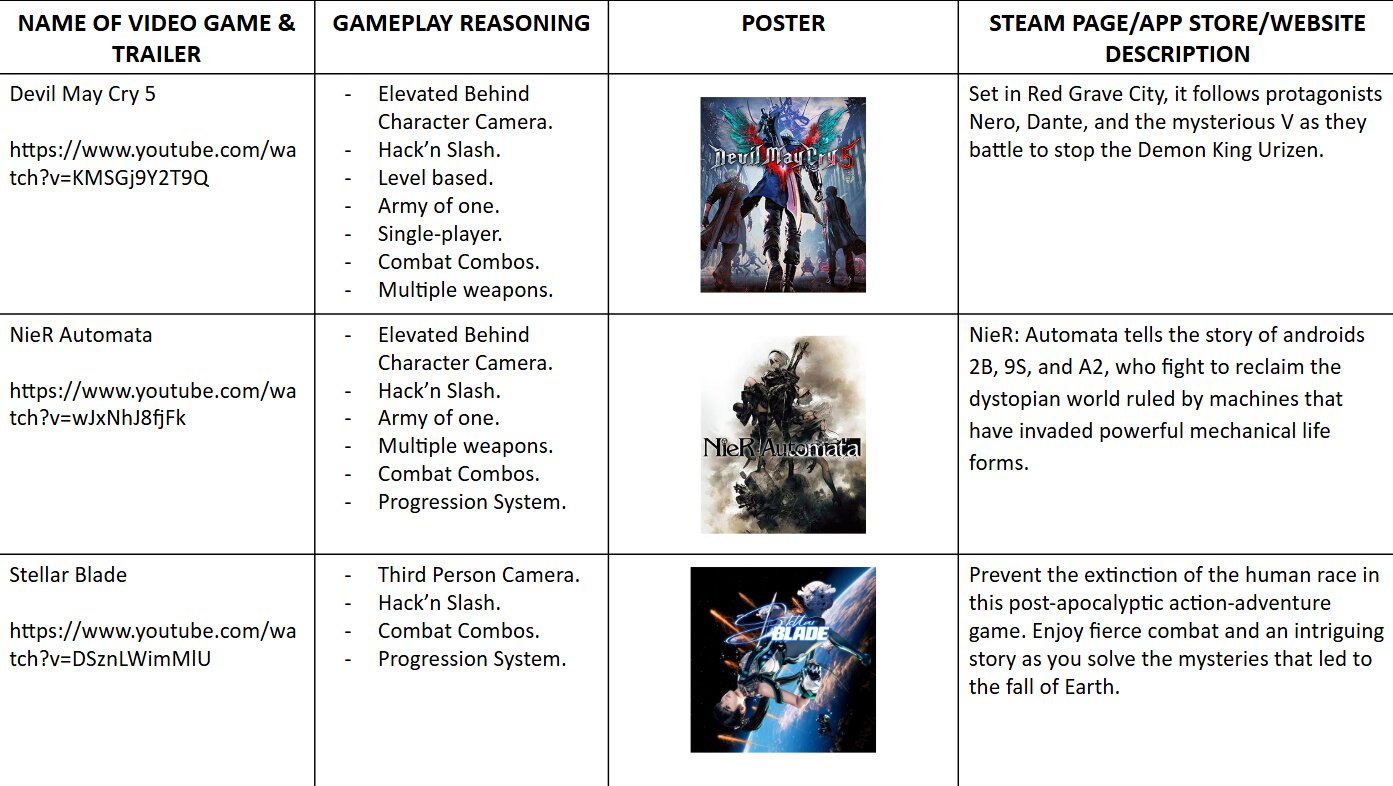
Researching audiovisual content is key for the rest of the team to understand the themes and help everyone to get onto the same line.
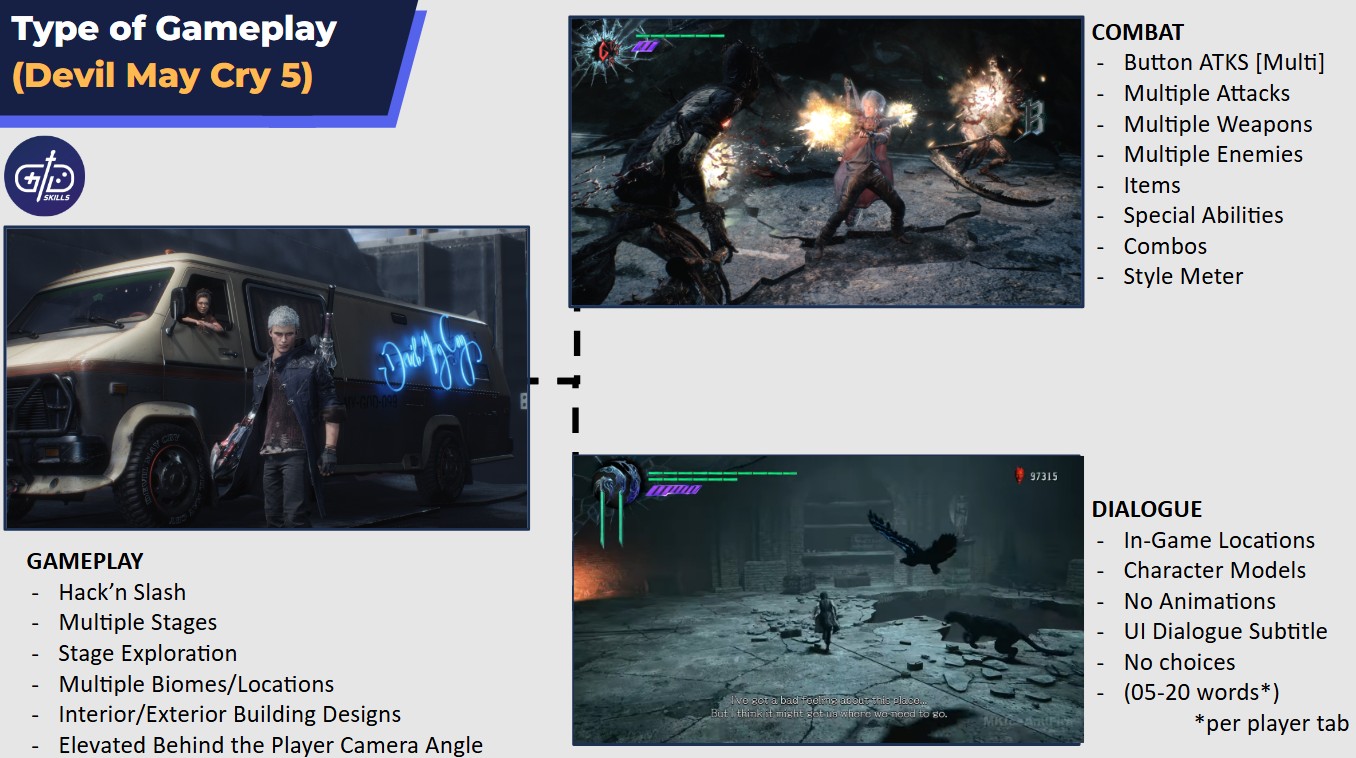
I did a critical analysis of content from media sharing similar narrative themes:
Movies, series, and games have their own way of portraying pace, characters, and stories. Each reasoning takes into account the medium of its reference.
- When looking for the specific feel you want in a game, finding similar media examples that capture that feel makes it easier for others to understand what you’re aiming for.